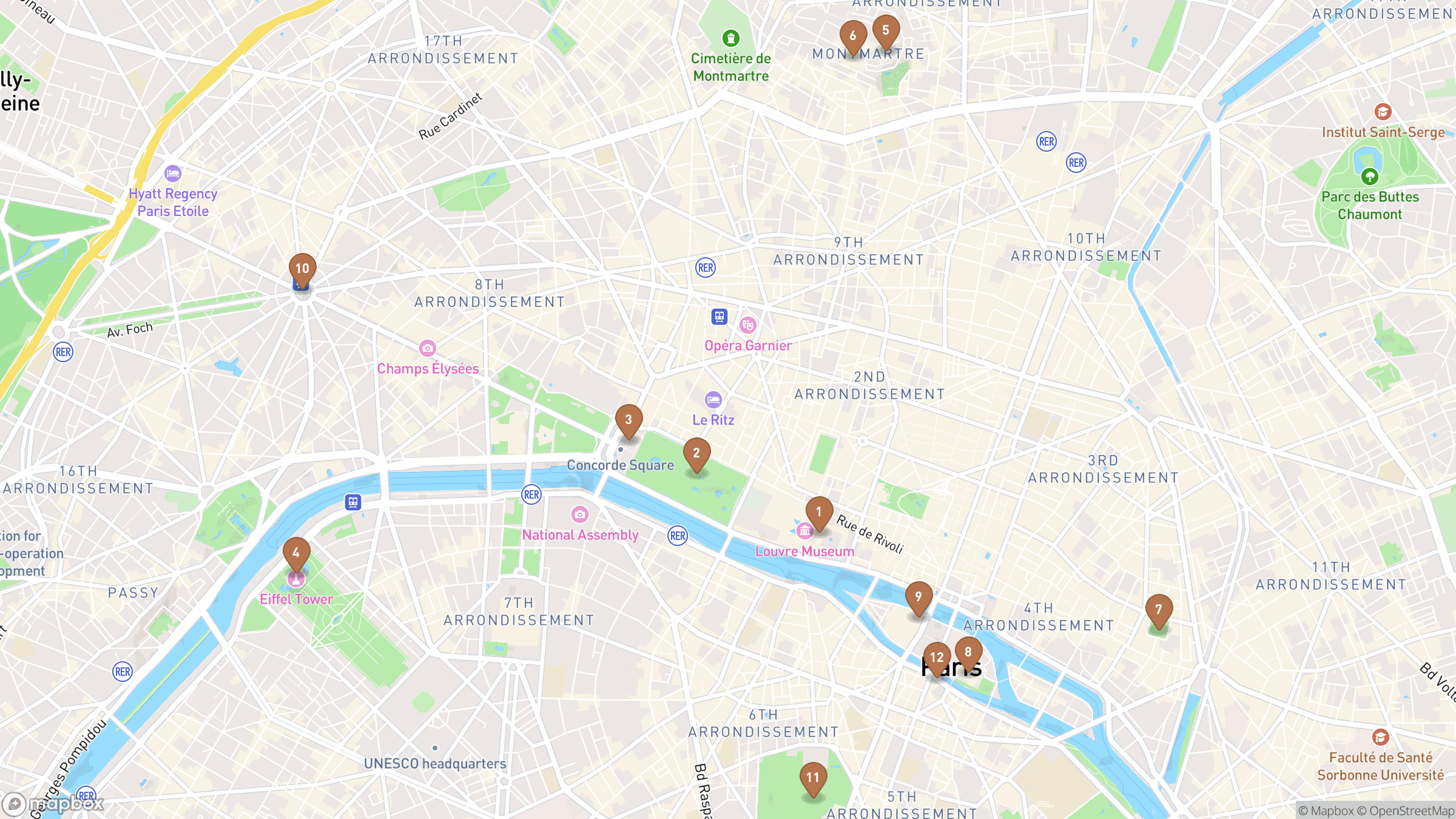
At-a-Glance
The Historic Heart Along the Seine
- Île de la Cité
- Sainte-Chapelle
- Conciergerie
- Louvre
- Tuileries Garden
- Place de la Concorde
- Eiffel Tower
From Montmartre to the Champs-Élysées
- Montmartre
- Sacré-Cœur
- Place du Tertre
- Rue des Saules
- Champs-Élysées
- Arc de Triomphe
Left Bank Museums and Neighborhoods
- Musée d'Orsay
- Saint-Germain-des-Prés
- Café de la Mairie
- Le Marais
- Place des Vosges
Best Things to Do in Paris in 3 Days: A Curated Itinerary
Three days forces you to choose: hit the Louvre and Notre-Dame, or wander Marais and let cafés slow you down. This guide assumes the former. You’ll see Paris’s signature monuments, spend real time in two major museums, and walk enough neighborhoods to understand what you’re missing. The challenge isn’t finding things to do—it’s sequencing them around museum closing days, timed entries, and the physical reality of a city where everything worth seeing clusters along a single river.
Paris’s compact historic center along the Seine makes three days feasible for experiencing core attractions, though this timeline requires accepting that you’ll sample rather than exhaust the city’s offerings.
The Louvre Museum alone holds approximately 35,000 works of art on display in its former royal palace on the Right Bank, and attempting comprehensive coverage would consume your entire stay. Instead, this itinerary balances signature monuments with neighborhood exploration, leaving time for a coffee at a zinc counter on Rue de Rivoli or a bench on the Pont des Arts without rushing to the next ticket entry.
Day One: The Historic Heart Along the Seine
Begin your Paris immersion on Île de la Cité, the island where the Roman city of Lutetia first took root and where medieval Paris centered its religious and political power. Sainte-Chapelle stands as one of the island’s most spectacular survivors—a Gothic chapel consecrated in 1248 whose interior transforms into a jewel box of stained glass. The Conciergerie next door served as a prison during the French Revolution and offers sobering historical context. Both monuments are managed by the Centre des monuments nationaux and benefit from combined timed tickets that help manage queues, particularly important given the limited space inside Sainte-Chapelle’s narrow upper chapel.
Notre-Dame remains closed for restoration following the 15 April 2019 fire, with reopening scheduled for December 2024. The cathedral’s parvis and surrounding viewpoints remain accessible for exterior appreciation, and the square itself provides perspective on the Gothic façade that inspired Victor Hugo and countless pilgrims. The temporary closure underscores a practical reality of Paris travel—even iconic monuments face periodic inaccessibility, making advance research essential for short visits.
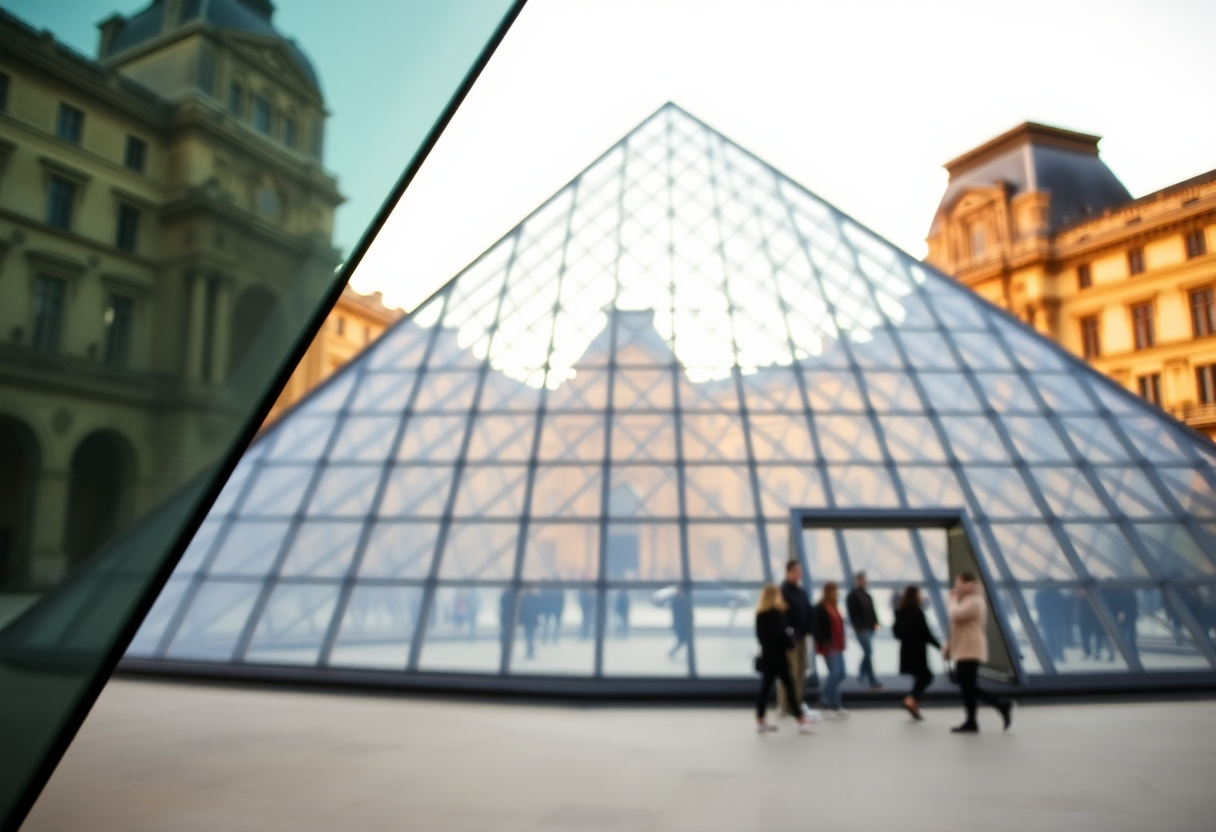
Cross Pont des Arts or Pont du Carrousel to the Right Bank and compare access options for the world’s most visited museum. The Louvre requires dated, timed reservations for all visitors, and morning slots typically offer lighter crowds than afternoon entries. Allocate three to four hours minimum to navigate the sprawling collections, which include the Mona Lisa, the Venus de Milo, and countless works spanning ancient civilizations through the 19th century.
In the basement level, you walk past 12th-century fortress stones before ascending to the Renaissance galleries—the building itself teaches you Paris’s transitions.
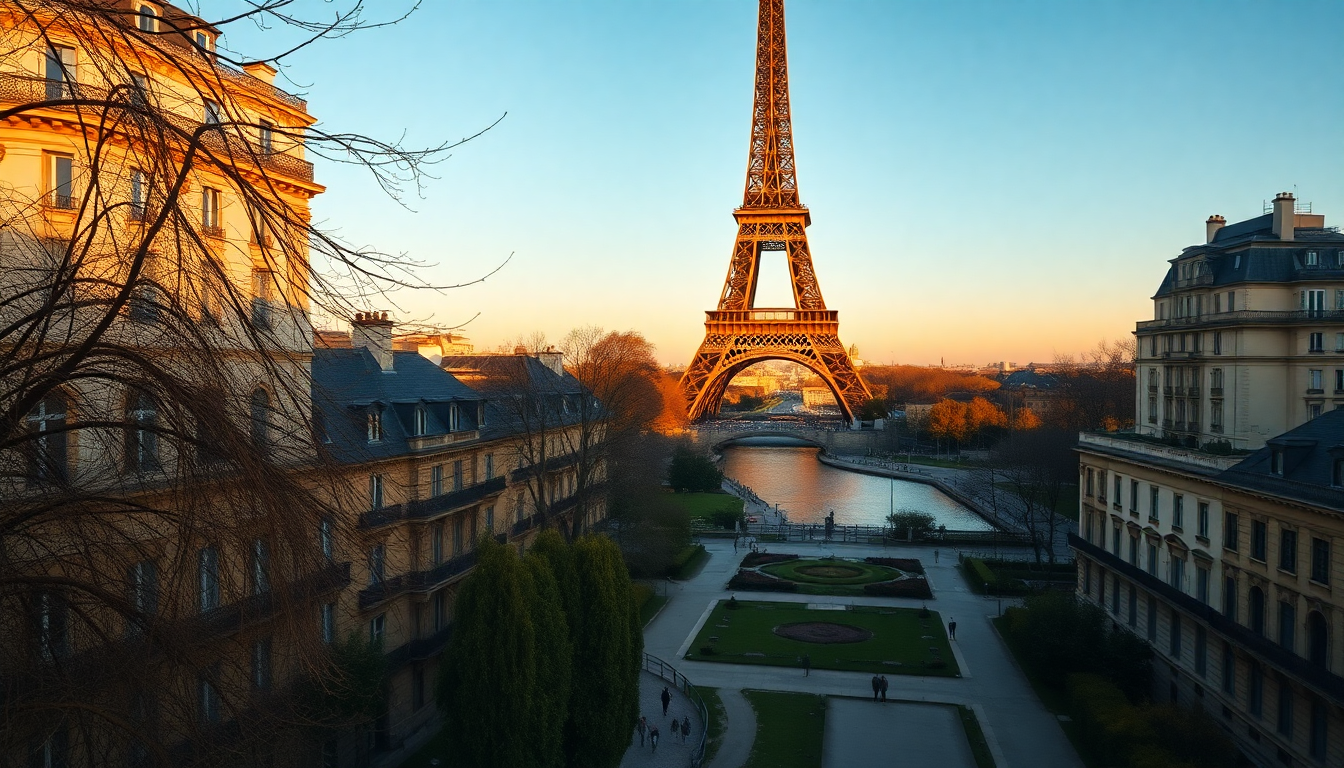
After the Louvre, walk through the Tuileries Garden toward Place de la Concorde, passing the octagonal fountains and formal tree-lined allées that exemplify French garden design. The garden’s long east-west axis offers clear sightlines and serves as a respiratory pause between museum intensity and your late afternoon destination. Follow the Seine westward on foot or take Metro line 6 for elevated views toward the Eiffel Tower area. Built for the 1889 Exposition Universelle, the tower stands 330 meters tall with antennas and operates with timed access slots that make advance booking strongly recommended. Late afternoon or evening access provides dramatic light for photographs and extends your first day until sunset over the Seine.
The Seine’s left and right banks hold UNESCO status—that’s why every museum, monument, and café cluster near water.
Use Metro lines 1 and 6 to move efficiently between these riverbank landmarks, taking advantage of 90-minute transfer validity on metro and RER within central Paris.
Standard t+ tickets or contactless bank card payments work seamlessly across the transport network, and single rides prove more economical than tourist passes for many short stays if your daily movement patterns don’t justify unlimited access.
Day Two: From Montmartre to the Champs-Élysées
Start your second day in Montmartre, the former hilltop village annexed to Paris only in 1860 that became a major center for avant-garde artists such as Picasso and Modigliani in the late 19th and early 20th centuries. Take Metro line 2 to Anvers or line 12 to Abbesses—the latter sits deeper and requires navigating spiral stairs or elevators, but emerges directly into Montmartre’s village-like streets. The funicular from base to summit operates on standard metro tickets and saves leg strength for exploration at the top.
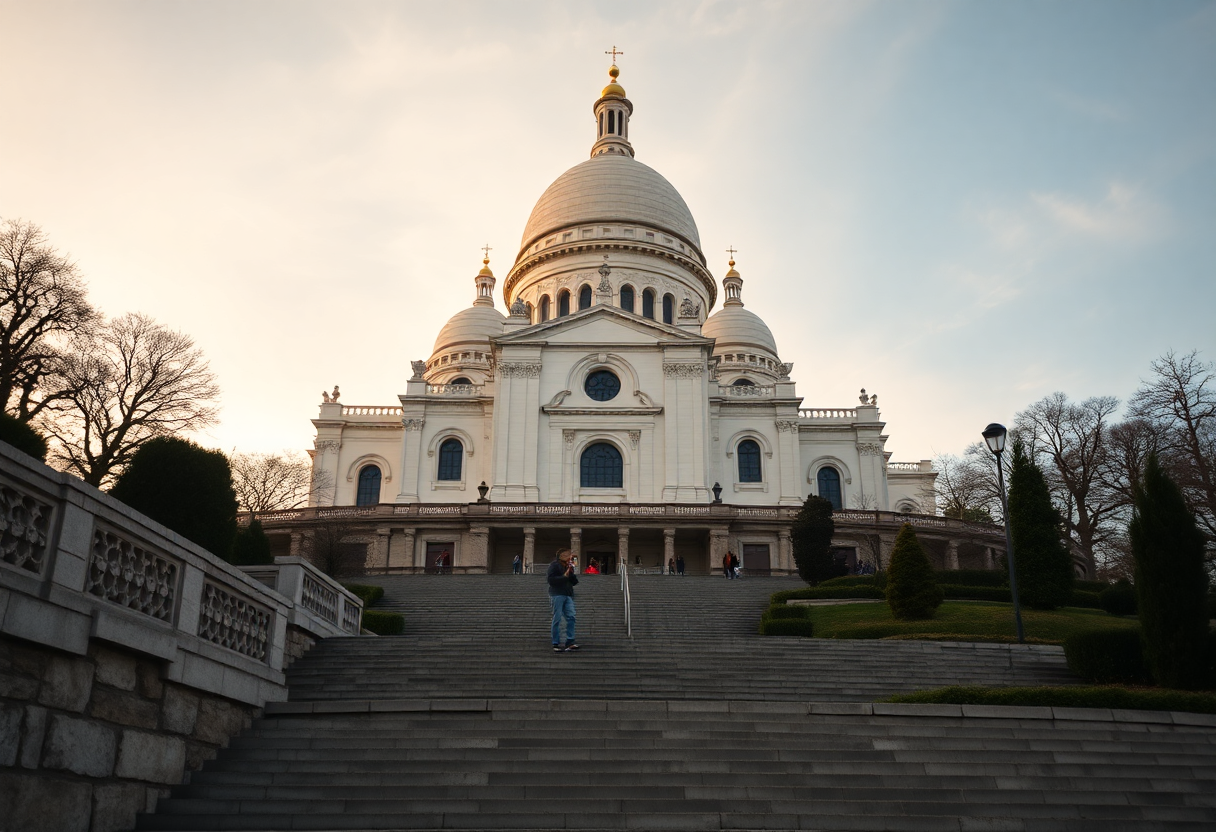
Sacré-Cœur’s white Romano-Byzantine dome is visible from across Paris, but go early (9–10 a.m.) to avoid queues. The view from the terrace beats the basilica interior itself.
Shoulders covered, no shorts—standard respectful-place-of-worship rules. You’ll see Parisians in jeans and trainers, so don’t overthink it.
Wander the winding streets behind Sacré-Cœur, particularly around Place du Tertre where artists sell work and the cobblestoned lanes retain hints of village character despite heavy tourism. Rue des Saules is where Toulouse-Lautrec’s Cabaret d’Ély once drew artists; today the street itself stays residential, with fewer portrait-sketch hawkers than Place du Tertre. These streets reward exploratory walking—take transport uphill and walk down through the neighborhood, which proves physically easier and allows spontaneous stops.
Descend from Montmartre to the Right Bank and navigate via Metro line 2 or 1 toward the Champs-Élysées, the grand avenue created as part of Haussmann’s mid-19th-century transformation of Paris.
Walk nearly two kilometers from Place de la Concorde to the Arc de Triomphe past luxury shops and cinemas—a monument to Haussmann’s vision but honestly, skip the terrace cafés here; €8 for a café crème is robbery compared to Marais.
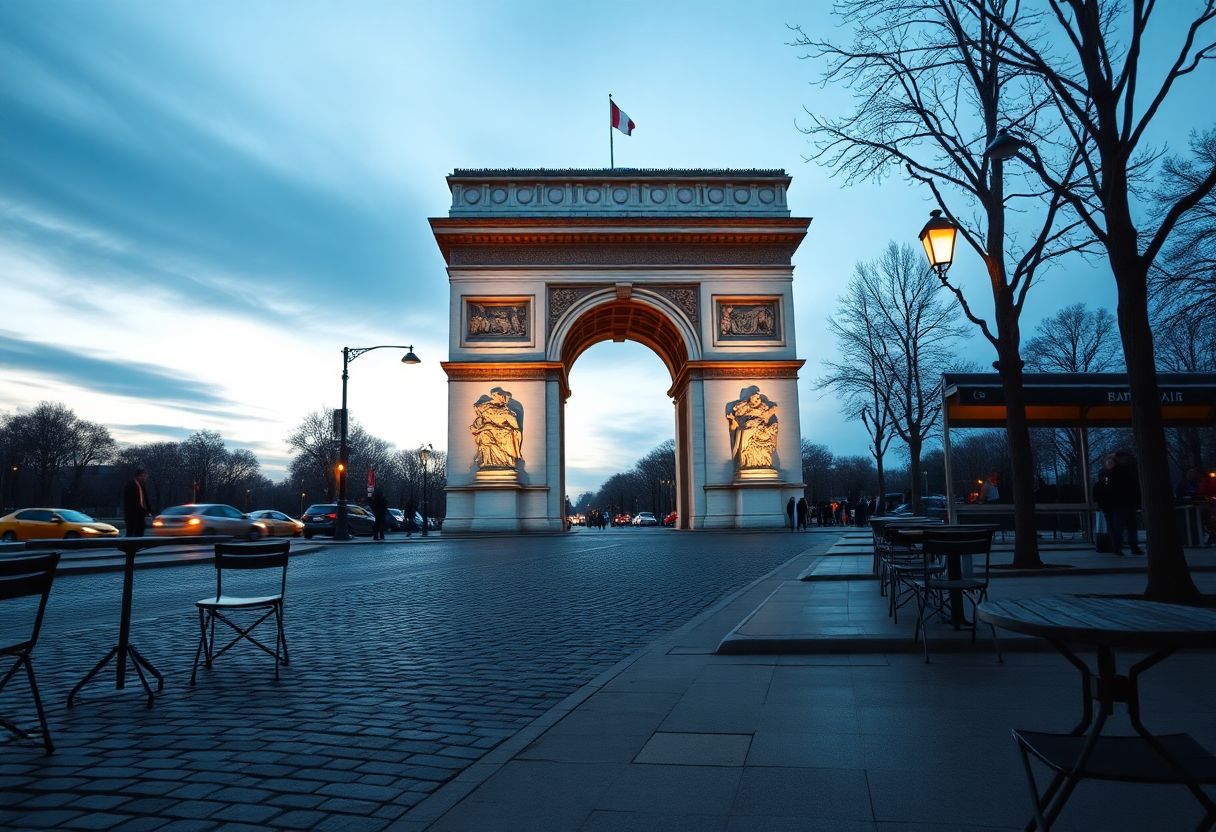
The Arc de Triomphe, inaugurated in 1836, commemorates those who fought and died for France in the French Revolutionary and Napoleonic Wars and houses the Tomb of the Unknown Soldier beneath its vault. Advance tickets grant access to the monument’s upper platform, reached by a tight spiral staircase that rewards the climb with 360-degree views over twelve radiating avenues.
From the top, you see twelve radiating avenues creating a wheel: that’s Haussmann’s vision for power and order imposed on medieval chaos. Stand there for five minutes and Paris suddenly feels logical.
This second-day route from Montmartre’s intimate streets to Haussmannian monumentality illustrates Paris’s varied scales and historical layers. The same city contains medieval street patterns, 19th-century grand boulevards, and the hilltop remnants of once-independent villages, all now integrated into a metropolitan fabric that rewards moving between contrasting districts rather than remaining fixed in any single quartier.
Day Three: Left Bank Museums and Neighborhoods
Dedicate your third morning to the Musée d’Orsay, housed in the former Gare d’Orsay railway station on the Left Bank. The museum holds one of the world’s foremost collections of Impressionist and Post-Impressionist art, including works by Monet, Degas, Renoir, Cézanne, Van Gogh, and Gauguin. The Beaux-Arts station architecture—particularly the great central nave with its vaulted glass roof—creates dramatic exhibition space that enhances the viewing experience beyond conventional gallery walls.
Louvre closes Tuesdays, Orsay closes Mondays. Align your visit to hit both. If you miss one, that day works for Marais or the Seine walks.
After the Orsay, explore Saint-Germain-des-Prés in the afternoon, experiencing the Left Bank’s historic literary café culture.
Café de Flore is a €6 tourist trap. For the same vibe and half the price, try Café de la Mairie at Place Saint-Sulpice, where locals actually sit.
Understanding this social contract helps budget both time and money—you’re purchasing temporary residency as much as refreshment. Prices vary between bar counter, indoor seating, and terrace locations, with terraces commanding the highest rates for prime people-watching position.
Cross the Seine via Pont Neuf or Pont des Arts toward Le Marais, one of Paris’s most successfully preserved historic districts. Place des Vosges, completed in the early 17th century, stands as the oldest planned square in Paris and an early example of royal urban planning that predates Haussmann’s larger transformations by two centuries. The square’s red brick and stone façades enclose a symmetrical garden where Parisians read, picnic, and occupy benches beneath pollarded lime trees. Victor Hugo’s former apartment at number 6 operates as a municipal museum offering literary context for modest entry fees.
Le Marais extends northward in a maze of narrow streets housing Jewish quarter bakeries, contemporary boutiques, and LGBTQ+ nightlife venues in one of Paris’s most socially diverse districts.
Marais’s grid of narrow streets is made for wandering. Hit the Picasso Museum if you have two hours; skip Musée Carnavalet unless you’re obsessed with Paris history. The bakeries and vintage shops on Rue Vieille du Temple are the real attraction.
Afternoon light works well for Marais exploration, as many shops and cafés remain open later than traditional lunch closures observed elsewhere in Paris.
Use this third day to calibrate your pace after two monument-intensive days. Paris sustainability over a short visit requires balancing scheduled entries with unstructured time for simply being in the city rather than perpetually moving between major attractions. The Left Bank and Marais offer neighborhoods where café breaks, shop browsing, and people-watching constitute legitimate activities rather than time stolen from a monument checklist.
Transport and Logistics for a Three-Day Visit
Standard t+ tickets and contactless bank card payments work efficiently across metro, RER (within Paris), buses, and trams, with 90-minute transfer validity between metro and RER from first validation. For short stays such as three days, many visitors find per-ride payment more economical than multi-day passes, particularly if your itinerary concentrates visits within walkable clusters rather than requiring constant cross-city movement. Tourist passes exist but justify their cost only if your specific movement pattern exceeds the break-even point of roughly four to five rides daily.
Plan journeys using the RATP route planner or mobile app to navigate between major sites, particularly Metro lines 1, 4, and 6 that follow the Seine and connect key landmarks. Line 1 runs east-west from La Défense through Louvre-Rivoli, Hôtel de Ville (for Le Marais), and Bastille. Line 4 runs north-south from Montmartre through Île de la Cité and Saint-Germain toward Montparnasse. Line 6 offers elevated sections with Seine views between Bir-Hakeim (Eiffel Tower) and Passy. Understanding these trunk routes simplifies orientation and reduces planning friction when moving between your day’s objectives.
For Montmartre, consider taking transport uphill to Anvers or Abbesses and using the funicular to reach Sacré-Cœur, then walking down through the streets, which proves physically easier and allows more exploratory time than attempting the climb. The descent route via Rue Lepic or Rue des Martyrs passes neighborhood bakeries, produce shops, and cafés serving locals rather than primarily tourists, offering glimpse into Montmartre’s residential function beyond its summit attractions.
Keep digital or photocopies of important documents separate from originals and carry bags closed and in front of you in crowded metro stations and around major tourist sites.
Watch for petition scammers asking you to sign and donate, fake-friendly crowds closing in around ticket machines, and distraction theft. It’s standard European city stuff, not unique to Paris.
Metro entrances and station corridors can become crowded at rush hours (roughly 8:00-9:30 and 17:30-19:00 on weekdays), making mid-morning or early afternoon travel somewhat more comfortable for sightseeing movement. Weekend patterns differ, with leisure travelers replacing commuters and creating different pressure points around major attractions rather than business district stations.
Booking Strategy and Timed Entry Requirements
The Louvre requires dated, timed reservations for all visitors, and booking tickets online in advance guarantees entry and manages crowding, essential for limited three-day stays. Walk-up entry is not guaranteed at the world’s most visited museum, and queues for same-day purchase can consume significant portions of your morning. The museum’s official visiting information outlines reservation requirements and confirms weekly Tuesday closures that affect scheduling.
The Eiffel Tower operates with timed access slots and seasonal opening hours, with online advance booking strongly encouraged to guarantee access at your chosen time. Demand concentrates around sunset hours for golden-hour photography, making early morning or late evening slots sometimes easier to secure.
Sainte-Chapelle and the Conciergerie on Île de la Cité offer combined tickets and timed entry; both frequently experience queues at peak times as monuments managed by the Centre des monuments nationaux. The practical information published by monument authorities confirms timed-entry systems and combined ticket options that save both money and queuing time when visiting both sites.
Book museum visits for mornings when galleries are generally less crowded, and consult floor plans in advance to prioritize key works within a limited visit window. The Louvre publishes collection highlights and gallery locations online; reviewing these before arrival helps maximize your three- to four-hour window rather than wandering aimlessly through 73,000 square meters of exhibition space. Even experienced museum-goers cannot comprehensively cover major institutions in single visits, making advance prioritization essential rather than shameful.
Book ahead. It’s not a scam; the Louvre genuinely has 9 million visitors a year. Same-day tickets are a lottery you’ll lose.
Common Misconceptions About Short Paris Visits
Notre-Dame is not open to the general public during 2024 for interior visits; only the exterior parvis and surrounding viewpoints are accessible while restoration continues following the 2019 fire. Travelers sometimes arrive expecting full cathedral access based on outdated guidebooks or assuming restoration has progressed faster than the complex reality of securing and rebuilding a medieval structure. Confirming current accessibility for all major attractions before finalizing your three-day schedule prevents disappointment and wasted travel time.
The Louvre cannot be visited without advance planning or timed tickets, even during a three-day trip; walk-up entry is not guaranteed at the world’s most visited museum. Some travelers assume major museums accept unlimited daily visitors on first-come basis, but modern crowd management systems cap entries for safety, conservation, and visitor experience. This applies across many Parisian attractions and increasingly at major monuments throughout Europe, making advance research and booking a practical necessity rather than excessive planning.
Major museums are not open every day; the Louvre closes Tuesdays and Musée d’Orsay closes Mondays, affecting which consecutive three days you choose for an art-focused itinerary. Many museums worldwide close one weekday for staff development, collection care, and building maintenance, but this pattern surprises travelers accustomed to seven-day-weekly retail and restaurant operations. Checking weekly closure patterns before booking accommodation and flights can mean the difference between seeing both major collections or missing one entirely.
Sacré-Cœur does not enforce a highly specific or unusual dress code beyond the modest attire and respectful conduct expected at any place of worship. Some travelers fear overly strict entry requirements based on misunderstandings of religious site standards or confusion with dress codes at sites elsewhere in Europe. In practice, visitors dressed for ordinary city sightseeing meet the basilica’s expectations, though active worship services warrant quiet observation rather than casual touristic behavior.
Tourist transport passes are optional, not mandatory; standard tickets and contactless payment may offer better value depending on your specific three-day movement pattern. Pass marketing emphasizes unlimited travel convenience, but many short stays cluster attractions within walkable zones that require fewer total rides than the pass break-even threshold. Calculate your actual anticipated journeys before purchasing multi-day transport products that may cost more than per-ride payment.
Safety, Café Culture, and Practical Details
Paris authorities warn about pickpocketing and scams around major tourist sites including the Eiffel Tower, Louvre, Notre-Dame area, and on public transport; vigilance with bags and valuables is recommended. Watch for petition scammers asking you to sign and donate, fake-friendly crowds closing in around ticket machines, and distraction theft. These tactics target tourists universally rather than Paris specifically, but concentrated visitor numbers at world-famous monuments create target-rich environments that merit standard urban precautions.
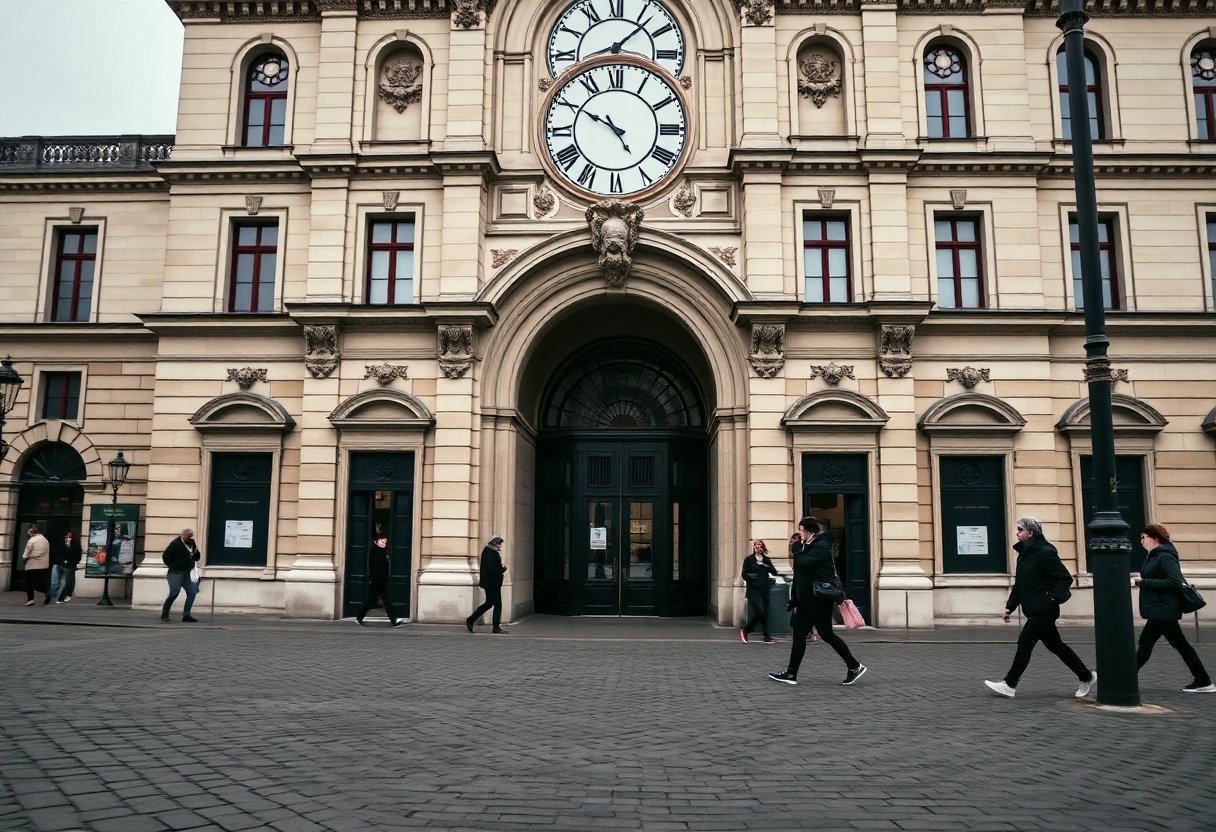
In Parisian cafés and brasseries, a single drink traditionally gives you extended table rights, and prices vary between bar counter, indoor seating, and terrace locations. This cultural expectation allows you to occupy a terrace chair for an hour or more with one coffee, transforming café visits from quick refreshment stops into legitimate rest periods during intensive sightseeing days. The price differential between counter and terrace can reach double or more, reflecting not just drink cost but location rental value. Tourists sometimes express surprise at pricing variations, but understanding the social contract clarifies that you’re purchasing time and space as much as beverages.
Restaurant and café tipping practices differ from some other countries; service is included in the bill (service compris), and rounding up or leaving small change is customary rather than percentage-based tipping. A few euros on a moderate bill represents appropriate appreciation rather than the 15-20% calculations familiar in North American contexts. Servers earn hourly wages rather than depending primarily on tips, making the social expectation and economic necessity fundamentally different from tip-dependent wage structures elsewhere.
Keep photocopies or digital backups of important documents separate from originals, particularly in crowded areas along the Champs-Élysées, metro stations, and around major monuments. Smartphone photos of passport data pages, credit cards, and travel reservations provide insurance against loss or theft without carrying multiple physical copies. Many travelers now maintain cloud-accessible document folders that any internet connection can retrieve if physical possessions go missing.
Weather variability affects outdoor monument visits more than museum days; Paris experiences rain year-round, and umbrella or light rain jacket proves more practical than attempting to reschedule around weather forecasts during limited stays. The city’s café culture exists partly because intermittent rain showers make frequent indoor shelter breaks socially expected rather than weakness. Museums and covered passages offer wet-weather alternatives if downpours make riverbank walks unpleasant, though many Parisians simply deploy umbrellas and continue about their business.
Historical Context That Shapes Your Three Days
Paris grew from a Roman fort on Île de la Cité. Almost every major building you’ll visit sits on the Seine because that’s where power always clustered.
The Louvre was a fortress, then a palace, then a museum—you see all three in the basement. Medieval stones under Renaissance additions under glass pyramids. It’s messy, but that’s kind of the point.
Haussmann’s mid-to-late 19th-century transformation created the broad avenues and monumental perspectives that structure central Paris today, making orientation relatively straightforward for contemporary visitors. The radical redesign demolished much of medieval Paris but established the grands boulevards, unified façade heights, and radiating place-étoile layouts that characterize the city’s modern appearance. Understanding this 1850s-1870s intervention explains why Paris feels legible compared to medieval city cores elsewhere—you navigate a deliberately planned urban landscape rather than organic medieval growth.
The Champs-Élysées and Arc de Triomphe area exemplifies Haussmannian principles: straight sight lines, monumental focal points, and building façades held to consistent heights and materials creating unified street walls. This systematization extended across central arrondissements, creating the coherent aesthetic that tourists recognize as distinctively Parisian. The same transformation displaced tens of thousands of working-class residents and destroyed irreplaceable medieval structures, making Haussmann’s legacy politically contested even as his urban form dominates contemporary experience.
Three days is a teaser. But if you understand that the Louvre’s basement is medieval, the main rooms are Renaissance, and the wing is Napoleonic, you stop seeing it as just a building and start reading Paris’s story in stone.
The district of Montmartre illustrates different historical patterns—annexed to Paris only in 1860, it retained village character into the late 19th century when cheap rents attracted avant-garde artists. Picasso, Modigliani, Renoir, and countless lesser-known painters and writers created the bohemian reputation that still sells Montmartre to tourists, though actual affordability disappeared decades ago. The artistic heritage transformed from living creative community into heritage commodity, a pattern repeated across gentrifying urban neighborhoods worldwide.
Place des Vosges represents early 17th-century royal urban planning that predated Haussmann’s larger interventions by more than two centuries. Henri IV commissioned the square as aristocratic residential space surrounding a central garden, establishing formal principles of symmetry, unified façade treatments, and recreational green space that influenced later European urban design. The square survived Haussmann’s transformations and Nazi occupation to remain one of Paris’s most successfully preserved historic ensembles, now protected as national heritage.
This historical layering means that your three days navigate multiple epochs simultaneously rather than following strict chronology. A morning on medieval Île de la Cité leads to Renaissance-classical Louvre collections, afternoon walks through Haussmannian boulevards, and evening views from the late-19th-century Eiffel Tower—all within a few kilometers.
Sainte-Chapelle’s stained glass is worth the queue. The Eiffel Tower at sunset is worth the climb. Notre-Dame exterior while it’s under repair is not—skip it, come back in 2025.
Understanding that a comprehensive Paris experience extends far beyond three days helps travelers approach short visits as meaningful introductions rather than definitive encounters. The monuments covered in this itinerary represent conventionally essential sites for first-time visitors, but Paris contains dozens of additional museums, hundreds of historically significant buildings, and countless neighborhood-specific cultural patterns that reveal themselves only through extended residence or repeated visits. Three days provides solid foundation knowledge and determines whether Paris warrants deeper future exploration, which for many travelers becomes the most valuable outcome of short initial exposure.