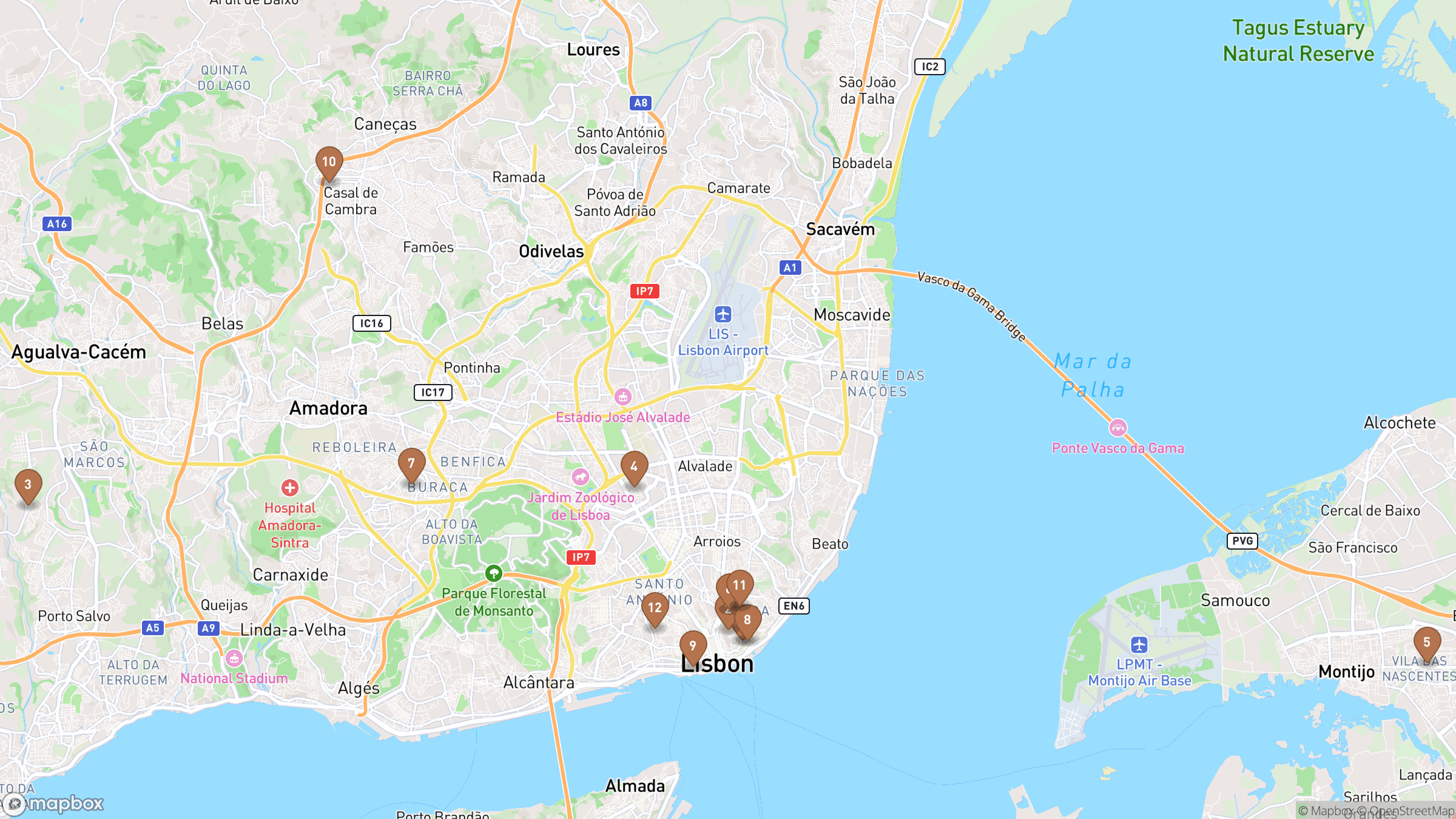
At-a-Glance
Belém and the Age of Discoveries
- Jerónimos Monastery
- Belém Tower
- Monument to the Discoveries
- Maritime Museum
- Belém Cultural Center
Medieval Alfama and Castelo Hill
- Castelo de São Jorge
- Miradouro das Portas do Sol
- Miradouro de Santa Luzia
- Igreja de São Vicente de Fora
- Mouraria
Fado Tradition
- Alfama fado houses
- Bairro Alto venues
- Mouraria tascas
Baixa, Chiado, and Central Viewpoints
- Praça do Comércio
- Rua Augusta
- Elevador de Santa Justa
- Carmo Convent
- Miradouro de São Pedro de Alcântara
Lisbon in 3 Days: Hills, Fado, and Atlantic Light
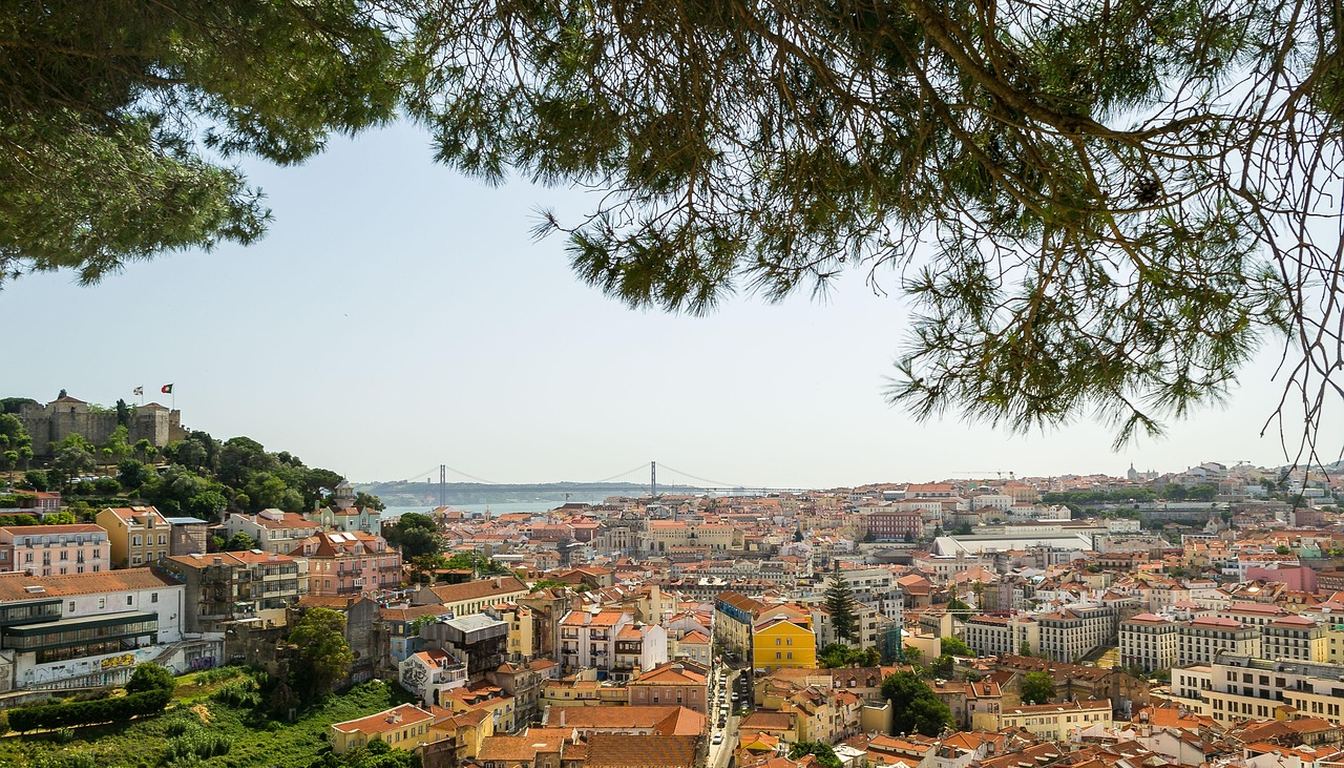
Lisbon reveals itself across three days as a city shaped by steep hills, maritime heritage along the Tagus estuary, and the melancholic vocals of fado singers that seem to echo from every neighborhood bar. This itinerary balances waterfront monuments, medieval lanes, miradouros, and evening cultural experiences to capture the essence of Portugal’s Atlantic capital. The challenge and reward of exploring Lisbon lie in navigating its topography—where cobbled inclines lead to sweeping viewpoints and centuries-old neighborhoods preserve layers of Moorish, medieval, and Age of Discoveries history.
A well-structured three-day visit allows you to experience the maritime grandeur of Belém, the organic maze of Alfama’s medieval streets, and the rational grid of post-earthquake Baixa.
Evening fado performances provide cultural depth, while miradouros scattered across the hills frame the red rooftops and Atlantic light that define the city’s visual identity. The rhythm alternates between monument visits and wandering—a balance that’s necessary, since Lisbon’s hills punish rushed sightseeing.
Understanding Lisbon’s Topography and Transport
Lisbon is built on a series of steep hills, and many of its central streets are paved with small cobblestones, which can make walking challenging on inclines and when surfaces are wet. The city’s topography shapes every visitor’s experience—planning your route to minimize exhausting backtracking while still capturing the essence of different neighborhoods requires understanding elevation and transport options. Comfortable, non-slip footwear isn’t optional.
The integrated public transport network includes metro, buses, trams, funiculars, and suburban trains. Tram 28 cuts through Graça, Alfama, Baixa, and Estrela, passing residential courtyards and tile-covered facades. The Lisboa Card or rechargeable Viva Viagem card simplifies multi-mode transport across the city, allowing you to combine metro journeys with tram rides and funicular ascents without managing individual tickets.
Suburban trains from Cais do Sodré provide frequent services to coastal towns such as Cascais, making it practical to include a seaside visit within a three-day Lisbon stay. The metro covers major districts efficiently, but the charm of trams and funiculars lies in how they navigate the hills while offering glimpses into neighborhoods. Funiculars such as Elevador da Glória and Elevador da Bica function as vertical shortcuts, saving energy for exploring once you reach higher elevations.
Understanding the city’s layout helps you cluster visits by geography rather than checklist. Belém forms a western waterfront zone best tackled in one dedicated stretch. Alfama and Castelo occupy the eastern hills above the riverfront. Baixa and Chiado sit centrally at mid-elevation, connecting easily to both waterfront and hilltop neighborhoods. You see it in every neighborhood—medieval Alfama, earthquake-rebuilt Baixa, Age of Discovery grandeur in Belém.
Day One: Belém and the Age of Discoveries
Plan a full day for Belém to group the Jerónimos Monastery, Belém Tower, and surrounding waterfront monuments in one westward journey. The Jerónimos Monastery and Tower of Belém are inscribed together as a single UNESCO World Heritage property commemorating Portugal’s maritime expansion, reflecting their shared historical role in the Portuguese Age of Discoveries. These monuments sit along the Tagus estuary, where the river opens toward the Atlantic Ocean—a broad waterfront that historically connected Lisbon to maritime routes spanning Africa, Asia, and the Americas.
 Photo: Berthold Werner / Wikimedia Commons, CC BY-SA 4.0 (cropped)
Visit early morning or later in the day to avoid peak crowding and longer queues at these major attractions. The Jerónimos Monastery’s Manueline architecture—characterized by nautical motifs, elaborate stone carving, and references to maritime exploration—stands as the era’s architectural high point. The cloisters provide a contemplative space where you can appreciate the craftsmanship away from the busier church interior. Adjacent cultural spaces include the Archaeology Museum and Maritime Museum, both offering context for Portugal’s seafaring history.
The Belém Tower, a fortified structure originally built to defend the Tagus entrance, sits closer to the water’s edge. Its decorative elements blend military function with the same Manueline style found in the monastery. Walking between these monuments along the riverside promenade takes roughly 20 minutes and passes the Monument to the Discoveries, a 20th-century structure celebrating the navigators and explorers who departed from this waterfront.
Allow time beyond the two main monuments to explore the wider Belém area. The Belém Cultural Center hosts contemporary exhibitions and performances, while the gardens and green spaces provide rest points between monument visits. Jerónimos Monastery ticket information helps you plan entry times that align with the rest of your day in this western district. The neighborhood’s cafés are synonymous with pastéis de Belém, a custard tart recipe closely guarded by local establishments.
Sunset along the Tagus in Belém offers a different perspective on the waterfront. The light shifts all day—morning softens the river, afternoon warmth hits the stone buildings, sunset turns everything orange. Returning to central Lisbon from Belém by tram or bus gives you a sense of the city’s scale and the distance maritime expeditions once crossed from these very docks.
Day Two: Medieval Alfama and Castelo Hill
Alfama is one of the oldest districts in Lisbon, largely surviving the 1755 earthquake with its medieval street pattern intact. The neighborhood’s narrow lanes and alleys reflect the city’s earlier Moorish and medieval periods, contrasting sharply with the planned reconstruction visible elsewhere in the capital. Walking these streets immerses you in an organic, unplanned urbanism where orientation requires attention to landmarks rather than grid logic.
 Photo: Jakub Hałun / Wikimedia Commons, CC BY 4.0 (cropped)
Use tram 28 or funiculars to help manage the steep hills while experiencing traditional neighborhoods. The tram creaks through tight corners and past tiled facades, offering glimpses into residential courtyards and local shops. Starting from the Castelo de São Jorge at the hilltop gives you a strategic overview of the district below and allows you to descend gradually rather than face a strenuous uphill climb. The castle grounds offer panoramic views across the city, the Tagus, and the red rooftops that cascade down the hillside.
Miradouros throughout the area showcase the city’s topography and the interplay of light across rooftops and water. Miradouro das Portas do Sol and Miradouro de Santa Luzia provide classic perspectives on Alfama’s tile-covered buildings and the river beyond. These viewpoints are not merely photo opportunities—they function as social spaces where locals gather, adding a lived dimension to the cityscape. Descending from the miradouros into Alfama’s alleys, you encounter small squares, neighborhood taverns, and washing hanging between buildings.
The contrast between the Castelo hill’s organic medieval layout and Baixa’s rational grid illustrates how Lisbon layers historical periods in its urban fabric. Central areas such as Baixa were rebuilt after the 1755 earthquake according to a planned grid layout under the direction of the Marquês de Pombal, while Alfama’s survival meant its tangled streets remained largely unchanged. This juxtaposition allows you to experience two distinct urban planning philosophies within a short walk.
Afternoon exploration can extend to Mouraria, another historic neighborhood adjacent to Alfama where narrow streets and multicultural influences add depth to the medieval core. The Igreja de São Vicente de Fora, a monastery church with impressive tilework and royal tombs, sits at the eastern edge of these hill districts. Late afternoon light enhances the weathered textures of Alfama’s walls and cobblestones, and the neighborhood transitions into evening as fado houses prepare for performances.
For a full multi-day plan in Paris, see Best things to do in Paris in 3 days: a curated itinerary.
Evening Cultural Experience: Fado Tradition
Fado developed as an urban song tradition in 19th-century Lisbon and is now recognized by UNESCO as Intangible Cultural Heritage, reflecting its evolution from working-class taverns to a symbol of Portuguese identity. Traditional performances are concentrated in historic neighborhoods such as Alfama, Mouraria, and Bairro Alto, each offering different atmospheres and venue styles. Alfama feels like you’ve wandered into a neighborhood bar by accident; Bairro Alto feels like an event you’ve paid to attend. Multiple venues across these districts promote the tradition, with performances typically beginning around 21:00 or 22:00 and continuing late into the night.

Attending a fado performance provides insight into a cultural practice rooted in Lisbon’s maritime and urban history. The music conveys saudade—a complex Portuguese concept blending nostalgia, longing, and melancholy—through vocals accompanied by Portuguese guitar and classical guitar. Fadistas (fado singers) perform in intimate settings where silence between songs reflects audience respect for the art form. Some venues operate as restaurants with fixed menus, while others function as more informal taverns where fado alternates with conversation.
Alfama’s smaller tascas feel more intimate and less touristy, but expect fewer English speakers. Bairro Alto is easier to book and has wider menus—choose based on whether you want immersion or comfort. Mouraria, where fado singer Amália Rodrigues was born, also hosts performances that emphasize the tradition’s working-class origins. Pick based on what matters to you: smaller tascas feel more authentic, restaurants are easier to book, taverns are cheapest.
The experience of fado extends beyond the music itself to the ritual of performance—the way lights dim between songs, the moment of collective silence before applause, and the unspoken agreement among audience members to honor the emotional intensity of the tradition. This evening cultural element complements the daytime exploration of monuments and viewpoints, grounding your understanding of Lisbon in both its physical landscape and its intangible heritage.
Day Three: Baixa, Chiado, and Central Viewpoints
Baixa’s grid layout represents the planned reconstruction after the 1755 earthquake under the Marquês de Pombal, a rational response to urban destruction that created wide, straight streets organized by trade guilds. The contrast between this orderly grid and the organic hill neighborhoods illustrates Lisbon’s layered urban history—Enlightenment planning imposed on a site shaped by medieval growth. Walking Rua Augusta from the riverfront Praça do Comércio to Rossio Square demonstrates the district’s symmetry and the way Pombaline architecture unified building facades in disciplined rows.
 Photo: Luca Galuzzi (Lucag) / Wikimedia Commons, CC BY-SA 2.5 (cropped)
The Elevador de Santa Justa, a neo-Gothic iron lift, connects Baixa to the higher Carmo neighborhood and functions both as practical transport and viewpoint. From its upper platform, central Lisbon spreads below—the grid of Baixa, the ruins of the Carmo Convent (destroyed in the earthquake and preserved as a memorial), and the hills rising beyond. The Carmo Convent’s roofless nave serves as an archaeological museum and a reminder of the earthquake’s devastation, its skeletal Gothic arches open to the sky.
Chiado, adjacent to Baixa at a slightly higher elevation, offers a cultural and commercial district where historic cafés, bookshops, and theaters reflect Lisbon’s literary and intellectual history. The neighborhood’s association with Portuguese poets and writers adds a different dimension to the maritime and religious narratives emphasized in Belém and Alfama. Browsing the shops along Rua Garrett or sitting in century-old cafés provides a slower-paced counterpoint to monument-focused touring.
Viewpoints accessible from central areas offer perspectives on the city’s relationship with the Tagus and Atlantic. The Miradouro de São Pedro de Alcântara, reached via the Elevador da Glória funicular from Restauradores, provides westward views over Baixa toward the castle and river. The garden setting and tiled map panel orient you to the city’s geography. The connection between central districts and waterfront or hill neighborhoods functions efficiently via public transport, allowing you to move between Baixa’s grid and Alfama’s maze or descend to the riverfront for evening walks.
Free admission Sundays are crowded and unpredictable; pay full price and use the time you save to wander neighborhoods instead. The National Museum of Ancient Art, Museu Calouste Gulbenkian, and the Azulejo Museum each provide focused collections that deepen your understanding of Portuguese art and decorative traditions. Scheduling these cultural visits around your energy level—mornings for intensive touring, afternoons for slower museum wandering—helps maintain pace across three days.
For practical transit detail in Rome, see How to get around Rome using public transport: a complete guide.
Optional Side Trips: Sintra or Cascais
Sintra, located in the hills northwest of Lisbon, is a UNESCO World Heritage Cultural Landscape known for its palaces and gardens—a complex destination often recommended as a full-day excursion from Lisbon. The designation recognizes not a single monument but an assemblage of palaces, villas, and gardens within a wider historic and natural setting.
Sintra is an assemblage—Pena Palace, Moorish Castle, Quinta da Regaleira—that sprawls across forested hills. Each deserves at least two hours.
Frequent trains from Rossio station reach Sintra in approximately 40 minutes, and local buses connect the train station to hilltop palaces. Multiple palaces scatter across forested hills, so rushing through all of them in half a day is pointless. Pick two or three and spend the full day. The microclimate’s mist and greenery contrast with Lisbon’s open Atlantic light, and the concentration of Romantic-era architecture makes Sintra a distinct landscape experience.
Cascais, a coastal town reachable by direct suburban train from Lisbon’s Cais do Sodré station in around 30 to 40 minutes, offers Atlantic coastal scenery and a more relaxed alternative to palace-touring. The town retains a fishing village character alongside resort development, and the coastal promenade connects to nearby beaches and rocky headlands. The Boca do Inferno cliff formation and the coastal path toward Guincho Beach provide dramatic Atlantic views. Cascais functions well as a half-day excursion or a more leisurely full-day escape from urban exploration.
Choosing between Sintra and Cascais depends on whether you prioritize architectural and garden experiences or coastal atmosphere. The 25 de Abril Bridge connects Lisbon to the south bank of the Tagus and is a major crossing used by road and rail traffic, opening access to destinations such as the Cristo Rei statue viewpoint or further south to the Setúbal Peninsula. Either Sintra or Cascais complements Lisbon’s urban hills and viewpoints with different landscape experiences—forested hilltop palaces or Atlantic beaches—and both integrate smoothly into a three-day itinerary that dedicates two days to Lisbon proper.
Practical Considerations for Three Days
Because of Lisbon’s steep hills and cobbled pavements, wearing comfortable, non-slip footwear is essential—underestimating the physical demands of the topography leads to fatigue that diminishes enjoyment. Pacing your days to alternate intensive walking with transport-assisted movement or seated cultural experiences helps maintain energy. Some areas can be challenging for accessibility due to steep inclines and uneven cobblestone surfaces, and travelers with mobility concerns should research specific routes and available transport options in advance.
Visit major Belém attractions early in the morning or later in the day to avoid crowding and longer queues at peak midday hours. Summer and shoulder seasons see higher visitor volumes, and clustering your Belém visit in one dedicated day rather than splitting it across multiple trips reduces total travel time and transport complexity. The Lisboa Card or Viva Viagem card streamlines access to multiple transport modes, and understanding which neighborhoods connect via metro versus tram or bus helps you plan efficient routes.
Visit major Belém attractions early in the morning or later in the day to avoid crowding and longer queues at peak midday hours.
Lunch doesn’t start until 14:00 or later, and dinner rarely begins before 20:00. Adapting to local schedules means restaurants are less crowded if you dine when locals do, and it allows mid-afternoon breaks during the hottest part of the day. Traditional tascas (neighborhood taverns) offer straightforward Portuguese cooking at lower prices than tourist-focused restaurants, and seeking these out in residential areas adds authenticity to the experience.
Weather considerations matter year-round. Lisbon’s Atlantic climate brings mild, wet winters and hot, dry summers. Spring and autumn offer the most comfortable walking conditions, though even summer’s heat is tempered by proximity to the river and ocean. Rain makes cobblestones slippery, reinforcing the importance of appropriate footwear. Evening temperatures can drop more than expected given daytime warmth, and having a layer for late-night fado or waterfront walks adds comfort.
Three days in Lisbon requires accepting you cannot see everything. Prioritizing experiences that align with your interests—whether maritime history, fado tradition, architectural contrasts, or simply absorbing the quality of light from miradouros—creates a more satisfying visit than attempting an exhaustive checklist. Respecting the city’s hills and distances shapes a realistic, enjoyable three-day structure.
Making the Most of Atlantic Light and Lisbon’s Character
The light shifts all day. Morning softens the river, afternoon warmth hits the stone buildings, sunset turns everything orange. Time your viewpoint visits accordingly. Three days allows time to experience different neighborhoods at different times of day, capturing how light transforms Alfama’s narrow alleys, enhances Belém’s monumental scale, or frames the city from elevated miradouros. This atmospheric dimension separates Lisbon from other European capitals—the constant presence of water and Atlantic air creates luminosity that photographers and painters have long celebrated.
Balancing structured monument visits with unstructured exploration of hill neighborhoods and viewpoints ensures you experience both Lisbon’s documented heritage and its everyday character. The rhythm of wandering Alfama or Mouraria without a fixed destination, pausing at miradouros when they appear, and observing neighborhood life in small squares complements the focused attention required at Belém’s UNESCO sites or during evening fado performances. The combination of planned Baixa and organic Alfama illustrates how Lisbon layers historical periods in its urban fabric, each neighborhood telling part of a larger story about maritime power, seismic disaster, and cultural resilience.
Evening fado, waterfront walks, and hilltop viewpoints together capture the city’s maritime and cultural identity. Fado’s lyrics about loss and displacement reflect the same melancholy you feel standing in Belém watching boats that no longer sail to empire. Go to a miradouro at sunset, then to a fado bar at night. The connection between light and melancholy becomes obvious. Skip trying to tick off every monument. Instead, spend an afternoon getting lost in Alfama, catch sunset from at least one miradouro, and go to fado. That’s Lisbon.
Instead, spend an afternoon getting lost in Alfama, catch sunset from at least one miradouro, and go to fado.
Three days show you Belém’s ships, Alfama’s medieval lanes that survived the earthquake, and fado bars where locals still drink. Everything is vertical and wet. The city’s vertical topography demands effort, but the reward lies in viewpoints that reveal how Lisbon organizes itself between river and sky. The contrast between earthquake-planned rationality and organic medieval lanes offers lessons in urban resilience and adaptation. Fado’s vocals provide the soundtrack to evenings that follow days spent navigating cobbled inclines and monumental waterfronts. The city’s identity—Atlantic, melancholic, luminous—becomes tangible across three days of deliberate exploration and unplanned discovery.