How Overtourism Is Reshaping European Destinations in 2026
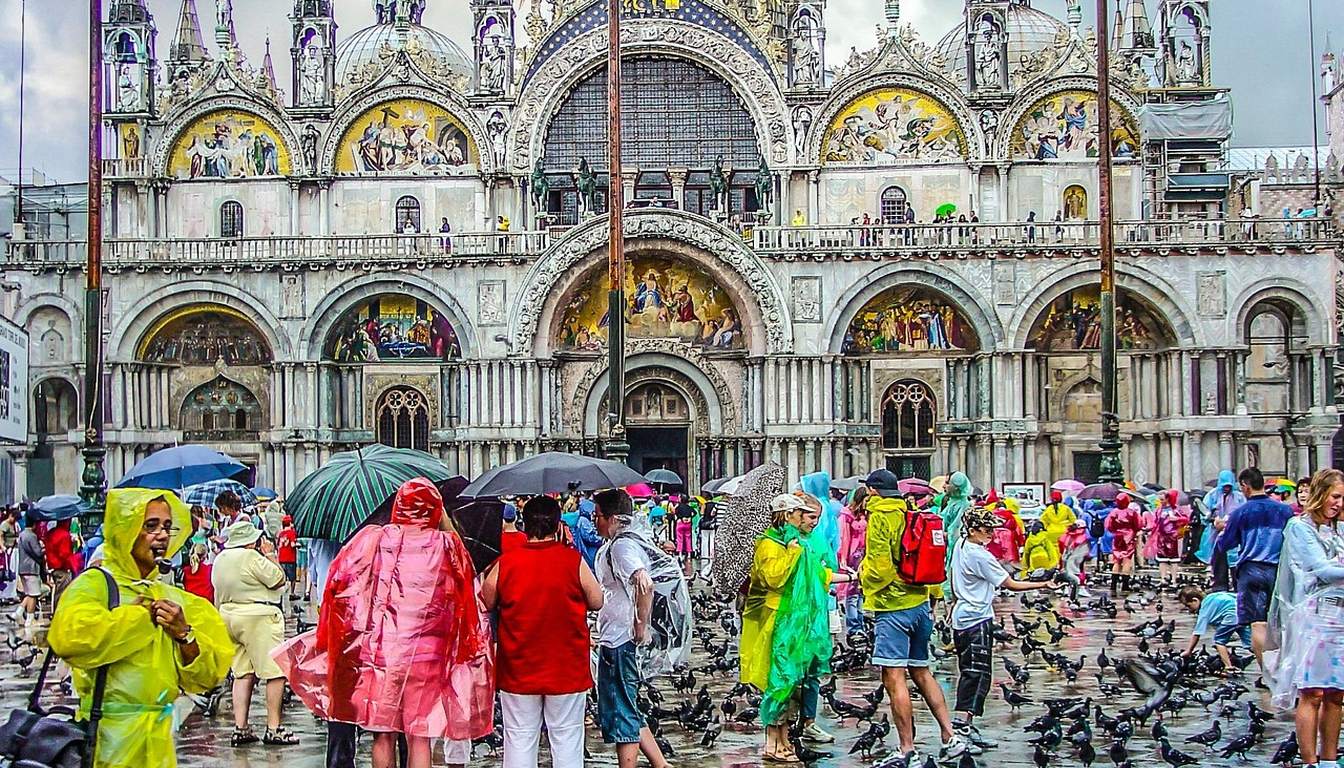
Overtourism is reshaping European destinations in 2026 as arrivals surge 5.6% post-pandemic, concentrating visitors in Barcelona, Venice, and other historic centers while rural regions lag. EU institutions and local governments are deploying caps, fees, rental restrictions, and infrastructure investments to redistribute demand across time and space—marking a shift from symbolic gestures to coordinated, structural policy response.
International arrivals to Europe have climbed 5.6% in early 2026, renewing pressure on historic cities and coastal regions already strained by concentrated tourist flows. As EU institutions test new regulatory tools and destinations implement caps, the balance between welcoming visitors and protecting local life has never been more urgent.
The post-pandemic rebound has exceeded many forecasts, with visitor numbers and overnight stays returning to—and in many cases surpassing—pre-2020 levels. Yet this growth remains stubbornly uneven, funneling millions of travelers into the same narrow set of destinations while rural areas, mountain regions, and peripheral towns struggle to attract even a fraction of that attention.
For residents of Venice’s calli, Barcelona’s Gothic Quarter, or Dubrovnik’s old town, the recovery feels less like renewal and more like a return to crisis.
What makes 2026 different is not the existence of overtourism—European destinations have wrestled with that reality for more than a decade—but the policy response. EU lawmakers, local governments, and industry stakeholders are deploying coordinated strategies that go beyond symbolic gestures, testing caps, fees, rental restrictions, and infrastructure investments designed to redistribute demand across time and space.
The question is no longer whether action is needed, but whether these measures can shift structural patterns fast enough to protect both heritage and the wages of hotel staff, restaurant workers, and shop owners who depend on stable, year-round demand.
The numbers behind Europe’s 2026 tourism surge
International tourist arrivals to Europe rose by approximately 5.6% and overnight stays by 5.5% in early 2026 compared with the same period in 2025, according to data from the European Travel Commission. That sustained growth signals continued momentum beyond pandemic recovery and confirms that global demand for European destinations remains robust despite geopolitical uncertainty and economic headwinds elsewhere.
| Metric | Value |
|---|---|
| International tourist arrivals to Europe (early 2026 vs. 2025) | +5.6% |
| Overnight stays in Europe (early 2026 vs. 2025) | +5.5% |
| Barcelona’s planned phase-out of tourist apartment licenses | by 2028 |
| Amsterdam short-term rental limit in city center areas | 30 nights per year |
But aggregate statistics mask critical imbalances. Demand remains heavily concentrated in a limited number of hotspots—historic city centers, Mediterranean coasts, and specific heritage monuments—creating uneven pressure across the continent. A handful of cities and coastal zones absorb a disproportionate share of arrivals, while vast swaths of rural and peripheral Europe see little change in visitor flows.
Pre-2020 overtourism patterns have returned and intensified. Visitor numbers and behaviors strain local environments, infrastructure, housing markets, and community cohesion. The rebound highlights structural imbalances in European tourism, with some destinations operating beyond sustainable capacity while rural and peripheral regions see little benefit from the sector’s growth.
The data underscores a fundamental challenge: Europe’s tourism ecosystem is not simply recovering—it is amplifying existing distortions. Without deliberate intervention, the 5.6% growth figure will translate into more crowding in places that can least afford it and continued neglect of regions eager to welcome travelers.
What overtourism costs: housing, infrastructure and heritage under pressure
Overcrowding in high-demand European destinations drives up housing costs, pricing out local residents and converting long-term rentals into short-term tourist accommodations. In cities such as Barcelona, Lisbon, and Prague, entire neighborhoods have seen residential stock shrink as property owners pivot to platforms offering higher nightly returns.
Young professionals, families, and service workers find themselves pushed to peripheral suburbs or forced out of urban cores altogether.
Public services—transport, waste, water—face capacity constraints funded by local taxpayers. Yet tourism revenues flow unevenly. Heritage sites suffer accelerated degradation under visitor pressure.
Cultural and natural environments bear the physical costs. Stone steps wear down, frescoes fade under constant exposure to humidity and breath, coastal dunes erode as day-trippers trample vegetation. The very attributes that attract visitors risk being diminished by the volume of visitation.
Social tensions grow as residents in overtouristed neighborhoods experience noise, loss of local commerce, and erosion of community identity, fueling protests and calls for tighter controls. In cities from Amsterdam to Florence, neighborhood associations organize against what they see as the commodification of public space and the displacement of community life by transient consumption.
For context on how some destinations are managing access to protect heritage while welcoming visitors, compare access options for heritage sites that have implemented reservation systems.
EU strategies to curb overtourism and spread demand
European lawmakers have backed a tourism strategy aimed at spreading travel demand more evenly across the EU, redirecting visitors to lesser-known rural, mountain, and remote regions. The approach recognizes that overtourism is not an inevitable consequence of prosperity but a distributional failure—too many visitors in too few places at too few times of year.
- Short-term rental oversight: Tighter caps on rental nights, host licensing requirements, and local zoning rules to protect residential housing stock.
- Infrastructure investments: Expanded cross-border night train services and integrated ticketing combining rail, air, and maritime travel to ease access to alternative destinations.
- Niche tourism promotion: Gastronomy, wine routes, heritage trails, cycling, and regenerative tourism to diversify demand and reduce pressure on major sites.
- Tourism skills card: Improved job mobility and fair labor conditions as the sector transitions to sustainable operational models.
Promotion of niche tourism forms—gastronomy, wine routes, heritage trails, cycling, regenerative tourism—aims to diversify demand and reduce pressure on the most visited sites. By encouraging travelers to engage with experiences rooted in local food systems and direct relationships with producers, policymakers hope to create economic incentives for communities outside traditional hotspots.
A proposed tourism skills card seeks to improve job mobility and address staffing gaps as the sector transitions to more sustainable operational models. Linking workforce development with sustainability goals reflects recognition that tourism transformation requires not only visitor redistribution but also fair labor conditions and professional pathways for those who serve travelers.
Local responses: caps, fees, and community-first regulation
In the decade before the pandemic, rapid growth in low-cost flights and international arrivals forced many European destinations to experiment with visitor caps, access fees, and restrictions in historic centers and natural sites. Venice introduced entry fees for day-trippers, Cinque Terre limited trail access, and cities from Dubrovnik to Hallstatt imposed cruise-ship caps and time-slot entry systems at heritage attractions.
Post-2020 recovery has accelerated local regulatory innovation. Cities now use reservation systems, time-slot entry, and seasonal closures to manage crowd flows at heritage attractions. Barcelona has tightened rules on tourist apartments in the Gothic Quarter and Gràcia. Florence restricts access to certain piazzas during peak hours.
Amsterdam bans new tourist accommodations in the historic center entirely.
For travelers planning visits to sites with controlled access, understanding reservation options for popular attractions helps avoid disappointment and supports orderly visitation.
The Balearic Islands and Greek island towns now charge waste levies and apply differential pricing—higher rates for day-trippers, discounts for multi-night stays—to fund infrastructure and shift toward longer visits.
Community consultation and participatory planning are increasingly central to local tourism strategies, recognizing that sustainable models require resident buy-in and equitable distribution of benefits. Mayors, neighborhood councils, and civic groups are demanding seats at the table when tourism policies are drafted, insisting that the needs of year-round residents take precedence over short-term revenue maximization.
The short-term rental challenge: housing, neighborhoods, and new rules
European institutions explicitly identify the rapid growth of short-term rentals as a driver of housing pressure, neighborhood change, and tourism concentration. Platforms that once promised supplemental income for occasional hosts have, in many cities, become engines of housing financialization, with professional operators managing portfolios of tourist-only apartments.
New frameworks under consideration allow municipalities to limit rental nights, require clearer host categories (commercial versus occasional), and implement local authorization systems. The EU strategy to address overtourism includes these tighter oversight mechanisms, potentially limiting the number of nights properties can be rented and allowing local zoning rules to manage tourism flows more effectively.
Cities such as Barcelona, Amsterdam, and Florence have already tightened rules, banning tourist apartments in historic cores or capping annual rental days to protect residential housing stock. In Barcelona, the city council has announced plans to phase out all tourist apartment licenses in certain zones by 2028. Amsterdam prohibits short-term rentals entirely in parts of the center and limits them to 30 nights per year elsewhere.
Florence requires explicit permits and enforces strict caps on density.
Travelers booking accommodation in 2026 must navigate patchwork local regulations, with compliance checks, licensing requirements, and penalties for illegal rentals becoming more common. Book only from verified platforms that display local licensing numbers—it’s the safest way to avoid fines and ensure your stay isn’t canceled mid-trip.
Local governments and EU regulators now require platforms to share data and block unlicensed listings.
The goal is not to eliminate short-term rentals but to rebalance their impact, ensuring tourism accommodations do not hollow out residential communities or displace long-term renters. The debate reflects broader tension between tourism as economic opportunity and tourism as threat to urban livability.
How travelers can help: timing, transport, and destination choices
- Travel off-season: Visit in April, October, or November rather than July or August to reduce infrastructure strain and enjoy lower costs and shorter queues.
- Extend your stay: Longer visits in fewer destinations reduce pressure and allow deeper local engagement than rapid city-hopping.
- Use rail and night trains: Long-distance and night trains to secondary cities reduce reliance on short-haul flights into overcrowded hubs.
- Choose lesser-known destinations: Lecce’s baroque squares, Gjirokastër’s stone mansions, or the Via Francigena walking routes offer cultural depth without Venice’s 30,000 daily visitors.
Using long-distance and night trains supported by multi-modal ticketing options helps reach a broader set of destinations, lessens reliance on flights into overcrowded hubs, and lowers environmental impact. Night trains connecting Vienna, Munich, Paris, Rome, and secondary cities across Central and Southern Europe have expanded in recent years, offering practical alternatives to short-haul flights and allowing travelers to wake up in towns that rarely appear on mass-tourism itineraries.
EU and expert guidance encourages visitors to major European hotspots to favor off-season travel, which spreads demand throughout the year and reduces strain on local communities and infrastructure. Traveling in April, October, or November rather than July or August means lower accommodation costs, shorter queues, more availability at popular sites, and a better chance of experiencing destinations as living cities rather than open-air theme parks.
For those planning visits to major attractions such as Versailles, exploring flexible access options can help align timing with less crowded periods.
The Pyrenees, Transylvania, and southern Andalusia have trail infrastructure and modest lodging without Barcelona or Madrid’s overcrowding. The Camino del Norte passes through smaller Basque towns with fewer pilgrim hostels but better access to local sidra bars and family-run restaurants. The Amalfi Coast has 10,000+ daily visitors on a 50km stretch; Basilicata’s Pollino coast has pristine anchorages and one main road to manage crowds.
Avoid eating on cathedral steps in Barcelona’s Gothic Quarter. Visit Girona or Tarragona instead—both have Roman ruins and medieval quarters with a fraction of the crowds.
Support local businesses and avoid peak hours at major sites. Remember: public squares are for residents first, tourists second.
Debunking myths: what overtourism is (and isn’t)
Myth: Overtourism affects only a few famous cities.
Reality: EU and sector analyses describe overtourism as widespread across heritage cities, coastal resorts, and protected natural areas, with knock-on effects on housing, services, and ecosystems beyond the most-photographed destinations. The problem is not confined to Venice or Barcelona; it touches dozens of mid-sized cities, island communities, and mountain valleys across the continent.
Myth: The solution is simply to reduce total tourist numbers to Europe.
Reality: Current policy focuses on redistributing visitors in time and space—promoting off-season travel, alternative destinations, and niche products—so benefits and pressures spread more evenly. The objective is not fewer travelers but smarter distribution, ensuring that tourism revenues and impacts are shared across regions and seasons rather than concentrated in a handful of hotspots during a handful of weeks.
Myth: Short-term rentals have little to do with overtourism.
Reality: Rapid growth of platforms converting residential housing into tourist accommodation is identified as a key driver of neighborhood pressure and housing unaffordability. European institutions explicitly link short-term rental proliferation to displacement, gentrification, and the erosion of community cohesion in overtouristed areas.
Myth: Travelers cannot influence overtourism patterns.
Reality: EU guidance emphasizes that individual choices on when, where, and how to travel directly affect crowding, infrastructure strain, and regional economic distribution. Millions of independent decisions—whether to visit Bruges in August or November, whether to fly into Rome or take a train to Lecce—aggregate into systemic patterns that either reinforce or mitigate overtourism.
Looking ahead: building resilient, balanced European tourism
The 2026 data confirming rapid visitor growth underscores the urgency of shifting from volume-focused tourism to quality, sustainability, and equitable regional distribution. Post-pandemic recovery has brought a rapid rebound in arrivals and overnight stays, renewing attention to overtourism risks if demand remains concentrated in a small number of destinations, as reported by the European Travel Commission.
On paper, these strategies are sound. In practice, enforcement is inconsistent, and platforms find loopholes. Travelers and operators who expect overnight change will be disappointed.
Success will require coordination across EU institutions, national governments, local authorities, industry stakeholders, and travelers themselves—no single actor can rebalance European tourism alone. The policies emerging from Brussels set frameworks, but implementation depends on municipal enforcement, industry compliance, and visitor cooperation.
Fragmentation and inconsistency undermine effectiveness; coherence and shared purpose amplify impact.
Investments in rail connectivity, digital infrastructure for visitor management, and skills development for tourism workers are critical enablers of more sustainable models. European policymakers are considering expanding cross-border night train services and integrated ticketing systems that combine rail, air, and maritime travel, recognizing that infrastructure shapes behavior and that alternatives must be convenient, affordable, and reliable to shift demand.
Monitoring and adaptive management will be essential. Standardized metrics, real-time data, and transparent reporting can help destinations identify thresholds, adjust policies, and communicate limits to visitors. Without empirical grounding, policy risks becoming performative rather than effective, imposing costs on residents and visitors alike without delivering meaningful improvement.
The ultimate goal is a European tourism sector that benefits local communities, preserves cultural and natural heritage, and remains attractive to international visitors over the long term. For instance, tiered ticket pricing at monuments—cheaper for residents, higher for tourists—funds maintenance while keeping locals engaged.
European institutions are linking sustainable tourism policies with labor issues, for example by proposing a tourism skills card to improve job mobility and address staffing gaps while the sector adapts to new, more sustainable models.
Overtourism in 2026 is not a crisis to be solved with a single intervention. It is a structural challenge requiring coordinated, sustained effort across scales and sectors. The regulatory tools, infrastructure investments, and behavioral shifts now taking shape offer pathways toward balance—but only if pursued with persistence, transparency, and genuine commitment to serving the needs of communities, heritage, and visitors alike.