Sustainable Transport Choices in European City Tourism
As European cities face the dual challenge of welcoming millions of visitors while meeting ambitious climate targets, sustainable transport has moved from aspirational to essential. Cities that cut car access saw visitor satisfaction rise, not fall—a shift that surprises operators still bracing for backlash.
The question is no longer whether cities should prioritise sustainable transport, but how quickly they can implement it at scale. Barcelona’s T-mobilitat and Copenhagen’s Rejsekort work differently but share one trait: they bundle metro, bus, bike share, and regional trains into a single account. Copenhagen’s system even flags when your route is faster by bike than by bus.
The Policy Shift: From Car-Centric to Multimodal Tourism
European urban transport policy has pivoted strongly towards sustainable and smart mobility since the late 2000s, with EU institutions encouraging public transport, multimodality, and demand management to address congestion and climate impacts. This represents a fundamental departure from decades of car-focused planning that shaped post-war European cities.
The European Parliament’s research demonstrates that increasing the share of public transport compared with private car use is now recognised as a more sustainable urban transport option, reducing both emissions and congestion across European cities. Policy frameworks have evolved from viewing tourists as a separate category to integrating visitor mobility into broader urban and regional transport strategies.
In summer, Barcelona’s metro nearly doubles ridership. Planners now budget capacity for tourists from day one, not as an afterthought.
Policy tools such as congestion pricing, low-emission zones, and reduced car parking availability are being deployed to encourage sustainable urban mobility and improve walkability. These measures send a clear market signal: driving a private car into a historic city centre is becoming both more expensive and less convenient than multimodal alternatives.
Public Transport as the Backbone of Sustainable Urban Tourism
In most European cities, public transport networks of trains, metros, trams, and buses offer extensive coverage and are generally the most sustainable way for visitors to move around urban areas. These systems carry the vast majority of daily urban trips and are designed to handle peak flows far more efficiently than private vehicles could manage.
European urban mobility strategies for tourism increasingly prioritise electrifying public transport fleets to decarbonise visitor mobility. Decarbonisation initiatives show how cities are replacing diesel buses with electric or hydrogen alternatives, while expanding tram and light rail networks that run on renewable electricity. The transition is happening faster than many observers expected, driven by falling battery costs and tightening air quality regulations.
Many cities provide integrated tickets or cards that combine public transport access with discounts on bike sharing or other sustainable services, enabling flexible multimodal journeys. A visitor to Paris buys one pass and switches between metro, buses, and Vélib’ bikes without fumbling for separate tickets.
Cities publish sustainable mobility guides—both online and in print—so visitors can plan low-carbon routes before arrival. Major tourist destinations are tailoring public transport service patterns to accommodate peak-season visitor flows while maintaining efficiency. Extended operating hours during summer festivals, additional tram cars on routes serving museums, and real-time crowding information help distribute demand more evenly.
Cities publish sustainable mobility guides—both online and in print—so visitors can plan low-carbon routes before arrival.
Visitors see far more of the city when they’re not hunting for parking or stuck in traffic jams. Tourists gain access to neighbourhoods beyond the historic core, while avoiding the stress of navigating unfamiliar streets or dealing with restricted traffic zones designed to keep cars out of pedestrian areas.
For a full multi-day plan in Paris, see Best things to do in Paris in 3 days: a curated itinerary.
Active Mobility: Walking and Cycling in City Tourism
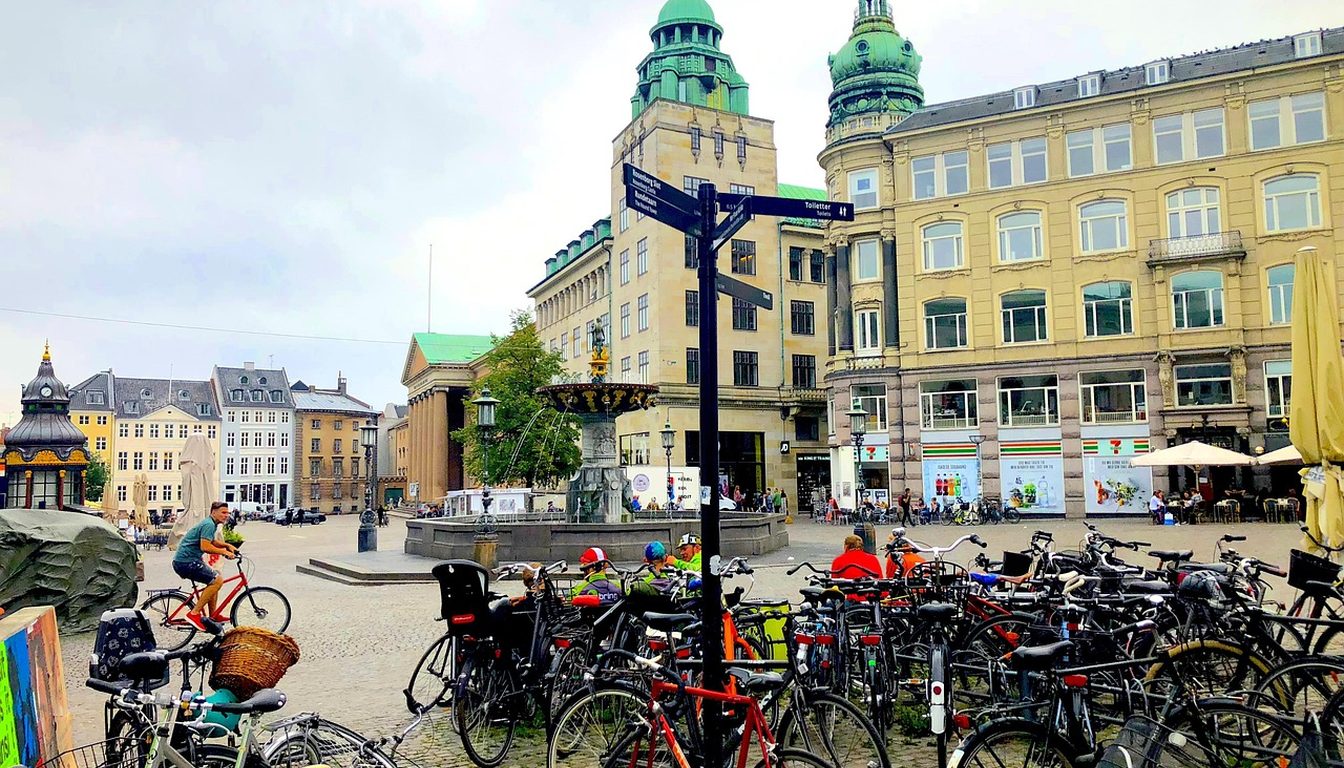
Copenhagen saw cycling tourism jump 40% between 2015 and 2023, driven by a protected bike network that tourists feel safe using from day one. Rome still struggles to make bike lanes work—cyclists share space with mopeds, and enforcement is weak.
Walking and cycling are culturally accepted and widely promoted ways of sightseeing across Europe, with many destinations marketing guided walking and riding tours that integrate local heritage. Contrary to the misconception that these modes suit only rural tourism, European tourism policy briefs explicitly recommend supporting active modes such as biking and walking to reduce tourism transport emissions at both metropolitan and neighbourhood scales. City centres are progressively redesigned to prioritise pedestrian zones and cycling infrastructure, making car-free exploration more practical for visitors.
In Amsterdam, Copenhagen, and increasingly in southern European cities such as Seville and Valencia, cycling infrastructure has evolved from painted lanes to physically separated networks. Seville and Valencia built the lanes fast, but enforcement is inconsistent—tourists still get honked at. Amsterdam’s 40-year head start shows.
Walking is how you stumble on the actual city—the bakery locals queue for, the hidden courtyard where residents sit. Maps miss these. The compact, human-scale design of historic quarters means that many key sights lie within fifteen minutes’ walk of each other. Pedestrianisation projects that began in the 1970s have accelerated, with entire districts now closed to cars during peak tourist seasons or permanently converted to foot traffic only.
The compact, human-scale design of historic quarters means that many key sights lie within fifteen minutes’ walk of each other.
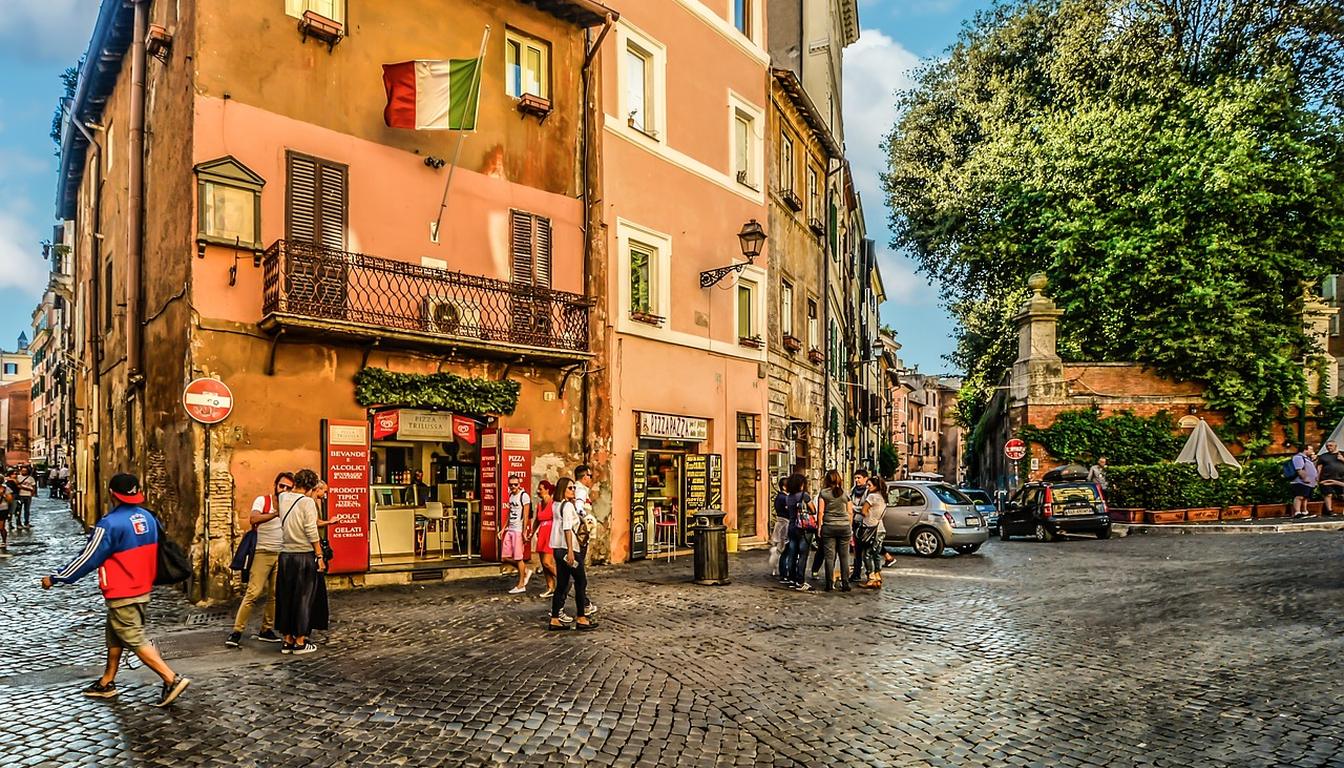
Medieval streets aren’t made for cars. Pollution eats away stone; traffic chokes the quiet that makes these places work.
For a full multi-day plan in Rome, see First-time visitor’s guide to Rome in 4 days.
Micro-Mobility and Sharing Schemes
EU guidance recommends e-scooters as part of the sustainable mobility mix. Bike sharing, e-scooters, and other micro-mobility options have been rapidly deployed across European cities, with programmes often designed to accommodate tourist flows alongside resident use.
Smart transport systems enable visitors to access real-time availability of shared vehicles and integrate payment across multiple micro-mobility platforms. A tourist in London can locate available bikes or scooters through a single app, pay with a credit card, and drop the vehicle at any authorised point near their destination. The friction of traditional rentals—opening hours, deposits, returning to a specific location—disappears.
Scooters piled up in plazas. Cities imposed parking zones and speed caps to stop the chaos.
The European Commission’s transition pathways document how these schemes specifically accommodate tourist flows, with seasonal fleet adjustments and station density increases near major attractions. Contrary to the myth that green transport options are rare and hard to access, EU-supported programmes show widespread deployment across cities of all sizes.
You take the train to the city, but the museum is 2 km away. A rented bike closes that gap without a taxi. This seamless intermodality was impossible a decade ago and is now routine across hundreds of European destinations.
Low-Emission Zones and Air Quality Management
Low-emission zones that restrict highly polluting vehicles are being progressively implemented across European cities, including tourist centres, to cut transport-related air pollution. These zones often cover historic city centres where tourist attractions are concentrated, directly affecting how visitors can arrive and circulate.
European cities use policy tools including low-emission zones and reduced car parking availability to encourage sustainable urban mobility and improve walkability. The deployment of LEZs challenges the misconception that driving a private car is always the most convenient way for tourists to get around, as congestion and access restrictions make multimodal options more practical.
Try driving a diesel car into Venice or Prague and you hit a fine—operators say it’s the biggest complaint from car-rental tourists.
Park-and-ride lots offer secure parking and shuttle buses, though reliability varies—some cities run them well, others treat them as afterthoughts. The message is clear: you can bring your car to the region, but not into the heart of the city.
London’s congestion charge faced a backlash from business owners, but air improved and tourism stayed strong—Milan and Stockholm copied it. Heritage cities particularly vulnerable to pollution damage—Venice, Florence, Prague—have been aggressive adopters, recognising that long-term preservation of cultural assets depends on reducing vehicle emissions in confined historic quarters.
Rail as the Sustainable Long-Distance Option
Rail beats driving for long trips—cheaper, faster, and you can work the whole way. Most operators now bundle rail into package itineraries.
European tourism policy briefs recommend shifting visitors towards rail at long-distance, regional and metropolitan scales to reduce carbon footprints. High-speed rail networks connect major tourism hubs, while regional services provide sustainable access to secondary destinations and rural areas. The expansion of high-speed corridors over the past three decades has made rail competitive with short-haul flights across much of Western and Central Europe, with journey times between many major cities now under four hours.
Planning documents emphasise that tourist transport systems should provide multimodal, energy-efficient and carbon-neutral options, with rail forming the backbone of intercity connectivity. A visitor exploring Versailles from Paris, for example, can reach the palace by regional train in under an hour, avoiding both the environmental cost and logistical headache of driving and parking near a major attraction.
Rail’s environmental advantage stems from electrification and high occupancy rates. European trains increasingly run on renewable electricity, and even diesel regional services emit far less per passenger-kilometre than private cars or coaches. The experience is also qualitatively different: visitors can work, read, or simply watch the landscape pass, arriving refreshed rather than stressed from navigating motorway traffic.
Interrail passes sold 50% more tickets in 2023; millennials use them to hit 5 countries in 2 weeks without flying.
Practical Guidance for Visitors
Take the metro, tram, and bus instead of renting a car—you’ll save money, avoid parking stress, and see the real city. European metro, tram, and bus systems are comprehensively mapped, with multilingual signage and real-time journey planners that remove much of the intimidation factor for first-time users.
Look for integrated tickets or cards that combine public transport access with discounts on bike sharing or other sustainable mobility services to make multimodal city travel easier. Tourist offices and transport authorities typically offer day passes or weekly cards that provide better value than single tickets while encouraging visitors to rely on public systems throughout their stay.
Before travelling, check city or regional information portals for maps and guides to walking routes, cycling paths, and micro-mobility options so you can plan low-carbon ways to visit key sights. Many destinations publish dedicated sustainable tourism guides, recognising that a growing segment of visitors actively seeks this information and will reward cities that make green choices straightforward.
For trips under six hundred kilometres, high-speed and regional trains often match or beat air travel door-to-door once you account for airport transfers and security time.
When exploring city centres, prioritise walking and cycling where infrastructure exists, as these modes are widely encouraged by European tourism bodies for both health benefits and reduced environmental impact. The best urban discoveries—hidden courtyards, neighbourhood bakeries, unexpected viewpoints—tend to happen at walking pace, making active mobility both sustainable and experientially rewarding.
Looking Ahead: Integration and Innovation
CIVITAS DESTINATIONS funds bike tours linked to village festivals. Early data suggests tourists who use them stay longer and spend more locally than car-bound groups.
Helsinki and Berlin are testing single-app mobility. Early results show adoption is slow—most tourists still download three different apps. The technical infrastructure for this integration—open data standards, interoperable payment systems, real-time availability feeds—is being built now, but the user experience still lags behind the policy ambition.
Electrification is one important component of sustainable tourism transport, but policy guidance stresses that walking, cycling, public transport, and sharing schemes are equally central solutions. The most effective strategies combine multiple interventions: electric bus fleets matter less if cities simultaneously expand pedestrian zones and cycling networks that reduce the need for motorised trips altogether.
Continued collaboration between tourism and transport authorities will be essential to manage peak-season flows, improve rural-urban connections, and communicate green mobility options effectively. The institutional coordination that emerged over the 2010s must deepen, moving beyond pilot projects to systematic integration of tourism considerations into regional transport investment programmes.
The ultimate goal is to align urban tourism with EU climate commitments while enhancing rather than compromising the visitor experience through accessible, efficient, and low-carbon mobility systems. Early evidence suggests this alignment is achievable: visitor satisfaction surveys show that tourists value clean air, quiet streets, and safe cycling infrastructure as much as residents do, making sustainable transport a win-win proposition that improves cities for everyone who uses them.