Eurostar and High-Speed Rail Across Europe: A Practical Guide
High-speed rail offers city-centre to city-centre connections that often beat flying on door-to-door time, but navigating Eurostar’s check-in procedures and Europe’s patchwork of national operators requires advance planning. This guide unpacks the logistics, booking windows, and reservation rules you need to travel efficiently by train across the continent.
Understanding Eurostar: The UK–Continent High-Speed Link
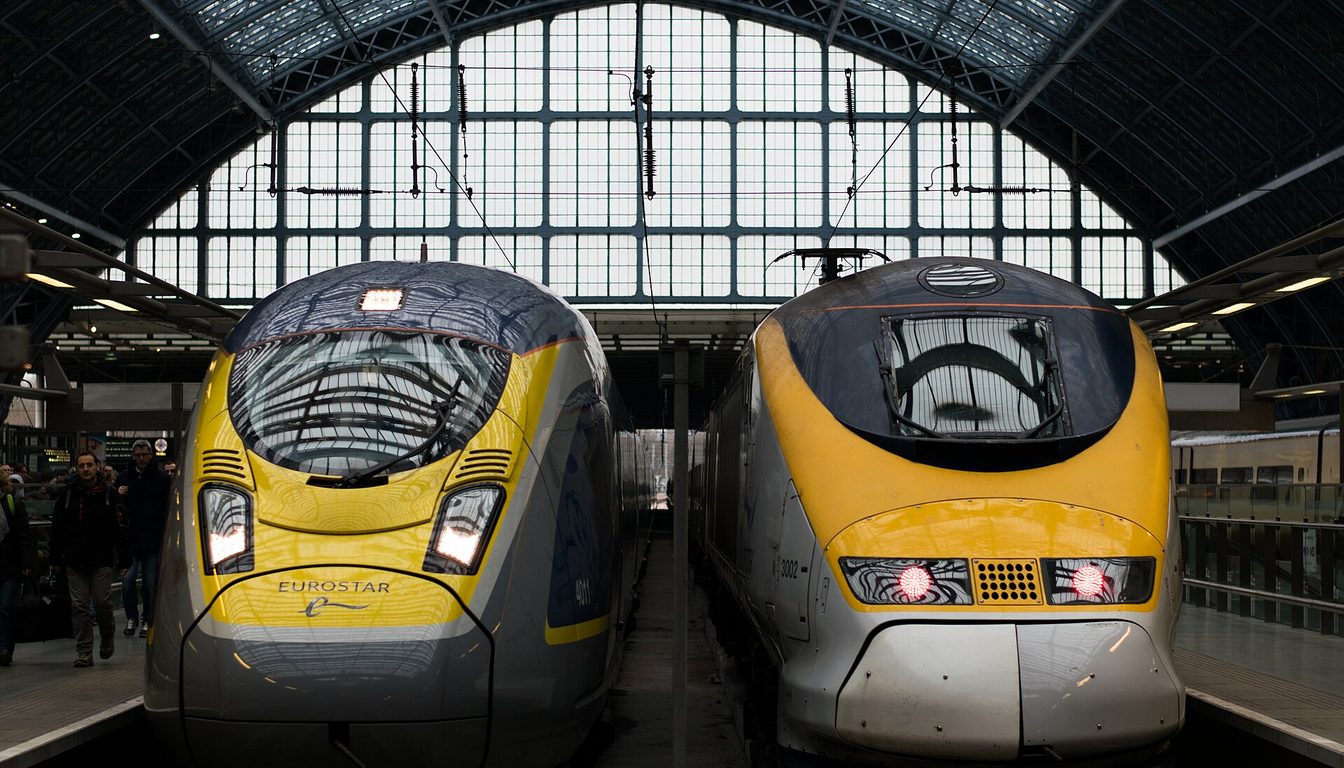
Eurostar connects London St Pancras with Paris, Brussels, Amsterdam and Lille via the Channel Tunnel, operating at up to 300 km/h on most routes, though the e320 trains are designed to reach 320 km/h under certain conditions in France, and serving as the primary high-speed rail link between the UK and continental Europe. Unlike most European trains, Eurostar requires ticket checks, security screening, and UK/EU passport controls before boarding, making it function more like an airport departure process than a typical train station.
Passengers should arrive 75–90 minutes before departure for Eurostar Standard & Plus tickets from Paris, while Premier passengers and those from Rotterdam should arrive 45–60 minutes before departure to clear these formalities—not the typical arrival time for domestic European high-speed services. This extra time covers three distinct checkpoints: ticket verification at the entry gates, airport-style security screening of baggage and persons, and full immigration controls where both UK and destination-country officers check passports. Missing any of these checkpoints means missing your train.
City-centre to city-centre travel often makes Eurostar faster door-to-door than short-haul flights on the same routes, once you account for airport transit times, early arrival requirements, and post-arrival transfers. Tickets typically open for booking up to about 11 months in advance with the lowest fares available early, compared to the 3–6 month windows common on most other European trains. Dynamic pricing means fares rise as seats fill and departure approaches, so locking in your booking early delivers both availability and value.
How High-Speed Rail Works Across Europe
High-speed lines are designed for 250–350 km/h, with typical operating speeds around 200–320 km/h on dedicated tracks built to accommodate these velocities. High-speed rail in Europe has developed into an increasingly popular and efficient mode of transport, with major networks now operational in France, Spain, Italy and Germany, each radiating from national hubs to connect key cities and cross-border destinations.
European rail is not a unified system—reservation policies, refund terms and onboard experience vary by country and route. France’s SNCF operates TGV services with mandatory reservations and premium lounges for first-class passengers. Spain’s Renfe runs AVE trains that compete directly with domestic flights on price and speed. Italy has two competing operators—state-owned Trenitalia and private Italo—both running on the same high-speed infrastructure, creating genuine price competition on busy corridors like Milan–Rome.
High-speed trains offer fast, city-centre to city-centre travel that can outperform flying in total journey time on many routes when you include check-in, security, boarding, taxiing, and transfers to and from airports. The train departs from a central station, arrives at another central station, and lets you disembark directly into the city heart. The European Commission’s high-speed rail plan aims to significantly reduce journey times on key international routes, such as cutting Berlin–Copenhagen to about 4 hours by 2030 and enabling Paris–Lisbon high-speed connections via Madrid by 2035, further shifting the door-to-door calculus in rail’s favor.
Booking Windows and Dynamic Pricing Strategies
Eurostar tickets open up to about 11 months ahead, while most other European operators release inventory 3–6 months in advance—a crucial difference when planning multi-leg journeys that cross the Channel. High-speed rail fares are dynamically priced and rise as departure approaches, making early booking essential for lower rates. Base fares can double or triple as trains fill, and popular weekend or holiday services often sell out entirely weeks in advance.
Many tickets are non-refundable or carry change restrictions, so confirm your travel dates before purchasing. Some fare classes allow paid changes within a certain window, but expect fees and fare differences that can negate your initial savings. If flexibility matters, budget for a higher fare tier that permits modifications, or consider whether a rail pass suits your itinerary better than point-to-point tickets.
Limited seat allocations exist for pass holders on premium services, so even with a rail pass you must secure reservations early. Eurostar and international high-speed trains dedicate only a small quota of seats to pass holders, and once those seats are gone, no amount of pass validity will get you on that train. Booking directly with operators—where possible—or through aggregators helps compare routes and fare classes across different networks, though interfaces and booking rules vary widely by country.
For travelers planning to visit multiple destinations, including Paris on a broader European itinerary, understanding these windows and locking in reservations early avoids last-minute scrambles and inflated walk-up fares. The staggered booking windows and dynamic pricing across operators mean that planning a multi-country rail journey requires tracking several calendars and acting decisively when each window opens.
Seat Reservations: Mandatory vs Optional
Seat reservations are mandatory on all Eurostar trains, as well as many high-speed services in France, Spain, Italy and on international routes—your ticket is not valid without one. Even with a Eurail or Interrail Pass, you must book and pay for mandatory reservations before boarding, and these reservation fees are separate from your pass cost. For Eurostar specifically, pass-holder reservations should be arranged as early as possible because pass-holder seats are limited and can sell out long before general inventory fills.
Pass-holder seat quotas are limited on popular trains, so reserve as early as possible to avoid being shut out. If you arrive at the station with a valid rail pass but no reservation on a mandatory-reservation service, station staff will not allow you to board. This is not a matter of fare-dodging or technicality—the train physically has no space allocated to unreserved pass holders, and conductors will not issue on-board reservations on these services.
Domestic trains in Germany and some regional services in other countries allow hop-on, hop-off travel without reservations, making them flexible options for spontaneous itineraries. German ICE trains generally do not require advance seat booking on domestic routes, though you can optionally reserve seats for a small fee if you want guaranteed seating. This flexibility makes Germany attractive for exploratory travel, but it’s the exception rather than the rule across Europe’s high-speed network.
Verify reservation requirements for each leg of your itinerary, as rules differ by operator and route. A journey from Paris to Barcelona via Lyon might involve two different operators with different rules: TGV from Paris to Lyon requires a reservation, and the connecting service to Barcelona also requires one, but if you detoured via a regional train that leg might be reservation-free. Always check official operator information for each specific train number you plan to board.
Check-In, Security and Border Controls
Passengers should arrive 75–90 minutes before departure for Eurostar Standard & Plus tickets from Paris, while Premier passengers and those from Rotterdam should arrive 45–60 minutes before departure for ticket checks, security screening and UK/EU passport formalities—a process far more involved than any other train service in Europe. The London St Pancras terminal features dedicated departure halls with entry gates that scan your ticket barcode, followed by airport-style X-ray machines and metal detectors for carry-on bags and personal screening. After security, you clear passport control with both UK Border Force (checking exit from the UK) and French border police (checking entry to the Schengen Area) before reaching the departure lounge.
Most domestic European high-speed trains have no security screening and typically require arrival at least 30 minutes before departure to locate your platform and board comfortably. Walk into the station, check the departure board, head to your platform, and board—passport checks are rare or nonexistent within the Schengen Area, and there are no baggage X-rays. This stark difference makes Eurostar an outlier, not the norm.
Cross-border trains within the Schengen Area typically involve minimal or no passport checks, but services to or from the UK have full border controls because the UK is outside Schengen. Trains from Amsterdam to Paris glide through without formalities, but the return Eurostar from Paris to London replicates the full security and immigration process before departure. Brussels and Amsterdam Eurostar terminals similarly require early arrival and full checks.
Choose seats near the front of the train—in the direction of travel—to disembark quickly and save time on tight connections. Eurostar trains are long, and the walk from the rear coaches to the station exit can add several minutes. For travelers continuing to London and onward connections within the city, those extra minutes matter when catching Underground trains or meeting scheduled tours.
Keep tickets (physical or digital) and travel documents accessible throughout your journey. Conductors on European high-speed trains check tickets after departure, and you’ll need your passport for any border crossing or random checks. Mobile tickets are widely accepted, but ensure your phone is charged and the barcode displays clearly—international roaming issues or dead batteries have stranded travelers at checkpoints.
For a full multi-day plan in Rome, see First-time visitor’s guide to Rome in 4 days.
Route Planning: Key Corridors and Connections
Eurostar offers journey times from Amsterdam of approximately 1 hour 50 minutes to Brussels and 3 hours 20 minutes to Paris, and these routes form the foundation of most UK-based travelers’ rail itineraries into Europe, connecting seamlessly to onward services across the continent. Paris serves as a hub for the entire French TGV network, Brussels anchors Belgium’s domestic and international rail web, and Amsterdam opens access to the Netherlands and Germany.
France’s TGV network radiates from Paris to Lyon, Marseille, Bordeaux and beyond, with connections to Switzerland, Italy and Spain. The Paris–Lyon route cuts through Burgundy in just under two hours at 320 km/h, while the Paris–Marseille service reaches the Mediterranean in around three hours. From Lyon, onward connections serve Geneva and the French Alps, making it a critical junction for multi-country travel.
Spain’s AVE services link Madrid with Barcelona, Seville and Valencia, operating at speeds up to 300 km/h for most services, with newer S-106 models reaching 330 km/h, shrinking a country that was once notoriously difficult to traverse by rail. AVE journey times are Madrid–Barcelona in 2 hours 30 minutes, Madrid–Seville in 2 hours 35–45 minutes, and Madrid–Valencia in under 2 hours. Cross-border AVE services to France connect Barcelona with Lyon and Paris, offering a practical alternative to flying for travelers combining Spain and France.
AVE journey times are Madrid–Barcelona in 2 hours 30 minutes, Madrid–Seville in 2 hours 35–45 minutes, and Madrid–Valencia in under 2 hours.
Italy’s Frecciarossa and Italo connect Milan, Rome, Florence, Venice and Naples on dedicated high-speed lines, with Rome–Milan in under three hours and Rome–Naples in just over an hour. Italo’s entrance as a private competitor brought lower fares and higher frequencies on the busiest routes, while Trenitalia’s Frecciarossa maintains the widest network reach. Both operators serve the same stations and tracks, so travelers can compare schedules and prices directly.
Germany’s ICE network spans major cities, with many domestic routes allowing flexible boarding without mandatory reservations. Frankfurt–Berlin, Munich–Hamburg, and Cologne–Munich all feature frequent ICE services that let pass holders hop on without pre-booking. Cross-border ICE trains serve Basel, Zurich, Vienna, and Amsterdam; Copenhagen is served by EuroCity trains operated by DSB and Deutsche Bahn, extending Germany’s flexibility to certain international corridors. For context, travelers exploring Paris can compare options for Seine river access as one example of how planning city-specific activities complements rail logistics.
For a full multi-day plan in Paris, see Best things to do in Paris in 3 days: a curated itinerary.
Rail Passes vs Point-to-Point Tickets
Eurail and Interrail passes offer multi-day or multi-country travel flexibility, but mandatory reservation fees apply on many premium routes—sometimes adding up to match or exceed point-to-point ticket costs. A 15-day Eurail Global Pass might seem like unlimited freedom, but if you’re traveling mostly on TGV, AVE, and Eurostar routes, reservation fees of €10–35 per leg will stack quickly. Calculate your total cost including these fees before committing to a pass.
Point-to-point tickets booked early can be cheaper than passes if your itinerary is fixed and you travel only a few legs. A London–Paris return booked months in advance might cost less than a pass plus reservations, especially if you’re not hopping between multiple cities daily. Passes shine when you’re taking many journeys, mixing high-speed and regional trains, or valuing spontaneity over locking in exact times and dates.
Passes excel for spontaneous travel and frequent journeys, especially in countries like Germany where reservations are often optional. Waking up in Munich and deciding to head to Stuttgart or Nuremberg that afternoon is seamless with a pass—just board the next ICE. That same flexibility on mandatory-reservation routes requires either pre-booking or accepting the risk of sold-out trains.
Pass-holder seat quotas on Eurostar and other high-speed trains are limited, so reserve as soon as your dates are firm. Eurail warns explicitly that Eurostar pass-holder seats sell out, sometimes weeks ahead of departure during peak travel periods. If Eurostar is a key part of your itinerary, book those reservations the moment you confirm your pass purchase and travel dates.
Compare total costs—including reservation fees—before committing to a pass or individual tickets. Spreadsheet your planned legs, add reservation fees for each mandatory segment, and compare against the best advance-purchase point-to-point fares. Passes rarely make sense for two or three long-distance trips; they pay off when you’re taking ten or fifteen journeys across multiple weeks.
Future of European High-Speed Rail
The EU’s high-speed rail plan targets substantial journey-time reductions on key corridors by 2030–2035, including Berlin–Copenhagen and Paris–Lisbon. The European Commission’s strategy envisions Berlin–Copenhagen cut to about four hours through upgraded Danish infrastructure and new rolling stock, while Paris–Lisbon becomes feasible via new high-speed links through Spain, connecting Iberia to the broader European network without the current need to change trains and lose hours at the Spanish-French gauge break.
The EU strategy encourages high-speed rail to replace short-haul flights, with France implementing a ban on flights where rail alternatives exist under 2.5 hours, making rail faster, more comfortable, and more reliable than flying on many routes. The Commission frames high-speed rail as the backbone of sustainable mobility, targeting routes where trains can match or beat flight times door-to-door while emitting a fraction of the carbon. Regulatory initiatives include proposals for integrated ticketing across borders and harmonized passenger rights.
New cross-border links and coordinated infrastructure upgrades promise faster, more seamless international travel. Bottlenecks like single-track sections, outdated signaling, and incompatible electrical systems between countries are being systematically addressed. The goal is a network where international trains flow as smoothly as domestic services, without long border stops or technical complications.
Technology improvements and rolling-stock renewals will continue to enhance comfort, reliability and speed. Next-generation trains feature better sound insulation, improved ride quality at high speeds, larger windows, and onboard connectivity that actually works. Real-time passenger information systems and digital booking integration are reducing friction points, making it easier for travelers to plan, book, and navigate complex multi-operator journeys.
Travelers can expect expanded service frequencies and improved integration between national operators over the next decade. Coordinated timetables, through-ticketing agreements, and shared loyalty programs are gradually knitting together Europe’s fragmented rail landscape. The vision is that booking a journey from Lisbon to Copenhagen becomes as straightforward as booking a domestic train, with a single transaction covering multiple operators and a guaranteed connection even if one leg runs late.
Travelers can expect expanded service frequencies and improved integration between national operators over the next decade.
High-speed rail’s expansion reflects both environmental imperatives and traveler demand for efficient, productive travel time. Unlike flights—where you’re locked in a seat during takeoff, cruising, and descent—trains let you work, read, move around, and arrive refreshed in the city centre. As climate consciousness grows and digital nomadism increases, the ability to hop on a train with your laptop and arrive three hours later in another capital without airport hassles positions rail as the obvious choice for Europe’s urban corridors. The investments underway today are building the infrastructure for that seamless, continent-spanning rail experience to become the default for millions more travelers in the years ahead.