Italian Trains Guide: Trenitalia vs Italo, Frecciarossa vs Regionale
Italy’s rail network offers two major operators—state-owned Trenitalia and private Italo—alongside a range of train types from high-speed Frecciarossa to local Regionale services. This guide breaks down which operator and service tier fits your route, budget, and schedule.
The Italian Rail Landscape: Who Runs What
Trenitalia is Italy’s national, state-owned railway company and the main operator of passenger trains across the country. Founded in 2000 as part of a reorganization of Ferrovie dello Stato, Trenitalia took over passenger rail services while infrastructure management was separated under Rete Ferroviaria Italiana (RFI). This separation allowed for the eventual entry of private competitors onto the same physical rail infrastructure.
Italo (Italotreno) is a private high-speed train operator in Italy that runs services exclusively on high-speed routes between major cities. Italo launched operations in 2012, becoming Italy’s first private high-speed passenger rail operator and introducing competition to Trenitalia on key high-speed routes. Both operators use Italy’s national high-speed rail infrastructure managed by RFI, meaning they share the same physical lines and run on the same tracks for intercity connections.
Trenitalia offers the full spectrum from high-speed to regional, while Italo focuses solely on premium intercity connections. Italy’s high-speed rail development began in the late 20th century, with the first high-speed line between Rome and Florence and subsequent expansion that enabled services running up to 300 km/h. If you need to reach a small hill town or coastal village, only Trenitalia can take you there on regional or intercity services.
Trenitalia’s Train Categories: From Frecciarossa to Regionale
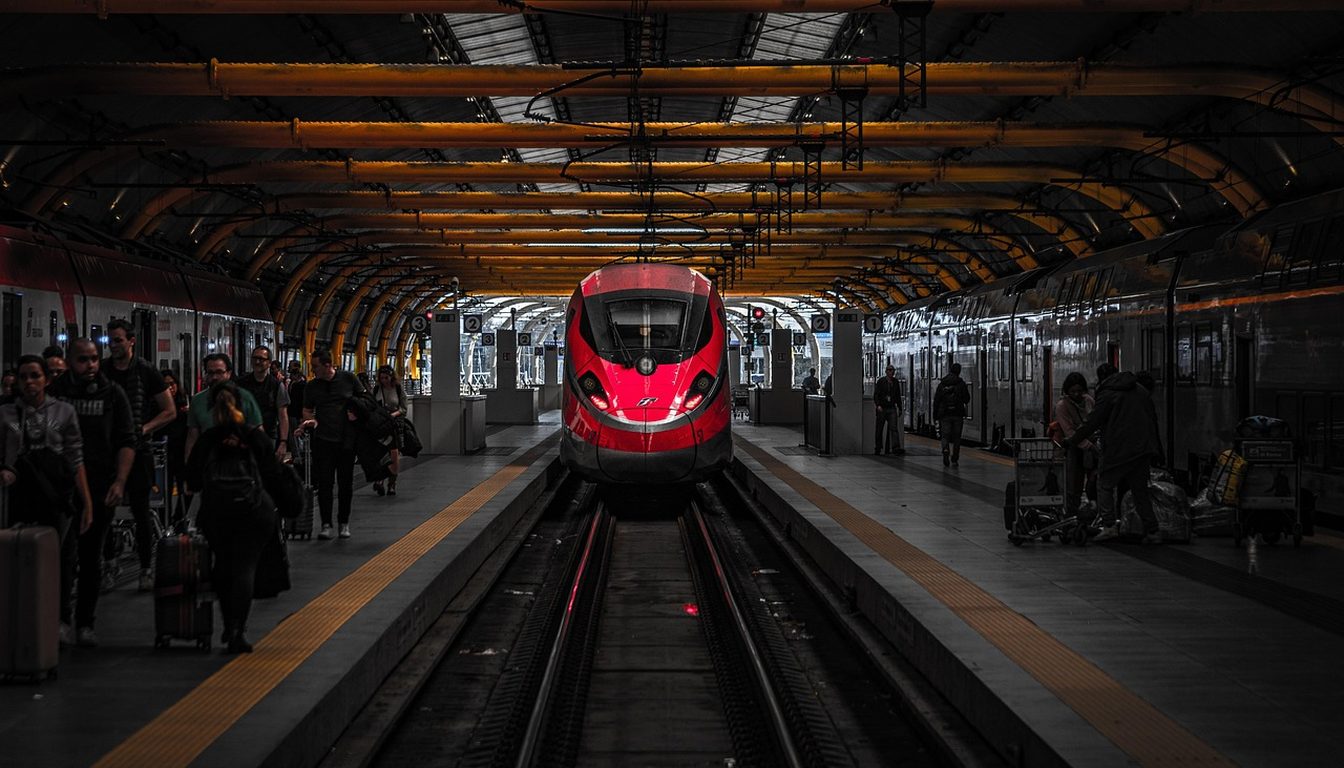
Trenitalia operates Frecciarossa, Frecciargento, and Frecciabianca services, collectively known as Frecce trains, connecting major cities like Turin, Milan, Bologna, Rome, Naples, and Salerno. Frecciarossa is Trenitalia’s flagship high-speed service, running at up to 300 km/h and covering trunk routes such as Milan–Rome and Milan–Naples. Frecciargento and Frecciabianca serve other key corridors and secondary high-speed routes, offering similarly modern rolling stock at somewhat lower maximum speeds.
InterCity trains provide medium-distance connections at moderate speeds, often serving routes not covered by high-speed lines. These trains bridge the gap between rapid Frecce services and the slower Regionale network, typically connecting regional capitals and important secondary cities. InterCity services operate on conventional railway lines and offer reserved seating, making them a practical choice when high-speed infrastructure is not available.
InterCity trains provide medium-distance connections at moderate speeds, often serving routes not covered by high-speed lines.
Trenitalia’s Regionale trains provide short and medium-distance services and are designed to connect smaller towns and cities, with fares set on a fixed tariff system. These trains stop more frequently than Frecce or InterCity services and serve as the essential link for destinations beyond the high-speed network, including hillside villages and coastal towns. Regional trains are the workhorse of Italian rail, carrying commuters, students, and travelers to places that high-speed lines simply don’t reach.
Tickets for Trenitalia high-speed services (Frecce and InterCity) are yield-managed, meaning prices vary according to demand and booking time, while many Regionale fares are fixed and do not increase closer to departure. This dynamic pricing structure means that early purchases often secure lower fares for high-speed journeys, while regional tickets maintain consistent pricing regardless of when you buy them. Travelers exploring different options may want to compare access strategies for attractions and transport as part of broader trip planning.
For a full multi-day plan in Paris, see Best things to do in Paris in 3 days: a curated itinerary.
Italo’s Network and Service Model
Italo’s network links major Italian cities including Turin, Milan, Venice, Bologna, Florence, Rome, Naples, and Salerno, using high-speed rail infrastructure. The operator’s fleet is modern and maintained to high standards comparable to Trenitalia’s Frecce trains. Italo’s entry into the market in 2012 introduced new train designs, premium amenities, and competitive pricing on key intercity routes.
Italo does not operate regional or InterCity services, so travelers needing onward connections to smaller towns must arrange separate tickets or choose Trenitalia. This limitation means that if your journey requires a combination of high-speed travel and a regional connection, you’ll need to coordinate between operators or book Trenitalia’s integrated tickets. Italo’s focus is exclusively on profitable, high-volume intercity corridors where demand justifies frequent high-speed service.
Service classes on Italo (Smart, Prima Business, Club Executive) are broadly comparable to Trenitalia’s Standard, Premium/Business, and Executive tiers. Both Trenitalia Frecce trains and Italo offer multiple service classes with varying seat comfort and onboard services. Choice between the two on shared routes typically comes down to departure time and price rather than quality differences, as the trains themselves are modern and well-equipped across both operators.
Comparing High-Speed Services: Trenitalia Frecciarossa vs Italo
For direct high-speed journeys between major cities (e.g., Milan–Rome, Florence–Venice), both Trenitalia Frecciarossa and Italo provide comparable modern high-speed trains. Travelers typically choose based on departure time and price rather than major differences in comfort or speed. Both operators run their high-speed services on Italy’s national high-speed rail infrastructure managed by Rete Ferroviaria Italiana (RFI), meaning they share the same physical lines even though they are independent companies.
Italo is a modern high-speed operator whose trains are broadly comparable in comfort and cleanliness to Trenitalia’s Frecce services; choice is usually driven by route, timetable, and price rather than quality differences. This misconception that Italo is a budget or lower-tier option persists, but in reality the two operators offer similar standards of punctuality, cleanliness, and onboard amenities. Journey times on identical routes are similar because both operators use the same tracks and infrastructure.
Advance purchase is strongly recommended for both operators because fares usually increase as the departure date approaches. Discounted tickets are generally not sold on the same day of travel, and late bookings may be significantly more expensive for high-speed services. Travelers planning a multi-city itinerary in Italy should secure high-speed tickets early to lock in lower fares, similar to advance planning strategies for exploring major cities like Paris or other European capitals.
When to Choose Trenitalia (Integrated Tickets and Regional Connections)
Use Trenitalia when your trip involves smaller towns or regional connections. Integrated tickets may include protections if a delay on the first leg causes you to miss a connection. This coordination simplifies travel logistics and provides recourse in case disruptions affect one segment of your journey.
If your itinerary includes a high-speed leg plus a regional connection (e.g., Rome to a smaller town), booking the entire trip on Trenitalia keeps all segments on one ticket. Coordinated assistance in case of delays is easier when all legs are on the same operator’s ticket, and you avoid the administrative hassle of claiming missed connections across separate bookings. Trenitalia’s broader network coverage is essential for destinations not served by Italo’s high-speed-only routes.
Regional trains serve areas where high-speed infrastructure does not reach, including rural regions, coastal towns, and smaller provincial cities. These connections form the backbone of local and medium-distance travel in Italy, and Trenitalia’s monopoly on regional services means it is the only practical choice for reaching many destinations. Travelers heading to hillside villages, smaller historic towns, or coastal areas off the main high-speed corridor will rely exclusively on Trenitalia’s Regionale and InterCity network.
Ticket Validation, Reservations, and Boarding Rules
Regional train tickets in Italy that are not tied to a specific train must be validated (stamped) before boarding when issued on paper, otherwise they can be considered invalid and subject to a fine. Validation machines are located in stations, typically near platforms or in main concourses. Even if you purchased a valid ticket, failure to validate it before boarding can result in penalties during on-board inspections.
E-tickets for specific trains (Frecce, InterCity, many reserved Regionale services) do not require validation because they are already linked to a departure time. These tickets, whether printed or shown digitally on a smartphone, contain all the necessary information and are checked by conductors during the journey. Always check whether your ticket requires validation: if you hold a paper Regionale ticket without seat reservation, validate it in the machines at the station before boarding to avoid fines.
On high-speed trains, boarding is usually possible only with a reservation for a specific train and time, printed or shown digitally. Seats are often assigned on Frecce and Italo services, so checking your carriage and seat number before boarding helps avoid confusion. Train carriage numbers are displayed on the platform, and knowing your assigned carriage in advance saves time and ensures a smooth boarding process. For travelers familiar with reserved seating systems on attractions like the Tower of London, the concept is similar—your ticket corresponds to a specific entry or departure slot.
Pricing, Advance Purchase, and Fare Strategies
High-speed Frecce and Italo tickets follow yield-management pricing: fares rise closer to departure and discounted tickets are generally not sold on the same day of travel. This dynamic pricing model rewards advance planning and penalizes last-minute purchases. Travelers who know their itinerary well in advance can secure significantly lower fares by purchasing tickets weeks or months before departure.
Regionale fares are generally fixed and do not follow yield-management discount schemes like high-speed services; prices are typically stable and do not drop for last-minute purchases. Regional trains maintain a tariff system based on distance, meaning the fare for a given route remains the same regardless of when you buy your ticket. This predictability can be helpful for flexible itineraries where you do not want to commit to specific departure times far in advance.
Reserve seats and buy tickets as early as practical for high-speed trains, especially on busy holiday periods and popular routes, because cheaper fare tiers can sell out. Demand on routes like Milan–Rome or Florence–Venice is high, particularly during summer months, national holidays, and weekends. Late bookings may be significantly more expensive for high-speed services, while Regionale tickets maintain consistent pricing.
When traveling between major cities, compare Trenitalia Frecciarossa and Italo for the same route and date, then select the combination of price and departure time that best fits your schedule. Service standards are similar, so the decision typically comes down to convenience and cost. Check both operators’ timetables and fares before committing to a booking, as schedules and prices can vary considerably even for trains departing within the same hour.
For a full multi-day plan in Rome, see First-time visitor’s guide to Rome in 4 days.
Passenger Rights, Delays, and Practical Tips
On Trenitalia high-speed Frecce trains, passengers may be entitled to compensation (often in the form of a voucher) if delays exceed specific thresholds, such as 30 minutes for certain services. Compensation policies vary by ticket type and service class, and not all fare categories qualify for the same level of reimbursement. Always retain your ticket and any documentation related to delays, as you may need to file a claim after your journey.
Italo has its own delay compensation policies; check terms at time of booking for eligibility. Both operators run on shared infrastructure, so delays can affect either company and are not always within the operator’s control. Infrastructure issues, weather disruptions, and technical problems managed by Rete Ferroviaria Italiana can impact punctuality across all trains regardless of operator. Understanding that delays are sometimes systemic helps set realistic expectations when planning tight connections.
Arrive at the station with sufficient time to locate your platform, validate any required tickets, and find your assigned carriage and seat. Italian stations can be large and busy, and last-minute platform changes are not uncommon. Allowing a buffer of at least fifteen minutes before departure reduces stress and ensures you have time to navigate the station, purchase any last-minute snacks or drinks, and settle into your seat before the train departs.
Arrive at the station with sufficient time to locate your platform, validate any required tickets, and find your assigned carriage and seat.
Keep digital or paper tickets accessible for on-board inspections; conductors routinely check all passengers during the journey. Failing to present a valid ticket, or presenting an invalidated paper regional ticket, can result in fines and penalties. Store tickets in an easy-to-reach location and be prepared to show them multiple times during your trip, especially on longer journeys where multiple conductors may patrol different sections of the train.
Italy’s extensive railway system has been integral to the country’s transportation infrastructure for over a century, with the network expanding significantly during the 20th century to connect the diverse geography from the Alps to Sicily. According to Wikivoyage, Italy’s trains remain one of the most efficient and scenic ways to travel between cities, offering travelers reliable connections to destinations across the peninsula. The modern high-speed network has dramatically reduced travel times between major cities, making rail travel competitive with air travel for many routes.
The evolution of Italy’s rail system reflects broader trends in European transportation, where the introduction of private competition has often led to improved services and more competitive pricing. Wikipedia notes that Italy was among the first European countries to open its high-speed rail market to private operators, a move that has increased service frequency and customer choice on major routes. This competition has benefited travelers through lower fares during off-peak periods and enhanced onboard amenities as operators vie for passengers.
Understanding the distinctions between operators and service types allows travelers to make informed choices based on their priorities—whether that’s speed, cost, flexibility, or access to smaller destinations. Both Trenitalia and Italo offer reliable high-speed services, while Trenitalia’s regional network remains essential for exploring Italy’s smaller towns and rural areas that define much of the country’s cultural heritage.