Le Marais in Half a Day: The Route Locals Actually Walk
Le Marais is a compact central Paris district where a half-day walk can connect medieval streets, Renaissance mansions, Jewish heritage sites, and garden squares—but only if you follow a coherent route instead of zigzagging. This guide maps the practical east-west itinerary that covers the district’s medieval, Renaissance, and 17th-century history without backtracking.
The Marais contains numerous museums and notable streets within its 126 hectares. The district occupies substantial ground between major landmarks, combines centuries of distinct cultural heritage, and contains far more museums and monuments than any visitor can cover in half a day.
Understanding the Marais triangle: boundaries and why half a day works
Le Marais is located in central Paris and takes its name from former marshland.
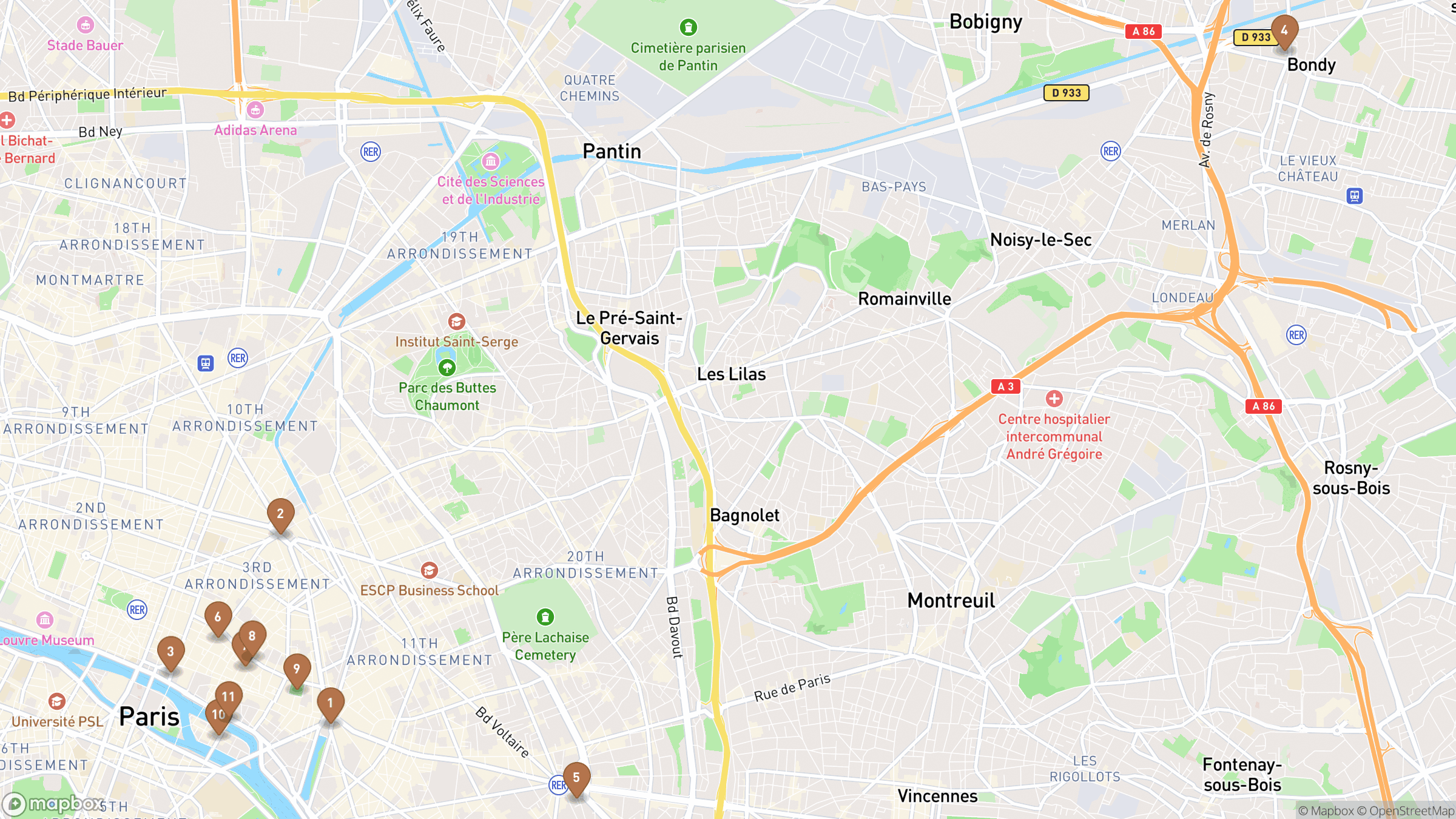
The district is broadly bounded by Place de la Bastille, Place de la République, and Place de l’Hôtel de Ville, forming a substantial triangle rather than a single street or square. The area has been occupied since at least the 12th century, and today the Marais is protected through a conservation and enhancement plan covering approximately 126 hectares.
Half a day works for Le Marais not because the district is small but because it allows a visitor to select key outdoor landmarks and one or two indoor stops rather than attempting every museum. The Marais contains numerous 17th- and 18th-century private mansions, several of which now house museums, alongside gardens, synagogues, and commercial streets. Trying to enter every institution will result in rushed visits and missed highlights.
The district’s compact medieval street pattern makes it walkable, but narrow sidewalks and courtyards require extra time beyond straight-line distance. Plan for slower progress than open boulevards allow, particularly along heritage streets where storefronts, archways, and pedestrian flow create natural pauses.
The practical starting point: Hôtel de Ville or Centre Pompidou area
Hôtel de Ville and the Centre Pompidou area serve as the western anchor for a half-day Le Marais walk. Both locations are accessible by multiple Métro lines, making them natural entry points whether arriving from central Paris or other arrondissements. Starting here allows an eastward flow toward Place des Vosges without doubling back across the district.
An official accessible Marais gardens walk covers approximately 2.5 kilometres and takes about 40 minutes, passing the Centre Pompidou, Jardin Anne Frank, the National Archives, Impasse des Arbalétriers, Halle des Blancs-Manteaux, Jardin des Rosiers, and the Stravinsky Fountain. This route provides a shorter alternative for visitors prioritizing green spaces and fountains over museums.
Arrive by 09:30 to orient yourself before they open. Weekday mornings see less pedestrian congestion than weekend afternoons, particularly along commercial streets near Rue des Rosiers.
The Centre Pompidou itself can consume an entire day, so treat it as either a brief exterior landmark on your Marais route or a separate visit on another trip. The plaza outside offers a clear transition point from the broader Beaubourg area into the narrower historic streets of the Marais proper.
Rue des Rosiers: the Jewish heritage focal point
Rue des Rosiers is identified by the Paris Tourist Office as the focal point of Paris’s Jewish community and is known for its shops and restaurants. The street combines heritage sites, synagogues, kosher bakeries, and falafel shops on a street lined with 17th-century buildings. Approach this as a heritage stop, not only a commercial street—it reflects centuries of Jewish presence in the Marais that extends beyond current retail activity.
Rue des Rosiers experiences midday crowds on weekends, with queues forming outside popular food vendors. Early morning or late afternoon offers better walking conditions for observing storefronts, plaques, and architectural details. If visiting during peak hours, expect slow progress and limited space for photography.
Rue des Rosiers runs roughly parallel to Rue des Francs-Bourgeois and can be incorporated into the broader east-west route without significant backtracking. The street connects to smaller perpendicular lanes that lead back to the main mansion belt, allowing flexible routing depending on crowd levels and personal interest.
Jewish settlement in the Marais dates back to the medieval period; today Rue des Rosiers houses active synagogues and community organizations alongside commercial shops. Treat it as both a historic site and an active neighborhood street rather than solely a dining destination.
Rue des Francs-Bourgeois and the private mansion belt
Rue des Francs-Bourgeois forms the major east-west axis linking the Centre Pompidou area to Place des Vosges and passes multiple historic mansions. The Marais contains numerous 17th- and 18th-century private mansions (hôtels particuliers), several now converted to museums. This street concentrates many of those conversions into a walkable sequence.
Many mansion courtyards are open to pedestrians during daytime hours. Look for archways and discreet entrance signs rather than assuming every historic façade is sealed. Some courtyards lead to small gardens, while others provide access to museum lobbies or cultural institutions. The right to access these spaces varies by building, but public museums and archive centers generally allow courtyard entry during opening hours.
The street name refers to a medieval almshouse for the poor; today contemporary retail occupies the ground floor. The upper floors and rear courtyards retain more of the aristocratic residential scale that defined the Marais during its 17th-century peak.
Small streets branching north and south often reveal additional mansions, gardens, and quieter passages that provide relief from the main thoroughfare. The Marais rewards exploratory walking rather than strict adherence to a single line, provided you maintain a general eastward direction toward Place des Vosges.
Musée Carnavalet: the half-day museum anchor
The Musée Carnavalet is housed in the Hôtel Carnavalet and Hôtel Le Peletier de Saint-Fargeau in the heart of the Marais and is dedicated to the history of Paris. The museum opened to the public on February 25, 1880, making it the oldest City of Paris museum. It occupies two Renaissance and classical mansions and offers free permanent-collection admission, making it a practical museum anchor for a half-day Marais route.
The Musée Carnavalet can be reached from Saint-Paul station on Métro Line 1; other nearby stations include Pont-Marie on Line 7, Chemin Vert on Line 8, and Bréguet-Sabin on Line 5. The museum is closed Mondays and open Tuesday through Sunday from 10:00 to 18:00. Verify the current schedule before incorporating it into your route, as special closures or exhibition schedules can affect access.
Allow 60 to 90 minutes for a focused visit that covers key galleries without attempting comprehensive coverage. The museum’s scope—tracing Paris from prehistoric settlement through the 20th century—requires multiple visits for full exploration. A half-day Marais walk should treat Carnavalet as one component rather than the sole destination.
Allow 60 to 90 minutes for a focused visit that covers key galleries without attempting comprehensive coverage.
The mansions include courtyards, staircases, and period rooms that show the residential scale of aristocratic Marais life before the Revolution. The Hôtel Carnavalet is described as a rare example of Renaissance architecture in Paris, complemented by the later classical Hôtel Le Peletier de Saint-Fargeau.
Place des Vosges and the Victor Hugo house: the eastern terminus
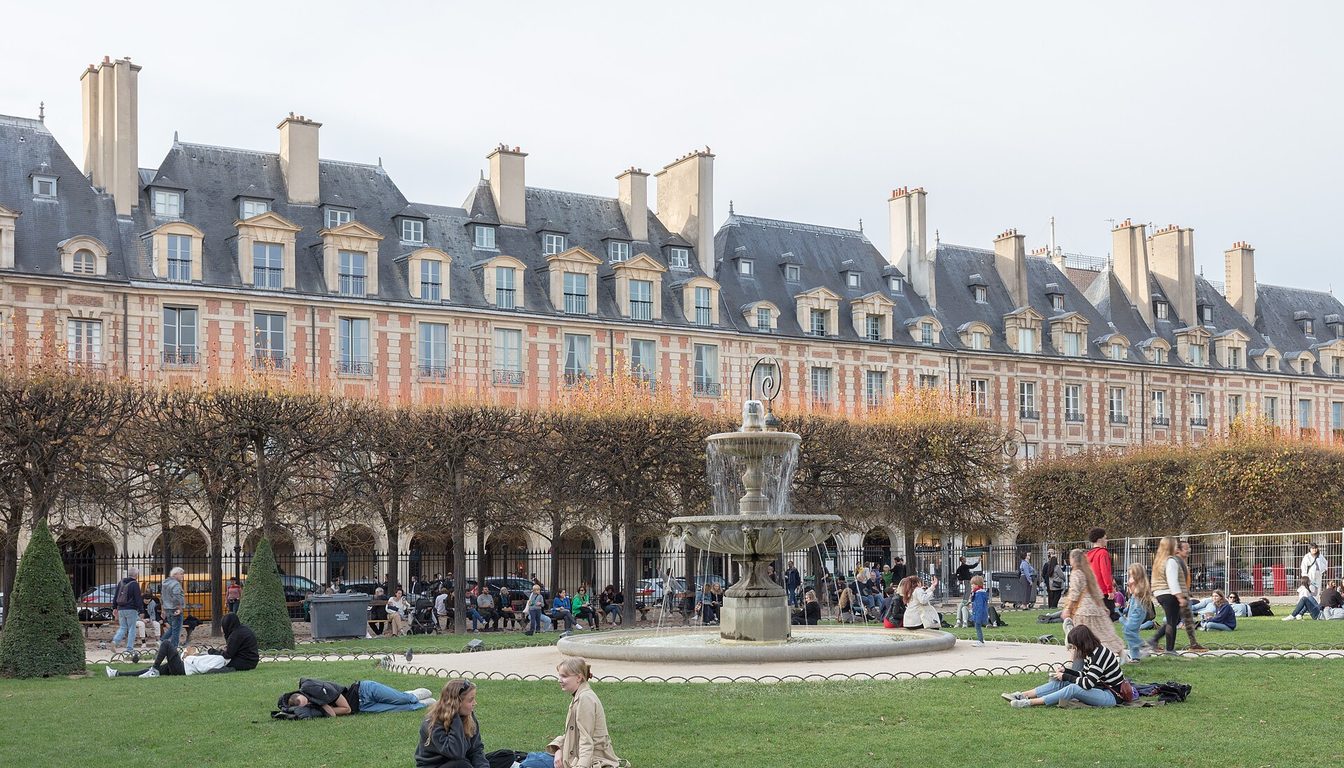
Place des Vosges marks the natural eastern endpoint of a half-day route and is the oldest planned square in Paris. The square, completed in the early 17th century, features uniform arcaded façades that establish a coherent architectural ensemble.
 Photo: Vassil / Wikimedia Commons, CC0 (cropped)
The same municipal authority that operates Musée Carnavalet manages Victor Hugo’s former residence at No. 6 as a small museum. Check current access policies and whether advance booking is required. The house offers insight into Hugo’s domestic life and literary work, though it functions as a compact site rather than a large museum complex.
The garden inside the square offers benches and shade, ideal for a mid-route rest or picnic stop. Arcades along all four sides provide shelter in wet weather and house small galleries, shops, and cafés.
The square operates as both a heritage monument and an active urban space, so expect a mix of tourists and local residents using the benches and walkways.
Place des Vosges represents a logical conclusion for a half-day Marais walk because it sits at the district’s eastern edge near the Bastille area. From here, return westward via Métro Line 1 from Saint-Paul or Bastille stations, or extend the walk south toward Île Saint-Louis if time and energy remain. The square’s symmetrical layout and central fountain provide a visual endpoint that contrasts with the irregular medieval streets covered earlier in the route.
For practical transit detail in Paris, see How to navigate Paris Metro and RER like a local.
Alternative and extension options for the half-day route
The official accessible gardens walk offers a shorter 40-minute alternative focusing on green spaces and fountains rather than museums and mansions. This route covers approximately 2.5 kilometres, passing the Centre Pompidou, Jardin Anne Frank, the National Archives, Impasse des Arbalétriers, Halle des Blancs-Manteaux, Jardin des Rosiers, and the Stravinsky Fountain. It provides a practical option when mobility or time limits prevent a longer route.
 Photo: ChrisSampson87 / Wikimedia Commons, CC BY-SA 4.0 (cropped)
Extend north toward the Picasso Museum or south toward Île Saint-Louis if the core route leaves time available. The Picasso Museum occupies another historic mansion and offers a focused collection, though it requires separate admission and advance planning. Île Saint-Louis provides a quieter contrast to the busier Marais streets and connects easily from the Place des Vosges area via Pont Marie.
Sunday mornings see local market activity near Bastille, while weekday mornings are quieter for photography and museum visits. Check museum closure days before finalizing your route, especially if Carnavalet or the Victor Hugo house are priorities. Saturday afternoons bring the heaviest pedestrian traffic to Rue des Rosiers and Rue des Francs-Bourgeois.
If visiting during major Paris events such as Nuit Blanche or heritage open days, expect altered museum hours and crowd levels. These occasions can offer extended access to normally closed courtyards and buildings, but they also eliminate the possibility of a quiet half-day walk. Ordinary weekday mornings in spring or autumn provide the most predictable conditions for the route described here. For broader Paris planning, compare access options here: Paris guide.
For a full multi-day plan in Paris, see Best things to do in Paris in 3 days: a curated itinerary.
Logistics: transport, timing, and what to skip
Métro access points for a Le Marais half-day walk include Hôtel de Ville (Lines 1, 11), Saint-Paul (Line 1), Chemin Vert (Line 8), and Bastille (Lines 1, 5, 8). Starting and ending at stations on Line 1 allows a simple return journey without changing trains, though other lines provide alternative access depending on your departure point.
Plan 3.5 to 4 hours for the full route including one museum visit; outdoor-only routes take 2 to 2.5 hours depending on walking pace and stops. This timing assumes moderate museum engagement—budget an additional hour if visiting both the Musée Carnavalet and the Victor Hugo house, or if extending the route beyond Place des Vosges.
Plan 3.5 to 4 hours for the full route including one museum visit; outdoor-only routes take 2 to 2.5 hours depending on walking pace and stops.
Skip secondary museums and boutique shopping on a half-day itinerary. The Marais contains specialized institutions covering topics from hunting and nature to contemporary Jewish art, each worthy of focused visits but impossible to incorporate into a general overview route. Similarly, the district’s boutiques and concept stores require dedicated shopping time that conflicts with heritage-focused walking.
Rue des Rosiers and Rue des Francs-Bourgeois have narrow sidewalks and busy commercial doorways; stay to the side to avoid blocking foot traffic. Courtyards and gardens may have specific visiting hours or temporary closures, so flexibility helps when an expected passage is unavailable.
The Marais district has evolved from aristocratic neighborhood to cultural crossroads while retaining its architectural integrity. According to Wikivoyage, the area became fashionable in the 17th century when nobles built elegant private mansions, many of which survive today as museums and cultural institutions.
For visitors seeking additional context before or after their walk, France.fr provides detailed information on French heritage sites and regional attractions that complement a Marais visit. The district’s protected status ensures that the streetscape and architectural character remain consistent with historical patterns, though the neighborhood now balances preservation with contemporary urban life.
This east-west route minimizes backtracking by starting at transit hubs, moving through the central spine, and ending at a natural boundary.