How Paris Transformed Public Space After the Olympics
Paris 2024 flipped the Olympic playbook: instead of single-use stadiums, the city bet on temporary installations, reused venues, and permanent upgrades built for residents. The result is a post-Games cityscape that prioritizes everyday mobility and neighborhood legacy over event spectacle. Nearly two years after the closing ceremony, the transformation is evident not in branded Olympic districts but in cycling lanes, converted housing, and public spaces that now serve commuters rather than spectators.
This approach represents a deliberate departure from the white-elephant model that plagued previous host cities. Rather than constructing purpose-built facilities destined to sit empty, Paris embedded Olympic investments within existing urban policy frameworks. The Games became a catalyst for projects already underway, accelerating timelines and securing funding for infrastructure that serves long-term metropolitan goals. For travelers arriving today, the city offers a different experience than traditional Olympic hosts—one shaped by reuse, sustainability, and a commitment to everyday function over spectacle.
The Reuse-First Strategy: Why Paris Built Almost Nothing New
Paris 2024 was planned around reuse and temporary structures, with 95% of venues already in place and the rest designed for long-term post-Games use. This planning philosophy emerged from both environmental imperatives and fiscal pragmatism. Building new stadiums for two weeks of competition makes little sense in a city with abundant existing infrastructure and aggressive climate targets.
The few structures that were built new followed strict legacy criteria. Every permanent addition required a clear post-Games function tied to residential, educational, or community needs. This approach aligned with long-term Paris climate and sustainability goals, reducing embodied carbon and material waste compared to conventional Olympic construction. The city avoided the fate of Athens, Beijing, and Rio, where purpose-built venues became maintenance burdens and reminders of fiscal overreach.
Every permanent addition required a clear post-Games function tied to residential, educational, or community needs.
Paris used tactical urbanism in the historic center during the Games, with demountable seating and temporary public-space installations that were later dismantled, recycled, resold, or reused. Temporary grandstands appeared along major avenues, turning streets into viewing corridors without permanent structural change. After the events concluded, these installations were broken down and their materials entered secondary markets or became components in other urban projects. According to Gensler’s analysis, this showed how to host thousands of spectators in historic squares without building permanent structures.
The emphasis on temporality extended beyond physical structures. Security perimeters, wayfinding systems, and event-specific signage were all designed for removal. This meant that neighborhoods hosting competitions could return to normal function within weeks rather than years. The Champ de Mars’s temporary seating was dismantled within three weeks, reversing the model seen in Rio or Athens where venues sat unused for years.
Historic Landmarks as Temporary Sporting Arenas
Beach volleyball at the Eiffel Tower and equestrian events on the Champ de Mars demonstrated how the Games opened public space to sport without permanent conversion. Beach volleyball matches at the Eiffel Tower drew 10,000+ spectators and dominated social media feeds, proving that heritage sites could accommodate large-scale programming without compromising their primary civic function.
Organizers installed protective surfacing and temporary lighting to preserve the historic fabric beneath. After the Games, these areas reverted to their traditional civic and tourist functions, with lessons learned for future large-scale events. The Champ de Mars returned to its role as an open public space within days of the last competition.
The strategy showcased Paris’s ability to balance heritage preservation with flexible, time-limited public use. It also highlighted how these sites could generate revenue and attention without requiring permanent conversion into single-purpose facilities. For visitors interested in the Olympic legacy, these landmarks offer the same access they did before 2024, though with infrastructure upgrades that improved overall visitor management.
This approach proved particularly valuable in a city where development permissions near historic monuments are notoriously difficult to obtain. By demonstrating that temporary use could deliver global visibility without altering heritage assets, Paris established a model for other cities facing similar constraints.
From Athletes’ Village to Everyday Neighborhood
The Olympic and Paralympic Village was planned for conversion into private, student, social housing, and offices after the Games. This decision represented one of the most significant long-term investments of the entire Olympic cycle. Rather than constructing athlete accommodation that would become a ghost town, planners designed a mixed-use neighborhood from the outset.
This approach ensures that Olympic investment serves long-term residential and economic needs rather than sitting empty after the event. The Village’s location in Seine-Saint-Denis tied the project to broader metropolitan regeneration goals and Grand Paris governance. Seine-Saint-Denis has historically faced underinvestment compared to central Paris, and the Olympic project brought transit upgrades, public services, and housing stock that the area required regardless of the Games.
Today the area functions as a mixed-use neighborhood, shifting from event-focused to everyday urban life. Students occupy residences designed for Paralympians. Office workers inhabit buildings that once housed coaches and support staff.
Public spaces that hosted welcome ceremonies now serve as neighborhood parks. Student housing in the former Athletes’ Village didn’t open until November 2024, leaving units empty through autumn. Occupancy hit only 60% by February 2025, raising questions about whether residential pricing matched neighborhood demand. The fundamental strategy of designing for afterlife rather than event-only use remains sound, even if execution lagged behind timelines.
The Village became a flagship project demonstrating how major events could be embedded within long-term urban policy rather than treated as one-off spectacles. Olympic deadlines accelerated infrastructure projects that would have taken years to fund and execute under normal circumstances.
For a full multi-day plan in Paris, see Best things to do in Paris in 3 days: a curated itinerary.
Accelerating the Cycling and Walkability Agenda
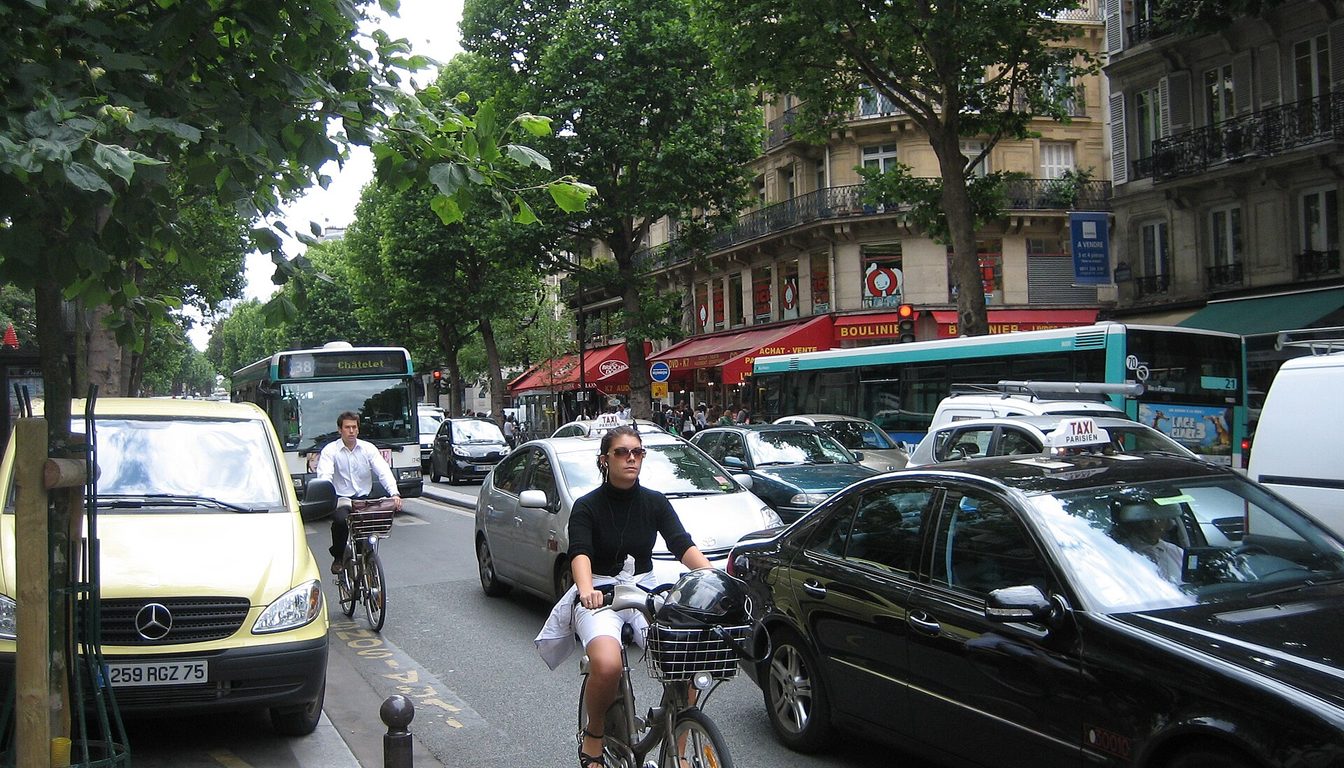
Paris’s urban transformation over the past decade included reclaiming streets for walking and cycling, and the Olympics helped accelerate cycling infrastructure and culture. The Games provided political cover and financial resources for projects that had faced resistance from motorist constituencies and budget constraints. What might have been incremental changes over fifteen years compressed into a five-year sprint leading up to the opening ceremony.
New protected cycle paths connected Olympic venues to major transit hubs—a network built for spectators that now serves everyday commuters. Post-Games, these upgrades remain in place and continue to support everyday commuters and tourists choosing active travel. Protected cycle lanes installed for Olympic access now carry morning commuters, delivery cyclists, and tourists navigating between neighborhoods.
Bike-parking facilities that served spectators during the Games now accommodate the city’s expanding fleet of shared bikes and private cycles. According to the Urban Cycling Institute, this infrastructure builds on Paris’s decade-long commitment to reclaiming street space from cars.
The emphasis on shared-space mobility over car access marks a structural shift in how visitors experience the city. Tourists arriving in 2026 encounter a Paris where cycling between major attractions is often faster and more convenient than driving. City council voted to expand protected lanes in 2025; pedestrian-priority zones are now in 12 neighborhoods, up from 7 in 2024.
What’s Still Temporary, What’s Now Permanent
Many of the most visible Olympic interventions—demountable seating, temporary pavilions—were removed shortly after the Games ended. Organizers dismantled demountable seating and signage within weeks—so fast that returning visitors found the city nearly scrubbed of Olympic traces. Within months, central neighborhoods looked much as they had before 2024, with only subtle changes visible to those who knew where to look.
Permanent changes focused on mobility infrastructure, housing, and public services rather than event-specific facilities. New cycling lanes, upgraded transit connections, and the converted Olympic Village represent the lasting physical legacy. Planners deliberately stripped Olympic branding from cycling lanes and signage, adopting Paris’s standard design language so the infrastructure wouldn’t feel temporary.
Wayfinding signage adopted Paris’s standard design rather than maintaining Games-specific branding. This absence of themed districts means visitors won’t find Olympic merchandise stands or commemorative districts, but it also means the city didn’t sacrifice neighborhoods to Olympic tourism—a trade-off that rewards return visitors more than souvenir hunters.
Travelers interested in legacy should focus on neighborhoods with reused venues, converted housing, and new mobility links rather than expecting Olympic branding or single districts. Seine-Saint-Denis, the areas around Stade de France, and corridors with new cycling infrastructure offer the clearest evidence of Olympic-driven change.
In central Paris, the story is more subtle—incremental improvements to public space and mobility that would be difficult to attribute to the Games without specific local knowledge. Those exploring iconic sites like the Arc de Triomphe encounter neighborhoods that function more smoothly than before, even if the changes aren’t immediately obvious.
For practical transit detail in Paris, see How to navigate Paris Metro and RER like a local.
The Grand Paris Connection: Olympics as Metropolitan Lever
The Games were embedded in the broader Grand Paris project, linking Olympic investment to long-term metropolitan governance and infrastructure. Grand Paris, the administrative and planning framework that integrates Paris with surrounding communes, provided the policy architecture within which Olympic planning occurred. Rather than treating the Games as a standalone project, officials positioned it as one component of a multi-decade metropolitan transformation.
Areas like Seine-Saint-Denis received targeted investment in transit, housing, and public space, using the event as a catalyst for regeneration. New metro extensions, improved bus networks, and upgraded pedestrian infrastructure all served Olympic logistics while addressing long-standing accessibility gaps. The concentration of investment in previously underserved areas represented a deliberate effort to spread Olympic benefits beyond the tourist core.
Olympic investment spread beyond central Paris to Seine-Saint-Denis, where new metro stations and housing now mark areas that historically went overlooked. Visitors who take the RER north will see the most substantial evidence of transformation.
The strategy aims to reduce spatial inequality and spread the benefits of global attention more equitably across the metropolitan area. By directing Olympic infrastructure investment toward Seine-Saint-Denis and other peripheral communes, planners attempted to address decades of uneven development. Seine-Saint-Denis saw heavy investment; areas like Pantin saw minimal change despite proximity to Olympic venues. Early housing affordability data suggests gentrification pressure in neighborhoods that received the most attention.
What Travelers Should Know About the Post-Olympics City
Expect stronger pedestrian and cycling infrastructure in areas that received Olympic upgrades, especially legacy redevelopment zones. Neighborhoods in Seine-Saint-Denis, corridors connecting major venues, and areas around the former Olympic Village offer the most noticeable improvements. Cycling from central Paris to these areas has become significantly more convenient, with protected lanes and improved signage making navigation easier than before 2024.
Some Olympic-era public spaces have reverted to everyday use, while others continue to evolve through ongoing construction and neighborhood redevelopment. The pace of change varies substantially by location. Some areas completed post-Games conversion within months, while others remain works in progress. Construction barriers, temporary fencing, and evolving pedestrian routes characterize neighborhoods still transitioning from Olympic to residential function.
Some Olympic-era public spaces have reverted to everyday use, while others continue to evolve through ongoing construction and neighborhood redevelopment.
The Champ de Mars reverted to restricted lawn access within weeks of closing; the temporary beach volleyball courts near the Eiffel Tower are now fenced off. Check the Paris tourism website for current opening hours before heading to former venues.
The post-Games Paris emphasizes reuse, everyday function, and sustainable mobility—offering a different experience than traditional Olympic host cities with purpose-built districts. The absence of Olympic districts means you won’t stumble into themed zones or souvenir traps—but it also means you have to know which neighborhoods to visit to see what the Games changed. For most travelers, this invisibility feels like missed opportunity; for locals, it’s the point.
For travelers planning visits, this means prioritizing neighborhoods where Olympic investments aligned with resident needs rather than seeking out event-specific landmarks. The most successful legacy projects are those that have been fully absorbed into everyday urban life, becoming invisible as Olympic interventions while improving city function. This invisibility, rather than representing failure, marks the success of Paris’s reuse-first strategy—infrastructure that serves people rather than commemorating an event. The experience of exploring Paris today benefits from Olympic-era infrastructure investments even if the Games themselves feel like distant history.