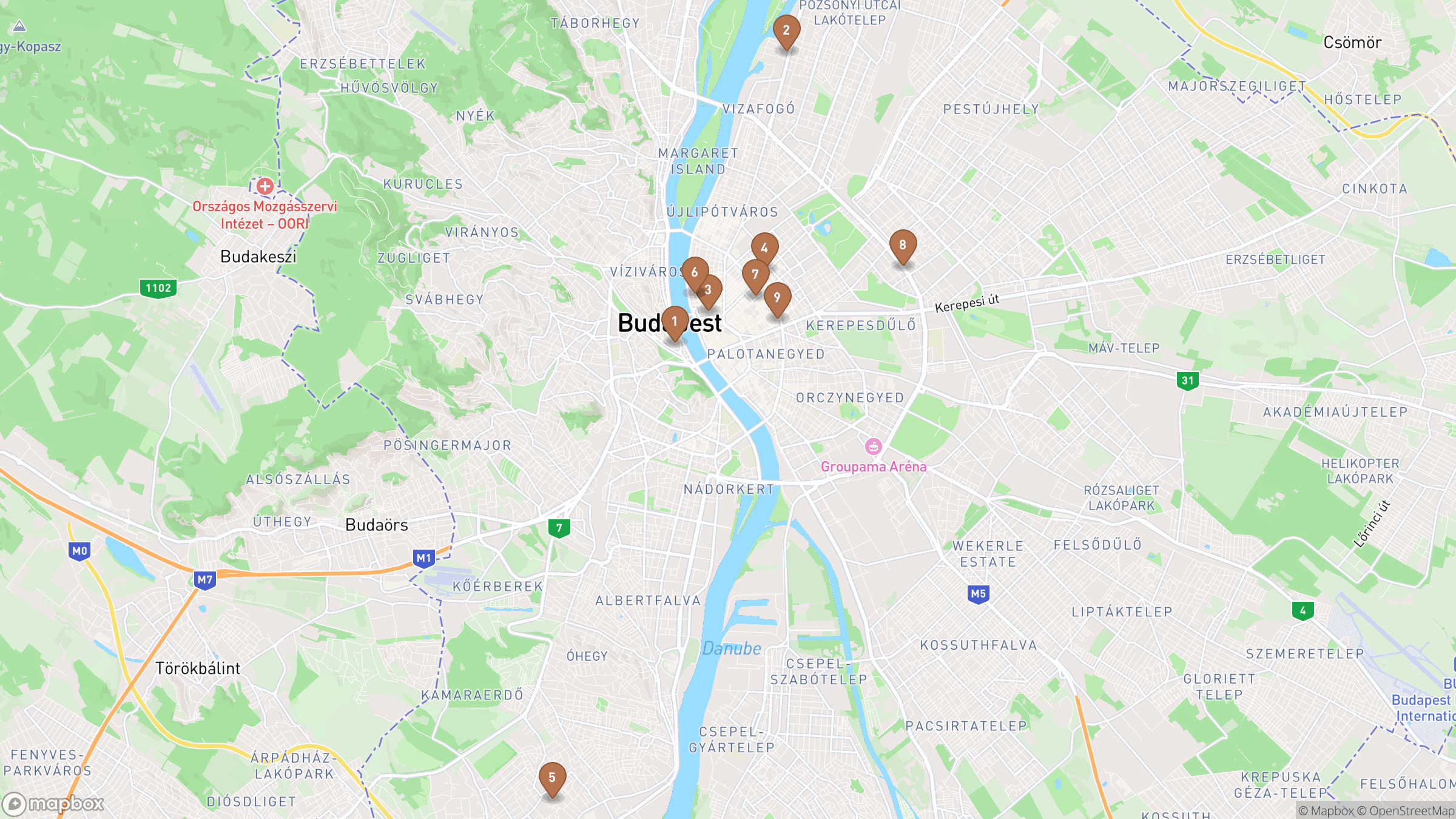
At-a-Glance
Buda's Castle Quarter and First Thermal Bath
- Buda Castle Quarter
- Matthias Church
- Fisherman's Bastion
- Gellért Hill
- Gellért Thermal Bath
Széchenyi Spa and the Jewish Quarter
- City Park
- Széchenyi Thermal Bath
- District VII Jewish Quarter
- Great Synagogue
- Ruin bars
Parliament, Danube Promenades, and River Views
- Hungarian Parliament Building
- Pest embankment
- Chain Bridge
- Buda embankments
Budapest in 3 Days: Thermal Baths, Ruin Bars, and Danube Views
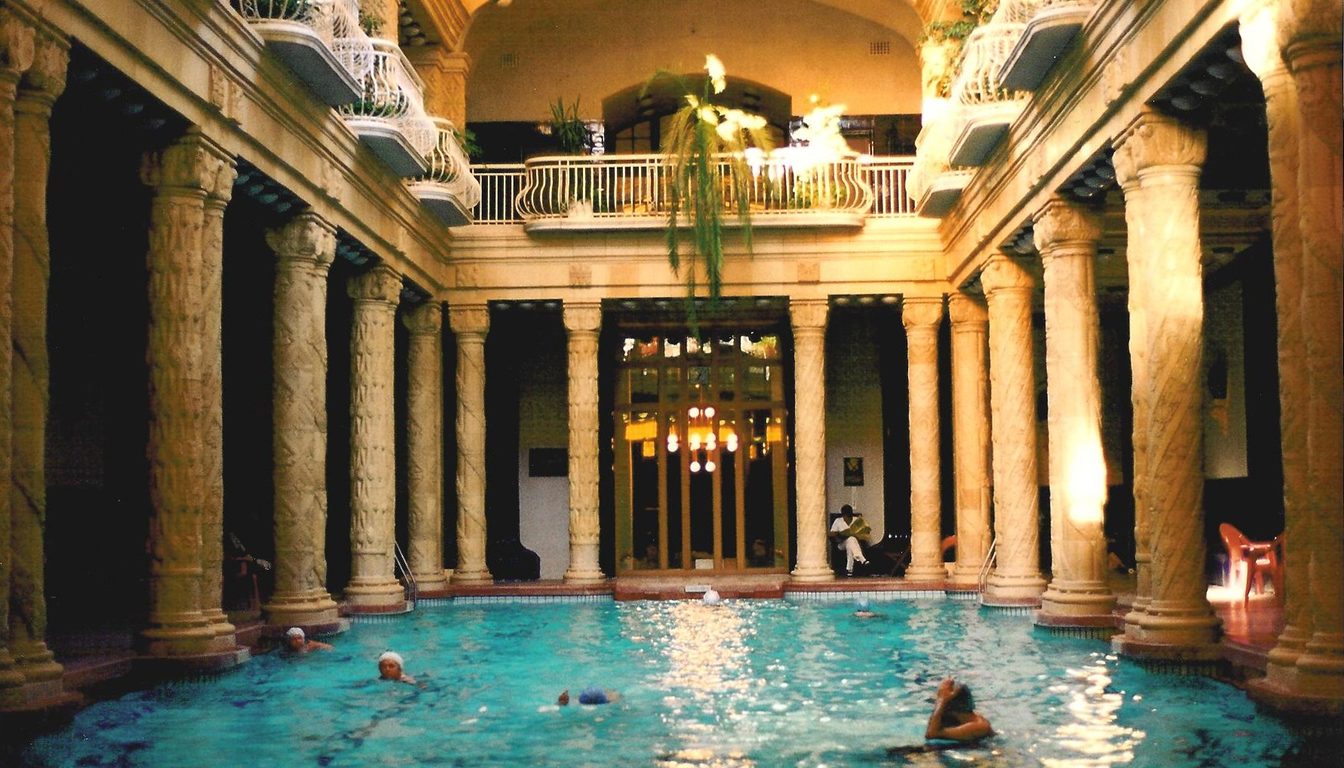
Budapest rewards a long weekend with experiences that span centuries—from Roman-era thermal springs to early-2000s cultural innovation. You’ll move between thermal pools, ruin bars housed in actual abandoned courtyards, and embankment walks where Parliament’s lit facade dominates the view at night. The Hungarian capital sits on natural thermal springs that allow you to weave restorative spa time into sightseeing without lengthy detours, while the Danube itself creates two distinct zones—historic Buda on the west bank and livelier Pest on the east—each offering different atmospheres within a single trip.
You can actually do all three in three days without rushing—Buda and Pest are close enough that you won’t lose a full day to travel. Public transport integrates metro, tram, and bus lines on time-based tickets, connecting the Buda Castle Quarter with the Jewish Quarter and City Park efficiently. This itinerary balances structured days with flexibility, leaving room to linger in a thermal pool or extend an evening in a candlelit courtyard bar.
Why Budapest Works for a Three-Day Visit
The historic core is compact, with Buda’s Castle Hill and Pest’s Jewish Quarter connected by walkable bridges and efficient trams. The Danube divides the city into Buda, with Castle Hill and Gellért Hill, and Pest, with the Parliament, Andrássy Avenue and the Jewish Quarter. Many key sights such as the Parliament, Buda Castle area and the Danube embankments are within walking distance, but the city also has an extensive public transport network of metro, trams and buses that makes cross-district movement straightforward.
Budapest sits on numerous thermal springs beneath the city, earning it the nickname “City of Spas” and enabling you to incorporate bathing into your daily rhythm rather than treating it as a separate excursion. The springs feed over a dozen historic and modern bath complexes, from Ottoman-era structures to Art Nouveau palaces, all accessible within the urban fabric.
The river itself provides natural orientation and spectacular views without requiring paid activities. The Parliament’s gold dome and bridge lights are specifically why UNESCO listed the riverfront—so stay until dark to see what they protected.
Public transport operates on time-based tickets that cover metro, tram, and bus lines. A multi-day pass allows unlimited movement between districts, making it practical to start mornings in Buda, shift to Pest for lunch and museums, and return to the river promenades at dusk. The system is reliable and frequent, with English signage at major stations.
Day One: Buda’s Castle Quarter and First Thermal Bath
Start on Castle Hill, where the medieval-to-Baroque Buda Castle Quarter overlooks the Danube and preserves centuries of royal architecture. The Buda Castle Quarter forms part of Budapest’s UNESCO World Heritage property, preserving medieval, Baroque and 19th-century structures that served as the royal seat of power. You walk past Gothic towers next to 19th-century palaces—the buildings are genuinely mixed eras, not restored into a single period.
 Photo: John Samuel / Wikimedia Commons, CC BY-SA 4.0 (cropped)
Morning light offers clearer views than midday haze, making early exploration ideal. Walk the cobbled streets around Matthias Church and the Fisherman’s Bastion, where terraces provide unobstructed panoramas of the Parliament and Pest skyline. Most buildings are 19th-century, not ancient, so you’re not staring up at cathedral-level grandeur—walk slowly enough to notice the roof tiles and door handles.
Walk south to Gellért Hill for elevated panoramas of the river, Parliament, and bridges. The climb is moderate, and the Citadel at the summit offers 360-degree views that contextualize the city’s layout. From this vantage point, you can trace the path of the Danube as it curves through the capital, dividing the two distinct zones you’ll explore over the next days.
Descend to Gellért Thermal Bath at the hill’s foot, an Art Nouveau complex fed by mineral-rich hot springs. The bath is known for its ornate architecture and thermal pools supplied by natural springs at the foot of Gellért Hill on the Buda side of the Danube. Early afternoon visits typically face lighter crowds than peak evening hours. Allocate at least two to three hours to move between indoor pools, outdoor thermal sections, and sauna areas.
Swimwear is required in mixed areas. Shower before entering pools—posted hygiene rules are taken seriously.
Bring a towel or rent one on-site. Some sections operate with gender-separated timing while others remain mixed throughout the day.
Return to the Pest embankment at dusk to see the illuminated Castle Quarter across the water. The golden lighting transforms the daytime skyline into something theatrical, with the castle walls and palace facades glowing against the darkening sky.
Day Two: Széchenyi Spa and the Jewish Quarter
Head to City Park on the Pest side for Széchenyi Thermal Bath, one of Europe’s largest spa complexes with indoor and outdoor pools supplied by natural hot springs. The bath offers multiple indoor and outdoor pools. The building looks like a Disneyland castle painted bright yellow, and the bright turquoise outdoor pools are surreal in winter when steam pours off them into freezing air. The complex is both a historic monument and a functional spa, preserving early 20th-century architecture while serving daily crowds of bathers.
 Photo: Marc Ryckaert (MJJR) / Wikimedia Commons, CC BY 3.0 (cropped)
Early morning visits before 10:00 typically face lighter crowds than midday sessions. Allocate at least three hours for the baths—this is not a quick stop but a key part of the Budapest experience. The outdoor pools remain open year-round, and locals use them through winter, creating steam clouds that rise into cold air. Move between temperature zones deliberately, allowing your body to adjust before shifting from hot pools to cooler plunge sections.
If you’d like to explore access options for thermal baths and other Budapest experiences, you can compare options here to plan your visit in advance.
Cross into District VII after lunch to explore the historic Jewish Quarter, where synagogues and heritage sites share streets with contemporary cafés. The quarter historically served as the city’s ghetto and still contains major synagogues and heritage sites, including the Great Synagogue on Dohány Street, one of the largest in Europe. The architecture shifts from religious monuments to residential courtyards that now house galleries, bookshops, and vintage stores.
Evening is the natural time to visit ruin bars, which occupy former residential courtyards and were first repurposed in the early 2000s. Budapest’s so-called ruin bars developed in abandoned buildings and courtyards in District VII, transforming derelict spaces into eclectic venues with mismatched furniture, local art installations, and candlelit ambiance. The bars came from locals using empty buildings they didn’t have money to demolish or renovate, not from a design concept.
Look for multi-room layouts in actual courtyards rather than single-floor bars with forced “ruin” décor. Real ruin bars are in buildings that genuinely look half-abandoned—crumbling walls, sometimes trash on the floor—not designed to look that way. The atmosphere shifts from afternoon café culture to late-night music venues, but earlier visits (before 22:00) offer a more relaxed experience with lighter crowds and often lower drink prices.
For practical transit detail in Rome, see How to get around Rome using public transport: a complete guide.
Understanding Budapest’s Thermal Bath Culture
The city’s bathing tradition dates to Roman times and expanded during 16th–17th century Ottoman rule, when significant baths like Rudas and Király were built. Ottomans built Rudas and Király in the 1500s–1600s. Vienna’s emperors added Széchenyi and Gellért a century ago. So you’re soaking where multiple empires soaked. These are not purely modern wellness facilities but layered historic monuments.
Budapest is often called the “City of Spas” due to numerous thermal springs beneath the city that feed over a dozen historic and modern bath complexes. The springs supply mineral-rich water at temperatures ranging from warm to very hot, with specific therapeutic properties attributed to different sources. Locals treat thermal bathing as part of daily life rather than a tourist activity, and you’ll see regulars reading newspapers in the pools or playing chess on floating boards. This means going at noon feels touristy; go at 8 a.m. when locals are reading papers, and you’ll feel less like an observer and more like you belong.
Swimwear is required in mixed areas, and bathers are expected to shower before entering pools. Posted hygiene rules are taken seriously, and staff occasionally monitor compliance. Some baths operate gender-separated sections on certain days or times, particularly older Ottoman-era facilities like Rudas. Check specific schedules before visiting if you have preferences.
Several Budapest baths, including Rudas and Király, have origins in the Ottoman period, and many current complexes preserve early 20th-century architecture. This dual identity—historic monument and functional spa—means that you’re not just soaking in hot water but inhabiting a space with centuries of use. The thermal bathing culture remains a living tradition rather than a reconstructed tourist experience.
Call ahead or check the website before you go—they’ll sometimes close an entire pool wing for maintenance, and it’s annoying to show up expecting Széchenyi’s outdoor pool when it’s drained. Some baths also host special evening sessions with different atmospheres, including nighttime bathing under the stars or rooftop pool access in summer months.
Day Three: Parliament, Danube Promenades, and River Views
The Hungarian Parliament Building on the Pest bank was completed in 1904 and anchors Budapest’s UNESCO-listed Danube riverfront. The Austro-Hungarians built it to say ‘Hungary matters,’ and after they left, the building became the center of government—so it’s loaded with meaning for locals. Its 691-foot length and central dome dominate the eastern embankment, visible from multiple points across the river.
 Photo: Pierre Blaché / Wikimedia Commons, CC0 (cropped)
Walk the Pest embankment opposite the Buda Castle Quarter for unobstructed views. Tram 2 runs this route along the Danube if you prefer to ride while sightseeing, offering a moving panorama of the river and both banks. The tram route is considered one of Europe’s most scenic urban transit rides, threading between the water and historic buildings with frequent stops.
The promenade itself is pedestrian-friendly, with benches, interpretive plaques, and seasonal cafés. Morning light illuminates the Parliament’s facade directly, while afternoon shifts the contrast and creates sharper shadows. The river level varies seasonally, and high-water periods can change the embankment’s accessibility, though pathways remain open except during extreme flooding.
Cross to the Buda side for the reverse perspective: the Parliament and Pest skyline are best photographed from the elevated promenades near the castle. The Chain Bridge provides a pedestrian crossing with midpoint views in both directions, and the walk itself offers a sense of the river’s width and current. From the Buda embankment facing east, the Parliament’s full symmetry becomes visible, with the dome centered against the Pest skyline.
Skip the river cruise. The embankments have better views and cost nothing. Walk instead—you’ll see more because you can stop when you want.
For travelers interested in exploring more of Budapest’s architectural landmarks, you can compare access options here for experiences beyond the riverfront.
Evening walks along either embankment allow you to see the illuminated skyline as UNESCO intended, with bridges, palaces, and the Parliament lit in golden tones. The lighting shifts through the year, with winter darkness bringing earlier illumination and summer extending daylight until late evening. Seasonal events occasionally add temporary lighting or projections, but the core illumination remains constant.
For a full multi-day plan in Paris, see Best things to do in Paris in 3 days: a curated itinerary.
Navigating Ruin Bars Without Falling Into Tourist Traps
Authentic ruin bars cluster in District VII’s Jewish Quarter, particularly around streets near the Great Synagogue. If a bar is in District VI or VIII and calls itself a ruin bar, it’s probably just an old apartment with fake graffiti. Real ones are only in District VII, in buildings that actually sat empty for years. Budapest’s original and most famous ruin bars are clustered mainly in the old Jewish Quarter in District VII, where abandoned buildings and courtyards were first repurposed as bars in the early 2000s.
Look for multi-room layouts in actual courtyards with mismatched furniture and local art installations rather than single-floor bars with forced “ruin” décor. Authentic venues occupy former residential buildings, often with multiple rooms opening onto a central courtyard, staircases to upper floors, and outdoor areas under tarps or fairy lights. The chairs don’t match because they’re actually random—you’ll see a 1970s office chair next to a couch that’s been there since 2005, not a bar owner’s curated vintage collection.
Look for multi-room layouts in actual courtyards with mismatched furniture and local art installations rather than single-floor bars with forced “ruin” décor.
Several well-known venues are located close together in former residential buildings and courtyards, making it efficient to visit multiple spots in a single evening. Walking between them reveals the neighborhood’s texture—residential buildings still interspersed with bars, street art on courtyards, and occasional glimpses of unrenovated interiors.
Visit earlier in the evening (before 22:00) for a more relaxed atmosphere. Later hours bring heavier crowds and higher drink prices in some venues, along with louder music and standing-room-only conditions. Early visits allow you to see the space itself and experience the design details that get lost in packed late-night sessions.
Ruin bars are not scattered city-wide—they originated specifically in abandoned Jewish Quarter buildings, so focusing your search in District VII ensures you experience the genuine article. Bars in other districts may adopt the aesthetic but lack the neighborhood history and organic development that defined the original movement. The Jewish Quarter itself retains its heritage sites and residential character despite the nightlife influx, creating a layered urban environment rather than a single-purpose entertainment zone.
Practical Logistics for a Long Weekend in Budapest
The official currency is the Hungarian forint (HUF). While some businesses accept euros, many smaller establishments prefer or only take forints, so withdraw cash or use cards that minimize foreign-transaction fees. ATMs are widely available in central districts, and exchange bureaus cluster near tourist sites, though rates vary—avoid airport and train-station kiosks in favor of reputable exchanges in the city center.
Pickpockets target the tram to Parliament during rush hour, so stay alert on that route. Use a backpack you keep in front, not over your shoulder. Hungary is considered a relatively safe destination, but standard urban precautions apply in busy squares and on packed trams.
Purchase multi-day public transport passes for unlimited metro, tram, and bus travel rather than single tickets if you plan to cross between Buda and Pest multiple times daily. Time-based tickets cover 24, 72, or 168 hours from first validation, and the integrated system allows seamless transfers between modes. Always validate before boarding—inspectors fine tourists for a missed validation and don’t let it slide.
Budapest’s metro system has four lines (M1, M2, M3, M4) that intersect at key transfer points. Trams run along the embankments and major boulevards, with tram 2 along the Pest riverfront and tram 19 and 41 on the Buda side. Buses fill gaps in the network, particularly reaching elevated areas like Castle Hill and Gellért Hill that metro lines don’t serve.
Night services operate on reduced schedules, with some tram and bus lines continuing through the early morning. Check schedules in advance if you plan late-night return trips from the Jewish Quarter, as frequency drops after midnight. Taxis and ride-sharing apps provide alternatives, though prices surge during peak hours and weekend evenings.
Common Mistakes and How to Avoid Them
Don’t assume thermal baths are modern wellness centers. Several Budapest baths, including Rudas and Király, have origins in the Ottoman period, and many current complexes preserve early 20th-century architecture, making them both historic monuments and spa facilities. These baths are protected heritage sites as well as functional spas, and their value extends beyond the thermal experience to architectural and historical significance.
Avoid concentrating all your time in a single district. Key attractions are spread across both Buda and Pest, including the Buda Castle Quarter and Gellért Hill on the west bank and the Parliament, Andrássy Avenue and Jewish Quarter on the east bank, so visitors typically move between multiple districts. The river crossing is part of the experience, and limiting yourself to one side means missing half the city’s character.
Don’t rely solely on river cruises for Danube views. Promenades on both banks, especially the Pest embankment opposite the Buda Castle Quarter and the Buda side facing the Parliament, along with elevated spots like Castle Hill and Gellért Hill, provide equally impressive panoramas of the illuminated skyline. Embankment walks are free, accessible at any hour, and allow you to move at your own pace rather than following a cruise schedule.
Plan bath visits with sufficient time—rushing through Széchenyi or Gellért in an hour defeats the purpose of the thermal experience. Allocate at least a few hours for a major thermal bath and consider visiting early in the morning to avoid peak crowds. The bathing culture is about slowing down, not ticking off a checklist, and locals spend half a day in the pools.
Plan bath visits with sufficient time—rushing through Széchenyi or Gellért in an hour defeats the purpose of the thermal experience.
Avoid assuming all ruin bars are interchangeable. Authentic venues in District VII’s Jewish Quarter differ significantly from imitations elsewhere in the city. The original bars occupy genuinely repurposed buildings with historical layers, while newer venues in other districts often create artificial “ruin” aesthetics without the context. Stick to the Jewish Quarter to experience the movement as it developed.
Don’t overlook seasonal variations in the city’s character. Winter bathing in outdoor pools creates a unique atmosphere with steam rising into cold air, while summer extends daylight hours and activates rooftop terraces and outdoor seating. Spring and autumn offer moderate temperatures ideal for walking the embankments and exploring both banks without extreme heat or cold.
Stay flexible—skip Parliament if you end up playing chess in Széchenyi for four hours instead. That’s the real Budapest experience.