Cruise Tourism vs City Sustainability: The Dubrovnik Case Study
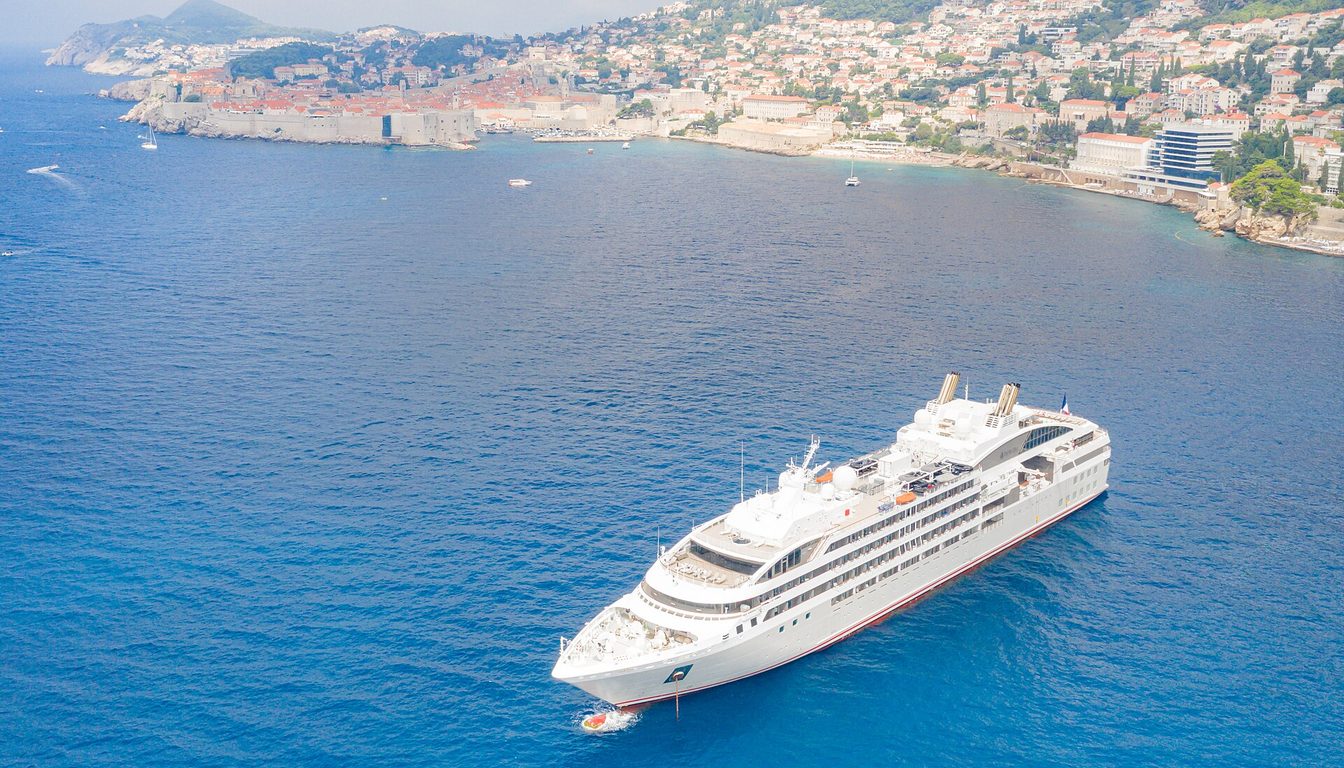
Dubrovnik’s UNESCO-listed Old Town has become a case study others copy—sometimes successfully, sometimes not. This analysis looks at how a small historic city navigates economic dependence on tourism while protecting heritage, environment, and residents’ quality of life. The Croatian coastal city shows that measurable policy intervention—regulatory caps, technology, industry partnerships, research—can shift destination management from reactive crisis response toward strategic balance.
The stakes are high. When a single cruise operator cancels a season, the city loses 70 percent of revenue—making restrictions politically toxic. When thousands of cruise passengers disembark simultaneously into a walled medieval quarter, the tension between economic imperative and livability becomes immediate and visible. Understanding how Dubrovnik addresses this tension offers lessons for destinations worldwide facing similar pressures.
The Economics and Ecology of Cruise Tourism in Dubrovnik
Tourism generates around 70 percent of Dubrovnik’s total city revenue, creating profound economic dependence on the sector. That concentration leaves limited room for maneuvering without risking immediate budgetary impact.
Research shows environmental costs of cruise activity may outweigh local economic benefits by six to seven times. Environmental externalities include air quality impacts from ship emissions, waste generation concentrated in short time windows, and strain on water and energy infrastructure designed for a smaller resident population.
Cruise passengers typically spend less per capita than overnight tourists because their accommodation, meals, and entertainment are bundled on board. The model can be seen as extractive: high foot traffic, low spend, high wear. Shore excursions and retail purchases in the Old Town generate revenue, but the value captured locally is lower relative to the visitor volumes involved.
The revenue concentration highlights a structural vulnerability. Dependence on tourism revenue makes it politically difficult to impose restrictions that might reduce visitor numbers, yet failure to manage impacts risks degrading the very assets that attract visitors in the first place.
From Mass Tourism to Strategic Management: The ‘Respect the City’ Programme
To address overtourism, Dubrovnik launched the “Respect the City” strategy, aiming to shift from mass tourism toward sustainable and inclusive destination management through urban planning, technology, and policy innovation. The programme integrates multiple tools across different governance domains, acknowledging that sustainable tourism requires coordinated action across infrastructure, regulatory frameworks, visitor behavior, and industry collaboration.
The city watches visitor flows live and can reroute shuttle traffic—but staff say enforcement is inconsistent on peak days. Real-time data feeds into operational decisions such as redirecting foot traffic, adjusting shuttle schedules, or triggering communications to visitors about alternative routes or sites.
Timed entry systems and controlled access help manage carrying capacity at key sites during peak seasons. Capacity controls transform abstract sustainability goals into operational rules enforced at the point of access.
The city plasters signage everywhere telling visitors to dispose of waste and lower their voices—whether anyone reads it is another question. The “Respect the City” messaging aims to shift visitor norms from passive sightseeing to active participation in preserving the destination’s character. The city relies on signage telling visitors to keep right and not block streets—but enforcement is lax, and compliance depends on visitor goodwill.
Cruise Ship Caps and Flow Management: Setting New Industry Standards
The city set a maximum of two cruise ships in port simultaneously to limit visitor concentration. This numerical cap represents a clear policy line: Dubrovnik prioritizes managing peak loads over maximizing total arrivals. When two ships docked on the same morning, the Pile Gate entrance turned into a crush of elbows and selfie sticks. One ship at a time makes it walkable.
Daily cruise passenger limit into the walled Old Town capped at 4,000, below UNESCO’s suggested carrying capacity threshold. By setting the cap below the carrying capacity threshold recommended by an international heritage body, Dubrovnik signals a precautionary approach that prioritizes long-term heritage protection over short-term revenue maximization.
By 2017, city authorities had reduced souvenir stands by 80 percent and restaurant outdoor seating by 30 percent to improve pedestrian circulation. Narrow Placa Street, where cruise passengers form a single-file queue at 11 a.m., was choking retail traffic. Reducing commercial infrastructure reclaimed public space for movement and reduced the density of commercial activity that can make historic cores feel commodified rather than lived-in.
Narrow Placa Street, where cruise passengers form a single-file queue at 11 a.m., was choking retail traffic.
Traffic elimination plans around gateway areas like Pile Gate aim to reduce congestion and prioritize walking. Removing vehicular access from entry zones improves pedestrian safety and circulation while reinforcing the historic character of the walled city.
These numerical limits represent measurable policy intervention rather than aspirational goals. The specificity of the caps—two ships, 4,000 passengers, 80 percent reduction—makes outcomes auditable and creates accountability.
For a full multi-day plan in Paris, see Best things to do in Paris in 3 days: a curated itinerary.
Industry Collaboration: The City–CLIA Partnership Model
Dubrovnik and Cruise Lines International Association (CLIA) signed a Memorandum of Understanding to formalize cooperation. The MOU framework shifts the relationship between destination and cruise operators from adversarial to collaborative, establishing shared responsibility for managing impacts.
CLIA member cruise lines staggered arrival and departure schedules during 2018 and 2019 seasons to reduce Pile Gate congestion. Staggering schedules spreads visitor flows across longer time windows, reducing peak-hour bottlenecks at the main entrance to the Old Town.
The partnership includes development of shore excursions to destinations outside the Old Town to disperse visitor pressure. Cavtat bus tours exist, but most passengers skip them for the Old Town selfies. Dispersal only works if the alternative is compelling. By offering curated experiences in the surrounding region, cruise operators can market differentiated itineraries while supporting the city’s goal of distributing visitors more widely.
Cruise operators support the “Respect the City” educational programme through on-board and port messaging. Pre-arrival communication can shape expectations and norms more effectively than signage encountered only after arrival.
The MOU sounds good on paper, but enforcement is weak—lines still overcrowd Pile Gate when profits are on the line. This model requires trust, transparency, and mutual commitment to shared goals, but it can produce coordinated action at a scale difficult to achieve through regulation alone.
Research, Data, and Academic Partnerships Driving Policy
Dubrovnik has partnered with the University of Dubrovnik to study visitor trends, carrying capacity, and cruise tourism impacts. The university partnership sounds neutral, but the city funds it—raising questions about whether researchers can push back on inconvenient findings. Research conducted by university partners can withstand scrutiny from industry stakeholders, international organizations, and advocacy groups in ways that purely internal city analysis may not.
This research contributed to one of the first comprehensive management plans and carrying-capacity strategies for a UNESCO site in Croatia. The management plan integrates heritage protection, visitor flow analysis, environmental monitoring, and socioeconomic considerations into a coherent framework.
Data-driven approaches allow the city to set evidence-based thresholds and monitor outcomes over time. Rather than relying on anecdotal reports or political pressure, the city can justify policy interventions with quantitative analysis of visitor flows, environmental indicators, and economic impacts.
Did the university research actually change policy, or was it cover for decisions the city wanted to make anyway? Hard to say from outside. Researchers bring expertise in survey design, statistical analysis, spatial modeling, and comparative case study methods that city staff may lack.
Ongoing research helps the city adapt strategies as conditions and tourism patterns evolve. Continuous monitoring and analysis enable the city to detect emerging pressures early and adjust policies before problems escalate.
Measuring Success: GSTC Scores and Sustainability Indicators
GSTC scores rose from 69.8% to 86% in four years—but the framework measures compliance, not lived experience. Residents may still feel squeezed. This quantitative improvement provides an internationally recognized benchmark for policy effectiveness. The GSTC framework covers sustainable management, socioeconomic impacts, cultural heritage, and environmental protection.
Zero risk indicators sounds great, but ask a resident if the summer crowds feel sustainable. Metrics lag lived experience. Risk indicators flag areas where current practices fall below acceptable thresholds or where trends point toward degradation.
GSTC criteria cover sustainable management, socioeconomic impacts, cultural heritage, and environmental protection. The breadth of the assessment ensures that improvements in one area do not come at the expense of another.
GSTC assessments allow Dubrovnik to compare its performance against other destinations and track progress over time using a standardized methodology. This benchmarking capability supports accountability, transparency, and knowledge sharing with peer destinations facing similar challenges.
Publishing assessment scores and methodologies enables civil society, industry stakeholders, and international organizations to monitor progress and hold authorities accountable for sustainability commitments.
Practical Implications for Travelers and Industry Professionals
Skip the generic bus tours; rent a scooter and head to Cavtat or the Elaphite Islands. You’ll see what Dubrovnik was before cruise ships. Cavtat is worth a half-day. The Elaphites are stunning if you have a full day. Visiting sites outside the walled city reduces pressure on the most congested zones while offering access to landscapes, villages, and cultural sites that provide context for Dubrovnik’s history.
Mid-morning to early afternoon remains peak congestion time; visiting early or late in the day reduces crowding. Passengers arriving on early shuttles or remaining ashore into the evening can experience the Old Town with fewer crowds and better light for photography.
Mid-morning to early afternoon remains peak congestion time; visiting early or late in the day reduces crowding.
Visitors may encounter timed entry or capacity controls at popular sites and should be prepared for advance reservations. Digital monitoring and timed entry systems manage carrying capacity at key sites during high season, so advance planning becomes part of the visitor experience.
Following “Respect the City” guidelines—avoiding blocking narrow streets, proper waste disposal, noise awareness—supports residents’ quality of life. Small actions such as keeping to the right on narrow passages, disposing of trash properly, and moderating noise levels contribute to preserving the destination’s livability.
Walking into the Old Town is often more efficient than vehicle-based access due to traffic reduction plans around gateway areas. As the city progressively limits vehicular traffic near Pile Gate and other entry points, pedestrian access becomes the primary mode of arrival.
For a full multi-day plan in Rome, see First-time visitor’s guide to Rome in 4 days.
Lessons for Other Cruise-Dependent Destinations
The partnership has kept cruise volumes from exploding—but locals still complain the streets are packed in summer. It’s an improvement, not a fix. The city has not banned cruise ships or imposed prohibitive fees; instead, it has engaged the industry as a partner in managing impacts.
Setting clear numerical limits—ship caps, passenger thresholds—provides enforceable frameworks rather than vague aspirations. Concrete limits create bright lines that operators, authorities, and civil society can monitor and enforce.
Combining regulation with technology—digital monitoring, timed access—enables adaptive management in real time. Technology allows destinations to move from static annual planning to dynamic, data-informed operations that respond to actual conditions.
Research partnerships provide the analytical foundation for policy decisions and create a buffer against accusations of arbitrary or politically motivated interventions. Academic credibility matters when justifying restrictions to industry stakeholders who may resist limits on their operations.
The case underscores that sustainability requires balancing economic dependence with long-term heritage protection, livability, and environmental integrity. When a single cruise operator cancels a season, the city loses 70 percent of revenue—making restrictions politically toxic. Effective destination management requires acknowledging this tension explicitly and building institutional capacity to navigate trade-offs over time. The city’s rising GSTC scores and formal partnerships with industry and academia demonstrate that structured, evidence-based approaches can shift the balance toward sustainability without abandoning economic viability.