UNESCO Sites Under Tourism Pressure: A 2026 Report Card
Post-pandemic travel has rebounded and climate change is accelerating. UNESCO World Heritage sites are caught between rising visitor demand and the imperative to protect what made them worth protecting in the first place. The equation has grown more complex since 2020: demand has returned to pre-pandemic levels, but environmental volatility and infrastructure stress have increased in parallel.
This report card examines which sites face the greatest pressure, what the heritage community is doing about it, and what travelers need to understand about visiting these places responsibly in 2026.
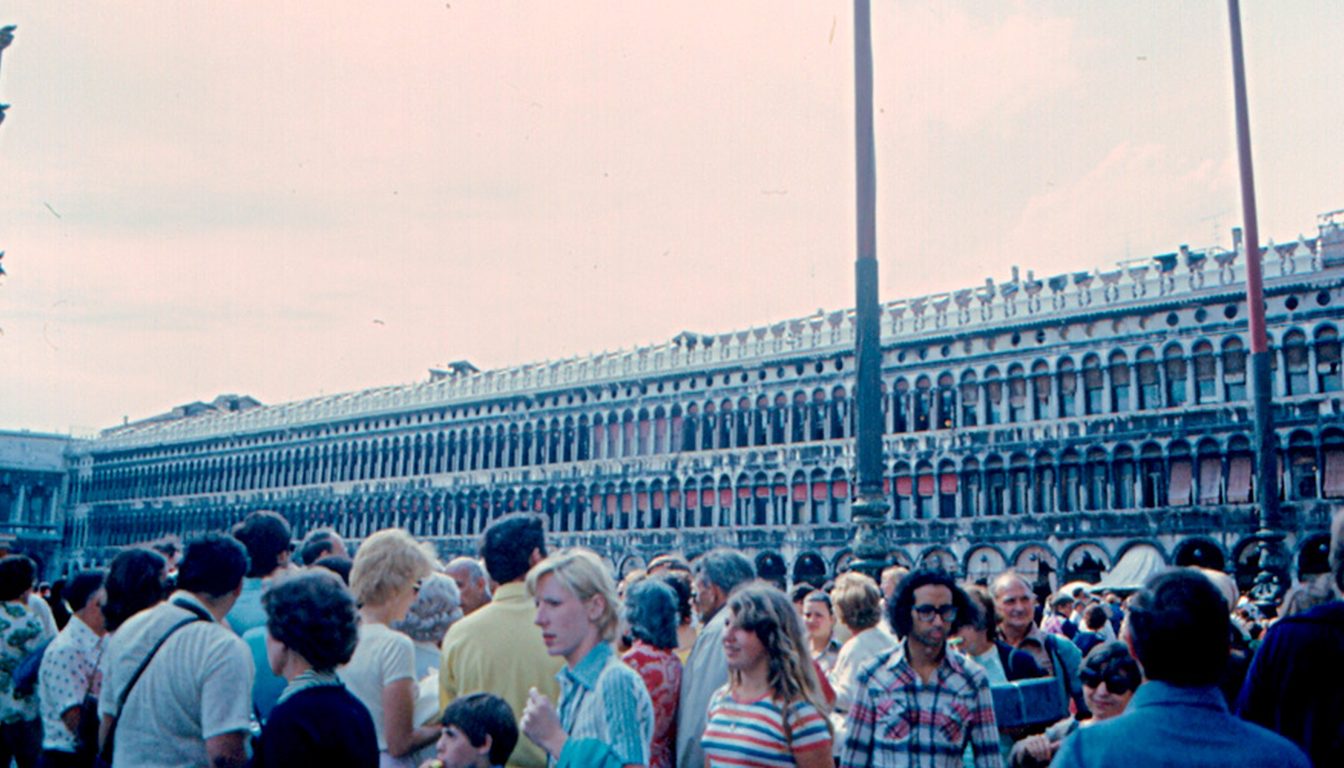
Venice gets 30 million visitors a year; its infrastructure was built for 5 million. Can any reservation system fix that? UNESCO’s own guidance acknowledges that many sites still need better prevention and management systems, even decades after inscription. The stakes are clear: these are humanity’s shared inheritance, and the decisions we make now about tourism management will determine whether future generations experience them intact or degraded.
The Scale of the Challenge: Tourism Pressure at World Heritage Sites in 2026
Post-pandemic tourism pressure has rebounded. According to a 2026 review published in Nature, the reality on the ground is messier: a site facing climate flooding also faces a booking surge, and managers can’t treat them separately. The return of international travel has not meant a return to pre-2020 management paradigms; instead, it has exposed vulnerabilities that the pandemic pause temporarily masked.
UNESCO states that the relationship between World Heritage and tourism is site-specific, and many properties still need better prevention and management of tourism impacts. That assessment is diplomatically worded but unambiguous: inscription alone does not guarantee protection from visitor pressure. Designation brings global visibility, which can accelerate demand, but it does not automatically deliver the funding, governance structures, or technical capacity required to manage that demand sustainably.
Heritage tourism continues to grow. The economic importance is undeniable—entire regional economies depend on World Heritage-driven visitation—but that dependency creates political pressure to maximize access rather than regulate it. Venice’s managers chose to cap cruise arrivals, accepting short-term revenue loss for long-term preservation.
UNESCO designation alone does not prevent overcrowding or visitor impacts; many properties lack robust monitoring and prevention systems. State Parties nominate sites for inscription, but they also retain primary responsibility for management and protection. When national governments lack the resources or political will to enforce access limits or invest in visitor infrastructure, the gap between UNESCO principles and on-the-ground reality widens.
Cinque Terre’s ticketing works. Rila Monastery’s does not because Bulgaria lacks enforcement capacity. The contrast shows how unequal global management capacity shapes what happens at each site.
Which UNESCO Sites Face the Most Pressure? Patterns by Property Type
Research shows that tourism threats are most likely at religious World Heritage sites, where visitor behavior and volume create unique management challenges. According to a study presented at the 2024 Global Sustainable Tourism Council symposium, religious properties face the highest risk of tourism-related pressures among all heritage types.
The reasons are structural: these sites often combine active worship, local community use, and mass tourism, creating competing demands on the same physical space. Visitor behavior at religious sites also requires cultural sensitivity that can be difficult to enforce at scale.
Among natural properties, forest areas and marine and coastal sites are the most threatened by tourism-related impacts. The same study found that these ecosystem types are especially vulnerable because visitor access—even at moderate levels—can disrupt ecological processes, fragment habitats, and introduce invasive species.
Forest World Heritage sites often lack the perimeter control and ranger capacity needed to monitor dispersed access. Marine and coastal properties face pressure from recreational boating, diving, and beachfront development that may predate inscription but accelerates with heritage branding.
World Heritage sites in Europe and North America have the lowest risk of being threatened by tourism compared to other regions. This pattern reflects differences in governance capacity, infrastructure investment, and visitor management experience rather than lower absolute visitor numbers. European and North American properties benefit from decades of institutional learning, established regulatory frameworks, and better coordination between heritage authorities and tourism operators.
Cultural sensitivity matters. So do fragile ecosystems and visitor infrastructure. Sites that combine high visitor volume with limited management resources face the steepest challenges.
Properties in regions where heritage management is a newer discipline or where tourism growth has outpaced infrastructure development are especially at risk. Tourism pressure is not evenly distributed, and certain site types and geographies face disproportionate risk.
Different site types require tailored management responses, from crowd control at monuments to ecological monitoring in natural reserves. A one-size-fits-all approach to visitor management fails because the reasons for inscription differ fundamentally across property types.
Religious sites may need visitor codes of conduct and capacity limits during worship hours. Natural sites may need seasonal closures and ecological carrying-capacity studies. The implication for heritage managers is that borrowing best practices across categories requires careful adaptation to local context.
Climate Change as a Tourism Pressure Multiplier
UNESCO reports that tourism and climate change interact, and climate change can worsen problems caused by unplanned tourism development and poorly managed visitor access. This is not a simple additive relationship; climate change amplifies existing vulnerabilities and creates feedback loops that heritage managers must now anticipate.
Coastal World Heritage sites facing sea-level rise must also contend with tourism infrastructure—hotels, access roads, parking—that increases impermeable surfaces and exacerbates flooding. Mountain properties experiencing glacier retreat see trails erode faster under visitor use. Sites in arid regions face water scarcity intensified by tourist demand.
Rising temperatures, extreme weather events, and sea-level rise all threaten World Heritage site infrastructure and conservation. Physical damage from storms, fires, and floods is the most visible impact, but chronic stress from temperature extremes and precipitation changes may be more consequential over time.
Materials degrade faster under climate stress: stone facades crack, wooden structures warp, archaeological deposits dry out or become waterlogged. For natural properties, shifting climate zones push ecosystems beyond the adaptive capacity that made them worth protecting in the first place.
Heat waves make outdoor heritage sites unsafe or uncomfortable, pushing demand toward shoulder seasons that were previously less pressured. Wildfires close access unpredictably, forcing visitors to reschedule and concentrate demand when sites reopen.
Flooding damages access infrastructure, requiring reconstruction that may not align with heritage conservation standards if done under emergency conditions. Each disruption forces managers to choose between maintaining access and protecting the site, and those choices grow more frequent as climate impacts accelerate.
Sites must now plan for both visitor demand spikes and environmental volatility simultaneously. Traditional visitor management assumes relatively stable environmental conditions; climate change removes that assumption.
Heritage managers must now scenario-plan for compound events—a storm that damages infrastructure during peak season, a drought that reduces water availability for both conservation and visitor services, a heatwave that coincides with a major cultural event. The complexity of this dual challenge exceeds the capacity of many site management teams, especially at under-resourced properties.
UNESCO’s tourism and climate-change work increasingly frames World Heritage as vulnerable to overlapping pressures from visitor demand and environmental change. The framing matters because it challenges the institutional tendency to address tourism and climate in separate workstreams. Integrated planning is not optional; it is the only way to prevent solutions to one problem from exacerbating the other.
A reservation system that spreads visitation year-round may reduce overcrowding but also expose sites to visitor pressure during climatically vulnerable periods. Infrastructure to accommodate more visitors may lock in carbon-intensive patterns incompatible with climate mitigation goals.
UNESCO’s Sustainable Tourism Programme: Progress and Gaps
UNESCO’s World Heritage and Sustainable Tourism Programme was developed to integrate tourism planning with heritage management at the destination level. Launched in the 2010s, the programme recognized that site-level management alone cannot address tourism pressure when demand is driven by destination marketing, regional infrastructure, and national tourism policy. The programme’s ambition is to shift the conversation from reactive damage control to proactive planning that aligns tourism development with what made each site inscription-worthy from the outset.
UNESCO states that sustainable tourism planning at World Heritage sites should be based on stakeholder cooperation, destination-level planning, and protection of natural and cultural assets. This principle sounds straightforward but proves difficult in practice.
You’re coordinating national heritage authorities, regional tourism boards, local governments, site managers, community representatives, and private-sector operators—each with different priorities and planning horizons. That’s what stakeholder cooperation means in practice.
Destination-level planning challenges the convention that World Heritage sites operate as islands separate from their surroundings. Tourism pressure originates from the destination scale, so solutions must as well.
Destination-level planning challenges the convention that World Heritage sites operate as islands separate from their surroundings.
Despite the programme framework, many properties still lack the capacity or resources to implement effective visitor management systems. UNESCO provides guidance, but State Parties implement, and implementation depends on political will, technical expertise, and funding.
Under-resourced sites may understand the principles but lack the staff to conduct carrying-capacity studies, the technology to operate reservation systems, or the legal authority to enforce access limits. The gap between UNESCO’s programme aspirations and on-the-ground reality is widest at properties where tourism pressure is mounting fastest but management capacity is weakest.
The programme emphasizes prevention, monitoring, and community engagement, but implementation varies widely from site to site. Some properties have embraced the full toolkit: participatory planning processes, visitor monitoring systems, adaptive management protocols.
Others have adopted isolated elements—a visitor survey here, a stakeholder workshop there—without the sustained commitment required for systemic change. The variance reflects not just capacity differences but also how State Parties prioritize World Heritage obligations relative to other development goals.
UNESCO and its Advisory Bodies have issued guidance and a toolkit for impact assessment in a World Heritage context to identify site values, assess potential impacts, and define mitigation measures. The Heritage Impact Assessment (HIA) toolkit represents a significant advance in methodological rigor, providing a structured process for evaluating proposed developments or tourism interventions before they occur.
The toolkit is explicit that impact assessment must consider both direct physical impacts and indirect effects on the attributes that convey what made the site worth protecting. For tourism, this means assessing not just infrastructure footprints but also visitor behavior, demand patterns, and cumulative effects over time.
For a full multi-day plan in Rome, see First-time visitor’s guide to Rome in 4 days.
New Management Tools: Access Caps, Timed Entry, and Impact Assessments
Many heavily visited UNESCO sites now use reservation systems, capped entry, timed access, or route restrictions to manage visitor flow. Site managers adopted these tools during COVID reopening and then kept them—because they worked.
Timed entry spreads demand across the day, reducing peak congestion and improving visitor experience. Access caps set absolute limits based on carrying capacity, preventing the overcrowding that degrades both conservation and visitor satisfaction. Route restrictions direct foot traffic away from fragile features or culturally sensitive areas.
Timed entry spreads demand across the day, reducing peak congestion and improving visitor experience.
These tools reflect UNESCO guidance that tourism impacts and management responses differ by property, depending on values, location, and governance. A coastal archaeological site facing erosion from foot traffic requires different interventions than an urban historic district grappling with commercial pressure.
Religious properties balancing worship and tourism need visitor codes of conduct that secular monuments do not. Natural sites managing ecological thresholds use science-based limits tied to habitat sensitivity rather than the built-environment carrying capacities relevant at cultural sites.
Advanced booking systems spread demand across time and prevent overcrowding on peak days, but they require digital infrastructure and visitor compliance. Digital infrastructure—reservation platforms, mobile ticketing, real-time capacity monitoring—represents a significant investment that many properties struggle to afford.
Visitor compliance depends on clear communication, enforcement, and political support for turning people away when limits are reached. Booking systems work in wealthy European cities with reliable internet and enforcement capacity; they fail in developing regions where populations resent being excluded from their own heritage.
In practice, some sites implement booking systems during peak months but abandon them off-season, creating gaps in data collection and inconsistent visitor expectations. If you’re planning a heritage trip to Europe, compare access options for major monuments to understand what reservation requirements you’ll encounter.
Impact assessment guidance from ICOMOS and UNESCO helps site managers identify risks before tourism development or access changes. The HIA process forces proponents to articulate how a proposed intervention—new visitor center, expanded parking, additional access route—will affect what made the property inscription-worthy.
The structured format makes trade-offs explicit and creates a record for future review. When implemented rigorously, impact assessment shifts decision-making from ad-hoc responses to evidence-based planning. When treated as a compliance exercise, it produces reports that sit on shelves while development proceeds unchanged.
Stricter visitor management is becoming the norm because UNESCO identifies uncontrolled or poorly managed visitor access as a major risk. Machu Picchu capped daily visitors at 2,500 in 2011. Today it enforces timed tickets. That shift reflects a hard lesson: open access destroyed the trails.
For decades, the assumption was that maximum access served the public interest and that restrictions required special justification. That assumption has reversed: now, unrestricted access is understood as a conservation risk, and managed access is the default posture at high-pressure sites.
The change has been gradual but unmistakable, driven by mounting evidence that unmanaged visitation undermines the very values that attract visitors in the first place. For sites like the Sagrada Família, advance planning is essential.
For a full multi-day plan in Paris, see Best things to do in Paris in 3 days: a curated itinerary.
Case Studies: Sites Managing Pressure, Sites Still Struggling
Certain well-resourced European sites have successfully implemented visitor quotas and pre-booking systems, demonstrating effective destination-level planning. At Mont-Saint-Michel, French authorities limited buses per day, compensated locals for lost commerce, and faced protests every year—but the abbey’s stones stopped eroding.
Success requires political leadership willing to prioritize conservation over short-term revenue maximization, sustained investment in visitor management infrastructure, and collaborative governance that brings heritage authorities and tourism operators into alignment. When these conditions are met, the results are measurable: reduced peak crowding, improved visitor satisfaction scores, and stabilized or improved conservation metrics.
Religious heritage sites in popular tourist destinations face persistent challenges balancing pilgrimage, local worship, and mass tourism. Research shows that tourism threats are most likely at religious sites, where the competing uses create inherent tension.
Faith calendars drive pilgrimage, not tourism demand. Local worshippers expect access during services, regardless of visitor limits. Mass tourists arrive in large groups with fixed itineraries.
Reconciling these patterns requires nuanced scheduling, spatial zoning, and cultural mediation—all of which demand management capacity beyond what many sites possess. The Alhambra exemplifies thoughtful capacity management at a culturally complex site.
Natural World Heritage sites in biodiversity hotspots struggle with enforcement of access rules and insufficient ranger staffing. Even when regulations exist, enforcement in remote or extensive landscapes requires personnel presence that budgets often cannot support.
Illegal trails proliferate, off-route hiking damages vegetation, and wildlife disturbance goes undetected. Marine protected areas face similar challenges: patrol vessels are expensive, monitoring is sporadic, and enforcement against illegal fishing or unregulated diving requires coordination across jurisdictions. The result is a gap between the rules as written and behavior on the ground.
Urban World Heritage districts contend with the blurred line between heritage conservation and commercial development pressure. Unlike bounded monuments, urban heritage properties cover neighborhoods where people live and work.
Tourism brings economic benefits but also drives commercial gentrification that displaces residents and erodes the actual worship, markets, and daily use that made the district distinctive enough to protect. Communities come first. Heritage that displaces locals is hollow; better to let a district change than to mummify it for tourists.
When tourism revenue flows to external investors rather than local communities, support for conservation erodes. Places like Versailles demonstrate how strong governance enables sustainable access.
What Travelers Should Know: Visiting UNESCO Sites Responsibly in 2026
Check whether the site uses timed entry, advance booking, or access caps before traveling, as these measures are increasingly common. The days of assuming you can walk up to any heritage site and enter immediately are ending at high-pressure properties.
Some reservation systems open weeks or months in advance and fill quickly during peak periods. Others release capacity on rolling windows. Waiting until arrival to sort out access may mean missing the site entirely or wasting days in a destination trying to secure entry. Treat access logistics as part of trip planning, not an afterthought.
Follow on-site rules closely at religious and culturally sensitive heritage places, where tourism pressure is especially high and visitor behavior matters most. Research confirms that tourism threats are most likely at religious sites, and inappropriate visitor behavior accelerates degradation and strains relationships between heritage managers and faith communities.
Dress codes, photography restrictions, areas closed during worship, and behavioral expectations are not arbitrary impositions; they reflect the living cultural context that makes these places meaningful. Ignoring them contributes to the pressure that may eventually force more restrictions.
Review climate and conservation updates close to your visit date because access conditions can change with weather and site stress. UNESCO’s guidance on tourism and climate change emphasizes that environmental volatility affects heritage site operations.
A trail open last season may be closed this year due to erosion. Access routes may be rerouted after storm damage. Summer heat may force seasonal closures. Winter storms may make sites unsafe. Conservation work may restrict access to portions of a property.
Real-time information is essential because conditions shift faster than guidebooks or planning resources can track.
Use destination-level planning resources when available, since UNESCO recommends stakeholder coordination and integrated tourism management. Many properties now publish visitor guidelines, best-time-to-visit recommendations, and information about combining heritage visits with low-impact destination experiences.
Regional tourism boards at well-managed destinations coordinate heritage access with transport, accommodation, and other attractions to reduce pressure on any single site. Engaging with these resources supports the collaborative planning model UNESCO advocates and improves your experience by aligning your visit with site capacity.
Advance booking at Angkor Wat is a hassle, but so are site closures from overtourism damage. Pick your inconvenience. The alternative to managed access is not open access; it is degradation to the point where there is nothing left worth visiting. Accepting reasonable restrictions is the price of keeping heritage intact.
The Road Ahead: Can UNESCO Sites Survive Mass Tourism?
The question is whether managers can stop treating UNESCO sites as infinite resources and start choosing which visitors matter most. Demand will not disappear; global tourism forecasts project continued growth, and World Heritage designation remains a powerful draw.
The challenge is therefore not to prevent tourism but to shape it in ways compatible with conservation. This requires reversing the assumption that heritage must accommodate whatever demand presents itself and replacing it with the principle that demand must adapt to what heritage can sustainably absorb.
UNESCO’s toolkit and guidance are advancing, but implementation depends on national governments, site managers, and local communities. The institutional gap is closing between UNESCO’s normative role and State Parties’ implementation responsibilities, but unevenly.
Countries with strong heritage institutions and political commitment are operationalizing sustainable tourism frameworks. Others treat UNESCO guidance as aspirational and prioritize tourism revenue over conservation rigor.
The result is divergence: some World Heritage sites are becoming models of sustainable heritage tourism, while others continue to degrade under pressure.
Climate change will continue to intensify tourism-related pressures, requiring integrated strategies that address both visitor management and environmental resilience. Heritage sites cannot climate-proof themselves in isolation from tourism planning.
Infrastructure to manage visitors must also be climate-resilient. Access systems must adapt to weather volatility. Conservation strategies must account for visitor behavior under climate stress.
Managers must now learn climate risk assessment, scenario planning, and cross-sectoral coordination—skills most heritage staff have never needed. Building that capacity is urgent.
Financial and technical capacity gaps remain the biggest barriers to effective tourism management at under-resourced World Heritage sites. UNESCO can write guidance, but it cannot fund implementation. State Parties can nominate properties for inscription, but they cannot always sustain the investment required to protect them.
International assistance exists but covers only a fraction of need. Peru has money to manage Machu Picchu but no continuity—staff rotate every election. Expertise walks out the door with each new government.
The future of heritage tourism depends on aligning visitor demand with conservation goals through transparent, evidence-based management. This alignment will not happen spontaneously. It requires changing how tourism development decisions are made, how success is measured, and who has a voice in heritage governance.
When Dubrovnik published its visitor impact data, residents stopped blaming managers and started blaming themselves for letting the city become a theme park. Evidence-based management means collecting data on visitor impacts, conservation condition, and community effects—and using that data to adjust policy.
When those conditions are met, heritage tourism becomes genuinely sustainable. When they are absent, pressure mounts unchecked until crisis forces reactive intervention. The choice is ours.