At-a-Glance
Duomo complex and the Bargello sculpture collection
- Duomo cathedral
- Brunelleschi's dome
- Giotto's Bell Tower
- Museo dell'Opera del Duomo
- Bargello National Museum
Uffizi Gallery and crowd-management strategies
- Uffizi Gallery
- Palazzo Vecchio
- Botticelli rooms
- Birth of Venus
- Primavera
Santa Croce and Medici Chapels
- Santa Croce
- Giotto frescoes
- Peruzzi Chapel
- Medici Chapels
- New Sacristy
- Chapel of the Princes
Accademia, Pitti Palace, and Oltrarno
- Accademia Gallery
- Michelangelo's David
- Pitti Palace
- Palatine Gallery
- Boboli Gardens
Florence in 3 Days: Renaissance Art Without the Crowds
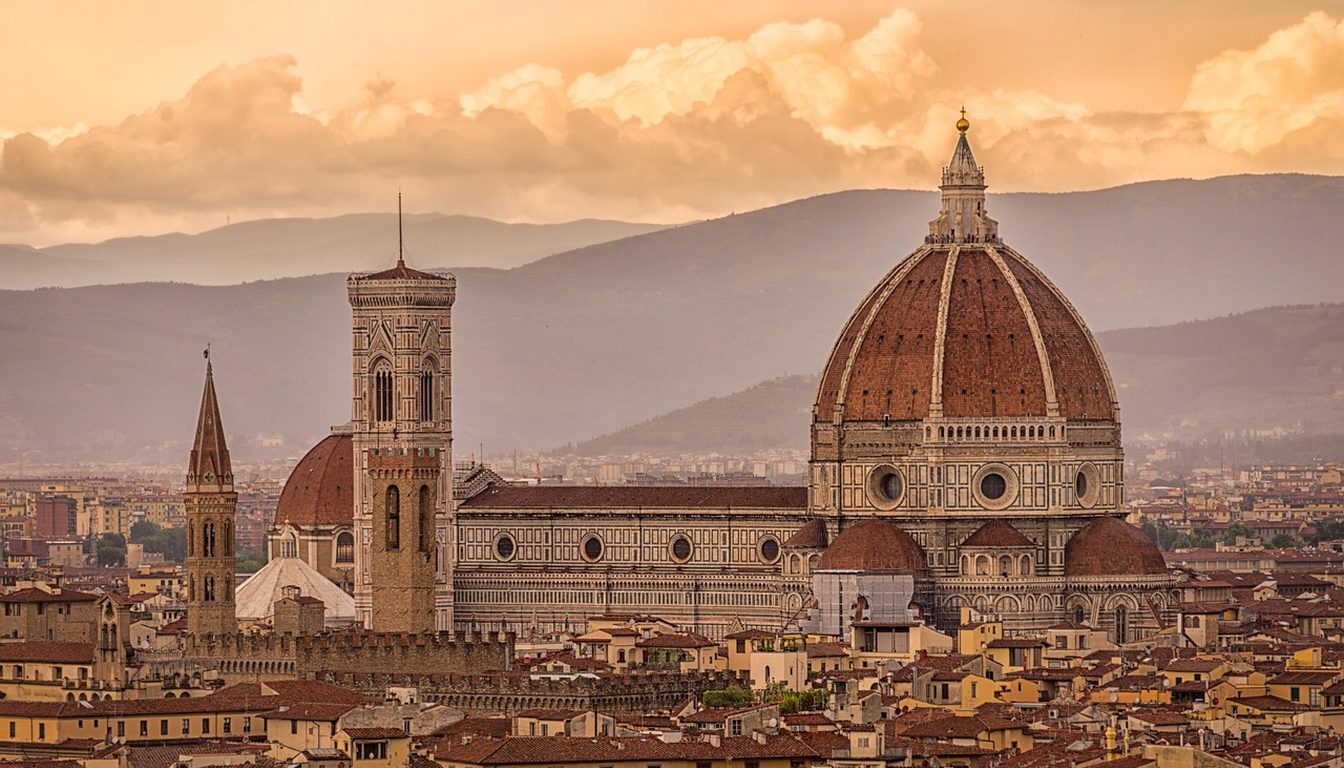
Florence concentrates some of the world’s most important Renaissance art within a compact, walkable historic center—but the same accessibility that makes it ideal for a three-day visit also creates bottlenecks at headline sites. This guide shows how to experience the full spectrum of Florentine art, from Botticelli and Michelangelo to Donatello and Cellini, while using timing, lesser-visited museums, and neighborhood clustering to avoid the worst crowds.
The challenge isn’t just seeing the David or the Uffizi’s Botticelli rooms. It’s designing a three-day itinerary that provides access to masterpieces while minimizing the time spent standing in queues or shoulder-to-shoulder with tour groups. The Bargello, Medici Chapels, and Santa Croce all hold major Renaissance works but draw a fraction of the Uffizi’s crowds.
Understanding Florence’s Renaissance landscape
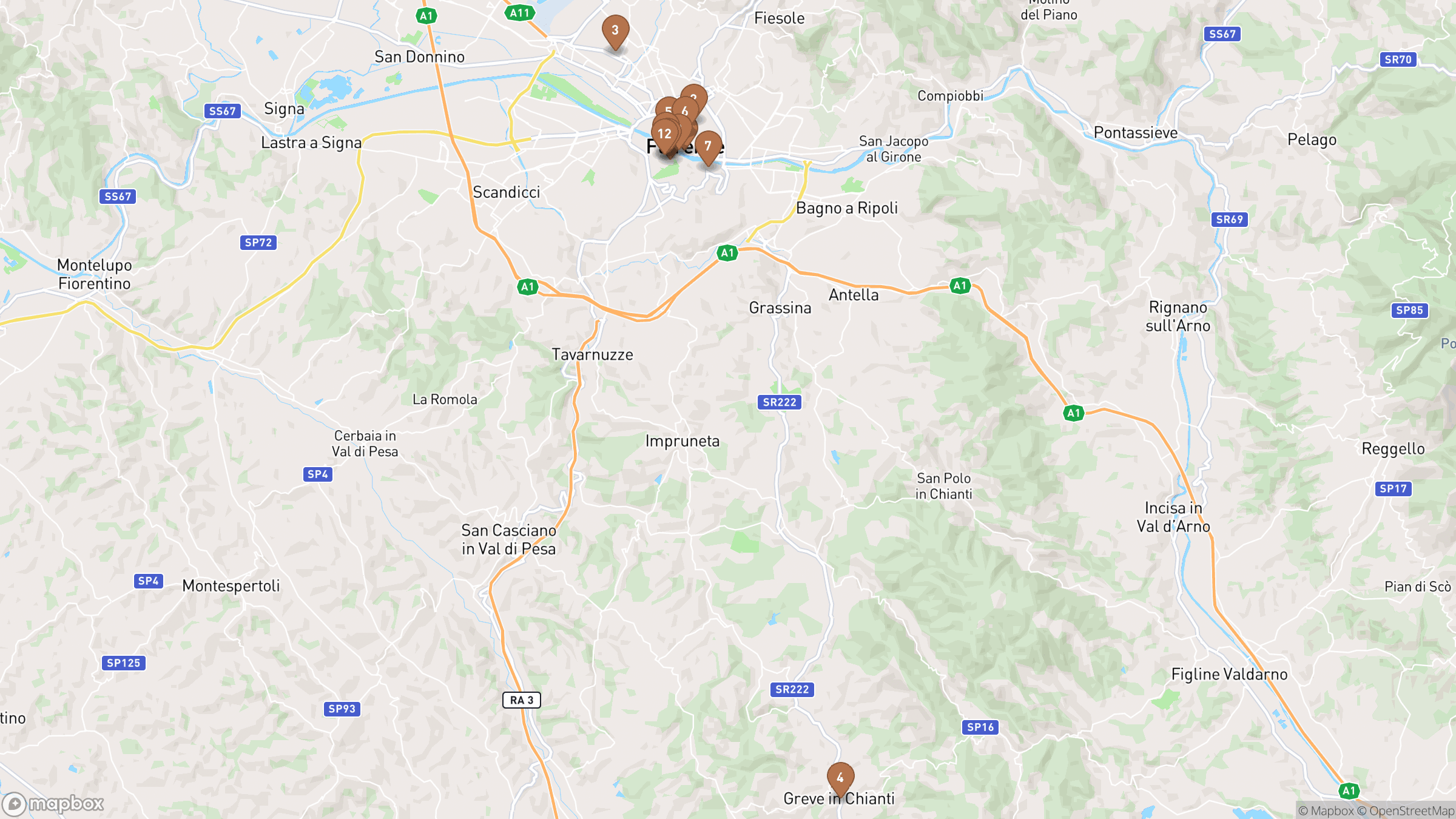
Florence’s compact historic center places major sites—the Duomo complex, Uffizi, Accademia, and Palazzo Vecchio—within walking distance, eliminating transport needs for core sightseeing. This pedestrian-friendly layout means you can move between world-class collections and Renaissance monuments without buses or taxis, keeping logistics simple and building natural breaks into your day.
The city developed as a leading center of European trade, finance, and culture under families like the Medici, creating the conditions for the 15th- and 16th-century Renaissance that transformed Western art. The UNESCO-listed historic center preserves the physical and cultural infrastructure that made this transformation possible, from the Cathedral’s pioneering dome to the Medici palaces that housed some of Europe’s most important art patrons.
Major Renaissance works are spread across multiple sites. The Bargello holds Donatello’s bronze David and several Michelangelo sculptures. The Medici Chapels preserve Michelangelo’s funerary monuments. Churches like Santa Croce contain fresco cycles by Giotto and tombs of Michelangelo, Galileo, and Machiavelli.
Visit Santa Croce after 16:30, when tour groups have left for dinner. You’ll have the frescoes nearly to yourself. The compact layout means strategic timing by neighborhood can dramatically reduce crowd exposure while maintaining access to world-class collections.
Skip the habit of rushing through the Uffizi and Accademia in one day. Instead, spend two hours at the Bargello on Donatello’s bronze David, then walk to Santa Croce. The Bargello rarely has queues; Donatello’s David and Michelangelo’s Bacchus are displayed at eye level in galleries small enough to absorb visitors without crowding.
Day 1: Duomo complex and the Bargello sculpture collection
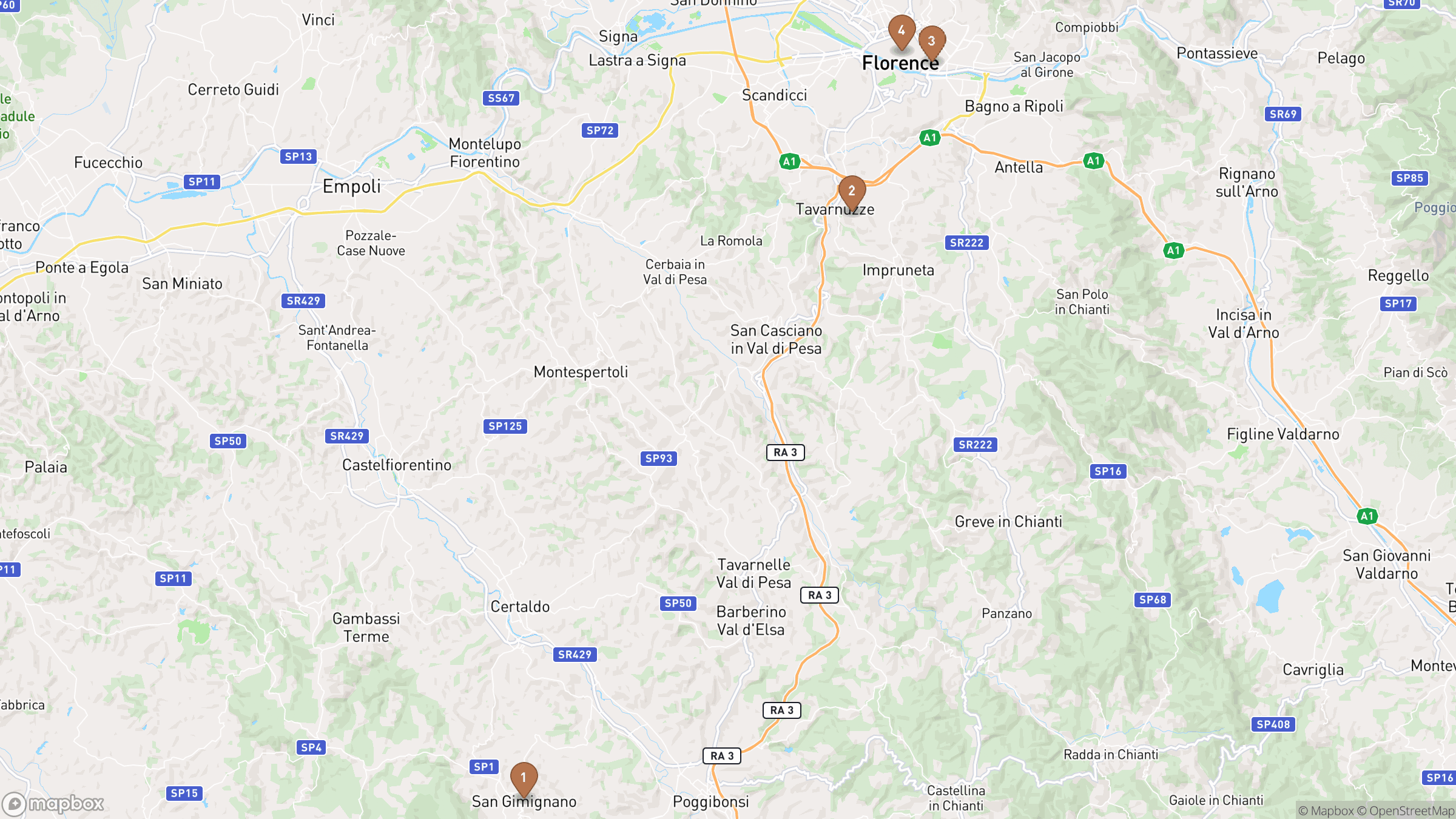
Begin with the Duomo complex, allocating half a day for the cathedral interior, Brunelleschi’s dome or Giotto’s Bell Tower climb, and the Museo dell’Opera del Duomo with original sculptures. The dome interior is surprisingly plain—the real payoff is climbing it or the adjacent bell tower to orient yourself to the city layout.
 Photo: Thermos / Wikimedia Commons, CC BY-SA 2.5 (cropped)
Climb Giotto’s Bell Tower (463 steps, ~40 minutes) to see how the Oltrarno and Duomo relate spatially—crucial for routing your next two days. Reviewing Giotto’s Bell Tower access details helps plan your climb timing around crowd patterns. The Museo dell’Opera del Duomo preserves original sculptures and reliefs removed from the cathedral exterior, including works by Donatello and Michelangelo, displayed at eye level rather than high on a façade. This museum sees far fewer visitors than the cathedral itself while presenting some of the complex’s most important artistic achievements.
Afternoon focus shifts to the Bargello National Museum, which holds one of Italy’s most important Renaissance sculpture collections with far lower visitor density than the Uffizi. The Bargello is a former palace-turned-prison, now Italy’s sculpture museum. It’s small enough to cover in two hours and rarely crowded.
The Bargello features works by Donatello, Michelangelo, and Cellini displayed across several floors of a fortified medieval structure. See Donatello’s bronze David and Michelangelo’s Bacchus side by side in a single room—an impossible comparison at the Uffizi. Cellini’s intricate bronze sculptures demonstrate the technical sophistication Renaissance artists achieved in metalwork. The museum’s smaller galleries and relative quiet compared to the Uffizi create conditions for careful looking rather than hurried passage through crowded rooms.
Visiting the Bargello in the afternoon, after the Duomo complex, establishes a pattern of pairing high-profile sites with quieter alternatives. The sculpture focus also provides variety from the painting-heavy days ahead while covering an essential dimension of Renaissance artistic production.
Day 2: Uffizi Gallery and crowd-management strategies
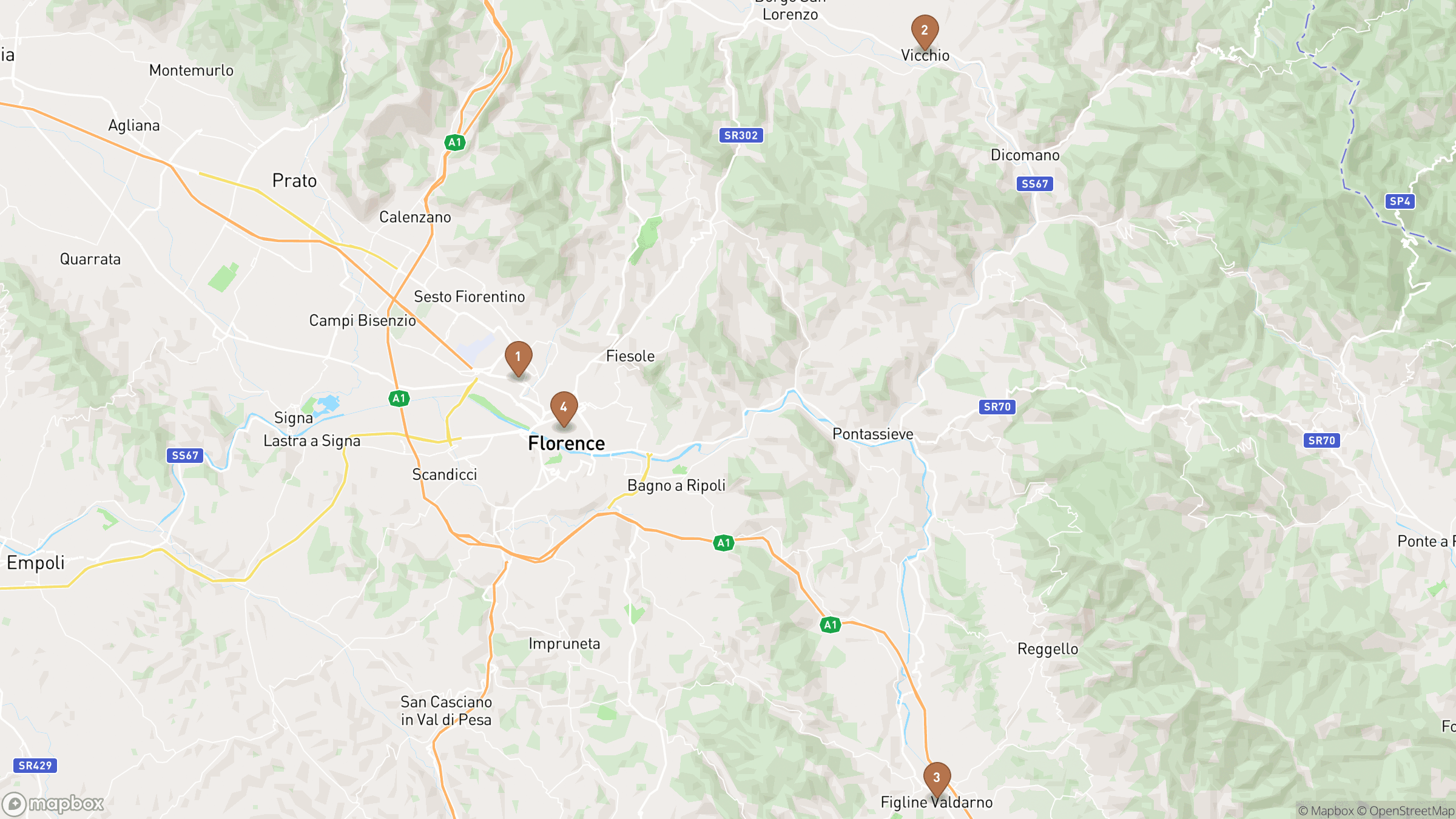
Reserve early morning or late afternoon timed-entry slots for the Uffizi to minimize midday crowd peaks. The Uffizi holds one of the world’s most important Renaissance painting collections, including works by Botticelli, Leonardo da Vinci, Michelangelo, and Raphael. The complex began under Cosimo I de’ Medici as administrative offices and evolved into one of the earliest modern public art galleries, opening to visitors in the 18th century.
Timed reservations are non-negotiable in peak season. Without them, you’ll lose 90 minutes to a queue at the Accademia alone. Early morning slots mean encountering fewer groups in the Botticelli rooms, where the Birth of Venus and Primavera draw concentrated attention. Late afternoon visits, an hour or two before closing, can also reduce exposure to peak crowds while still providing adequate time for a selective tour of highlights.
Never visit on the first Sunday of the month—free admission means 3+ hour waits and no ability to book timed slots. Choose a Tuesday or Thursday instead. On these days, queues build early and persist throughout operating hours, turning what should be a contemplative museum experience into a logistical challenge.
Both Palazzo Vecchio and Santa Croce are a 5-minute walk from the Uffizi. Palazzo Vecchio is still the town hall, so it feels less museum-like—useful if you want a break from galleries. Palazzo Vecchio has served as Florence’s town hall since the early 14th century and contains chambers decorated by artists such as Vasari that reflect Medici political power and Renaissance artistic patronage.
Comparing access options for Florence’s major galleries helps identify the most suitable entry method and timing for your schedule. Planning museum visits by neighborhood cluster—Uffizi, Palazzo Vecchio, and Santa Croce all lie within a compact area—means you can move between sites on foot while avoiding repeated crossings of the historic center.
Day 2 continued: Santa Croce and Medici Chapels
Santa Croce is where Michelangelo, Galileo, and Machiavelli are buried—plus you get Giotto frescoes that shaped Renaissance painting. The Franciscan basilica became a pantheon for figures central to Florence’s cultural and scientific legacy, with monumental tombs designed by leading artists. Giotto’s frescoes in the Peruzzi Chapel show space and movement in ways that directly influenced Michelangelo—you’ll see the lineage by comparing them side by side.
The Medici Chapels at San Lorenzo preserve Michelangelo’s sculptural ensembles in the New Sacristy and the ornate Chapel of the Princes. The New Sacristy contains Michelangelo’s sculptural monuments for Medici family members, integrating architecture, sculpture, and symbolic imagery in a unified design. The Chapel of the Princes showcases the dynasty’s wealth through extensive use of colored marble and pietra dura inlay work.
Both sites are active churches requiring modest dress and respectful behavior, offering Renaissance art in contemplative settings rather than museum formats. Shoulders and knees should be covered, and silence maintained in areas designated for prayer. This context reminds visitors that many Renaissance works were created for devotional purposes within specific liturgical and architectural frameworks.
These locations typically draw smaller crowds than the Uffizi or Accademia while presenting major works in their original architectural contexts. Santa Croce’s scale and multiple chapels distribute visitors across a larger area than a concentrated gallery. The Medici Chapels, while important, operate at a smaller scale than Florence’s headline museums, creating opportunities to study Michelangelo’s late sculptural work without constant jostling.
Visit Santa Croce after 16:30, when tour groups have left for dinner. You’ll have the frescoes nearly to yourself. The contemplative atmosphere of a Franciscan basilica or a Medici funerary chapel contrasts with the bustle of gallery corridors, offering a different mode of engagement with Renaissance art and architecture.
Day 3: Accademia, Pitti Palace, and Oltrarno
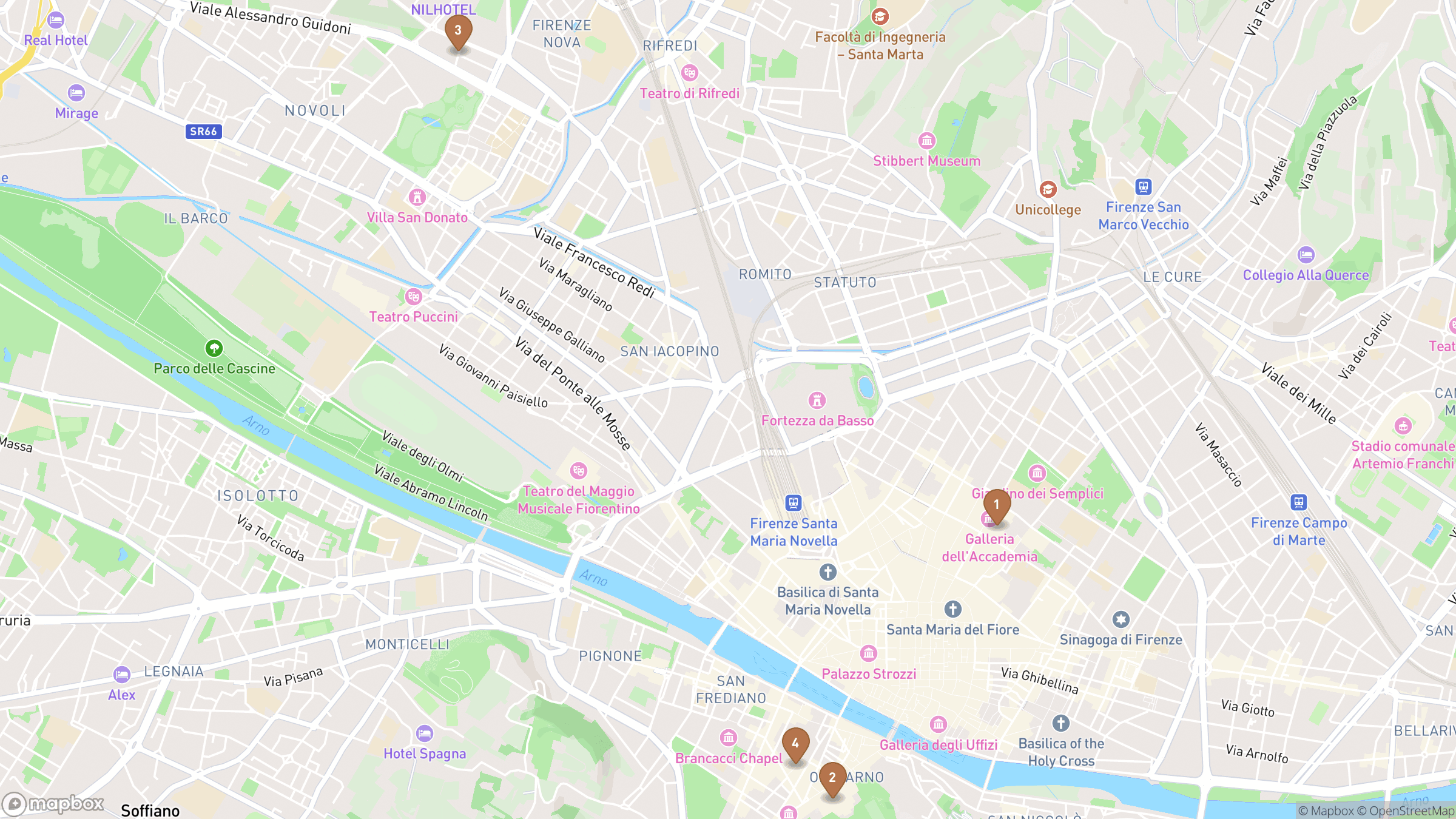
Book early morning access to the Accademia Gallery to see Michelangelo’s original David before crowds build. The Accademia holds the original; outdoor replicas are smaller, weathered, and lack the detail you see up close indoors. Visit the Accademia first thing. The distinction matters: the original’s surface detail and scale—over five meters tall—can only be appreciated in the gallery setting designed to showcase the sculpture.
 Photo: Diego Delso / Wikimedia Commons, CC BY-SA 4.0 (cropped)
Planning your visit to the Accademia for the opening hour provides the best chance to spend time with the David and Michelangelo’s unfinished Slaves without dense crowds. The Accademia’s collection extends beyond Michelangelo to include paintings from the 13th through 16th centuries and a collection of musical instruments, but most visitors concentrate on the sculpture gallery.
Cross to the Oltrarno neighborhood for the Pitti Palace and Boboli Gardens, which preserve major Medici collections of Renaissance and Baroque painting, decorative arts, and 16th-century garden design. The Pitti Palace houses multiple museums across several floors, including the Palatine Gallery with works by Raphael, Titian, and Rubens displayed in ornate chambers. The scale of the collection means selective visits to specific galleries work better than attempting comprehensive coverage.
The gardens offer outdoor sculpture and landscape architecture as a contrast to indoor museum time, with generally lower visitor density than central sites. Boboli Gardens, laid out mainly in the 16th and 17th centuries, demonstrate how Renaissance design principles extended to landscape and water features. Walking the terraced pathways provides physical relief from gallery floors while accessing Medici-era design and sculpture in an open-air setting.
The Oltrarno district as a whole sees less tourist concentration than areas immediately around the Duomo and Uffizi. Churches, artisan workshops, and neighborhood trattorias maintain more local character than the most commercialized streets north of the Arno. Spending the afternoon south of the river distributes your presence across Florence’s geography while still accessing major artistic collections.
For practical transit detail in Rome, see How to get around Rome using public transport: a complete guide.
Timing your visits: closure days and crowd patterns
Major museums including the Uffizi and Accademia typically close on Mondays, requiring careful schedule planning for short stays. Other museums have different closure patterns:
- Uffizi & Accademia: Closed Mondays
- Bargello: Closed 2nd & 4th Sundays, 1st/3rd/5th Mondays
- Medici Chapels: Closed 1st/3rd/5th Sundays, 2nd/4th Mondays
Verify current hours before booking. Early morning and late afternoon slots at top attractions reduce midday crowd peaks and queue exposure.
Book the 8:30 a.m. slot at the Accademia or visit after 17:00. Between 11:00 and 15:00, you’ll be trapped in a crowd. Timed reservations allow you to select these windows, converting timing from a matter of luck into a planning variable you control.
Skip free-admission Sundays entirely—you’ll wait 2+ hours and can’t reserve a time slot. Visit Tuesday–Saturday instead and pay the entry fee. The queues, density inside galleries, and absence of reservation systems on free days make them among the least desirable times to visit Florence’s major museums for visitors on a short stay.
Skip free-admission Sundays entirely—you’ll wait 2+ hours and can’t reserve a time slot.
Clustering visits by neighborhood—Duomo area one day, Oltrarno another—minimizes backtracking and spreads exposure across different crowd patterns. Different neighborhoods experience peak visitor flow at different times, and moving between areas provides natural variety in atmosphere and crowding. A morning in the Accademia followed by an afternoon across the river creates a rhythm that breaks up continuous exposure to the historic center’s most saturated streets.
Planning around these temporal and spatial patterns doesn’t eliminate crowds but reduces their impact on your experience. A well-timed visit to a major museum followed by a church or smaller collection creates contrast that makes both more rewarding.
Beyond the headline museums: quieter Renaissance treasures
The Bargello offers major Renaissance sculpture in a more contained space with lower visitor density than the Uffizi or Accademia. The building’s medieval structure and focused sculpture collection create intimacy that large painting galleries cannot match. Spending two hours at the Bargello provides access to masterpieces while avoiding the logistical friction that characterizes visits to Florence’s most famous sites.
 Photo: Mano1221 / Wikimedia Commons, CC0 (cropped)
Medici Chapels at San Lorenzo present Michelangelo’s work as originally conceived, in mausoleum settings away from gallery crowds. The New Sacristy represents a complete architectural and sculptural environment designed by a single artist, offering insight into how Michelangelo integrated different media. The ornate decoration of the Chapel of the Princes, though created by other hands, demonstrates the resources and ambitions of Florence’s ruling dynasty.
Palazzo Vecchio contains chambers decorated by Vasari reflecting Medici political power, with the building serving as town hall since the early 14th century. The Salone dei Cinquecento, with its elaborate ceiling panels and wall frescoes, functioned as a space where art reinforced political authority. The palazzo’s active civic role alongside its museum functions reminds visitors that Renaissance Florence was a working city, not a historical stage set.
Churches like Santa Croce and neighborhood sites in Oltrarno distribute important works across the city, offering access to Renaissance art in more relaxed surroundings. The Brancacci Chapel in Santa Maria del Carmine preserves Masaccio’s frescoes that influenced generations of painters, including Michelangelo. Santo Spirito contains a Brunelleschi-designed interior and several important altarpieces in a church that sees primarily local congregants rather than tour groups.
Hit the Bargello and Medici Chapels instead of spending 6 hours at the Uffizi. You’ll see more masterpieces in less time and actually remember what you saw. A three-day itinerary that includes the Bargello, Medici Chapels, and Oltrarno churches alongside the Uffizi and Accademia covers more artistic ground while creating better viewing conditions across all sites.
For a full multi-day plan in Paris, see Best things to do in Paris in 3 days: a curated itinerary.
Practical logistics for a three-day Renaissance focus
Timed-entry reservations for the Uffizi, Accademia, and Brunelleschi’s Dome are strongly recommended to avoid long lines, especially in peak season. Reservations can be made weeks in advance, providing certainty about access during your limited time in Florence. The small reservation fee proves worthwhile when compared to queue times that can extend to two hours or more at the Accademia during busy periods.
The walkable historic center eliminates the need for buses or taxis for core sightseeing routes between major sites. The distance from the Duomo to the Pitti Palace measures roughly two kilometers, a comfortable walk that passes through the historic core. Maintaining this pedestrian scale helps you notice details—architectural elements, street-level artisan workshops, neighborhood character—that disappear from a taxi window.
The distance from the Duomo to the Pitti Palace measures roughly two kilometers, a comfortable walk that passes through the historic core.
Neighborhood-based planning—pairing the Uffizi with Palazzo Vecchio and Santa Croce one day, Pitti Palace with Boboli Gardens another—reduces backtracking and crowd exposure. Each cluster provides enough material for a full day while keeping you within a defined area. This approach also means you can identify a local café or restaurant for lunch rather than resorting to tourist-focused establishments immediately adjacent to major monuments.
Allocating time in open-air sites like Boboli Gardens provides a break from indoor museum density while still accessing Medici-era design and sculpture. The gardens’ pathways, terraces, and fountains offer physical activity and varied sightlines after hours spent in galleries. Garden visits work particularly well in late afternoon when light softens and temperatures moderate, creating pleasant conditions for walking.
Avoid the trap of spending your entire three days trying to see everything. Two hours at the Bargello beats racing through it in forty minutes, and you’ll retain more. Florence rewards preparation and selectivity—choosing quality of engagement over comprehensive coverage produces more rewarding encounters with the Renaissance art that justifies Florence’s place on any cultural itinerary.