Florence in One Day: Should You Prioritize the Uffizi or the Accademia?
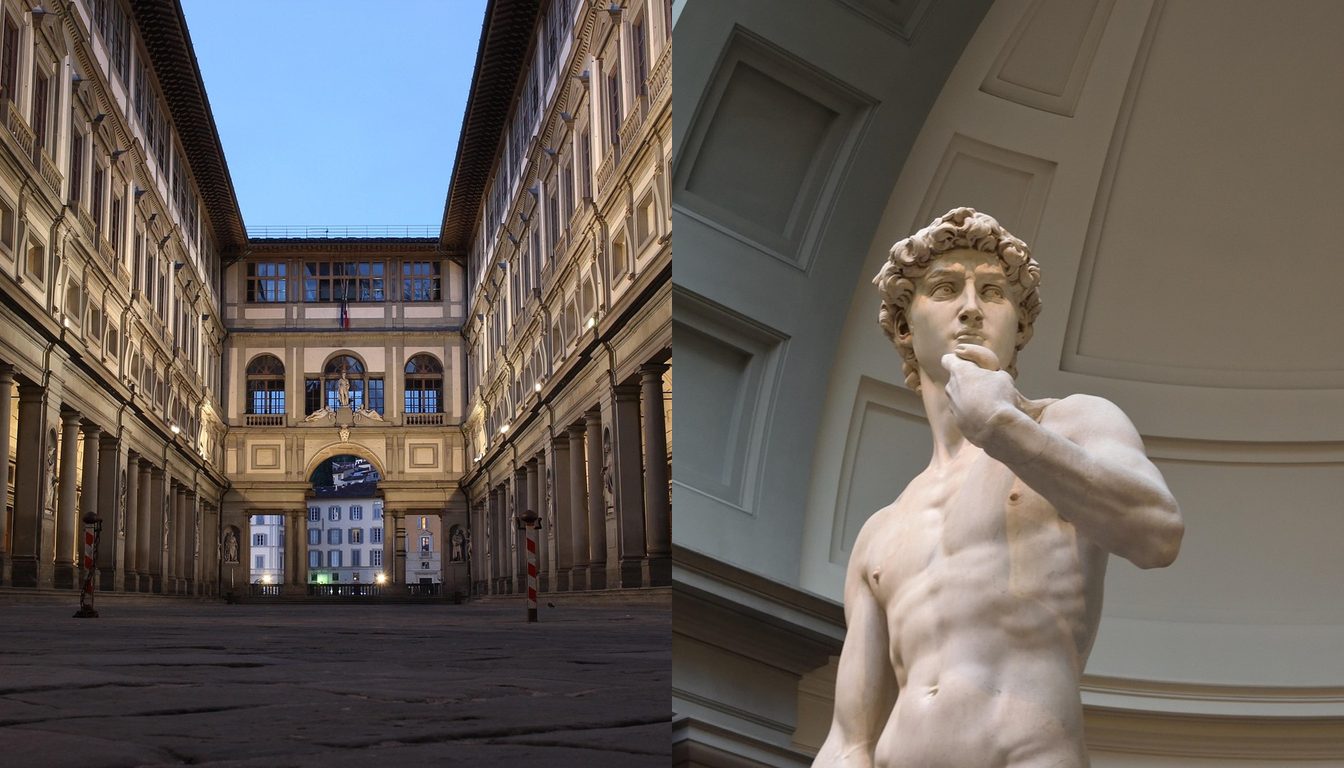
When time is limited in Florence, most travelers face a tough choice: the Uffizi’s sweeping Renaissance painting collection or Michelangelo’s David at the Accademia. This guide helps you decide which museum matches your priorities—or whether you can realistically fit both into a single day.
The decision isn’t purely about prestige or popularity. Both average 45-minute queues in summer without advance booking, and both hold major Renaissance works. But they offer fundamentally different experiences, and understanding what distinguishes them will help you allocate your limited hours more effectively.
Understanding What Each Museum Offers
The Uffizi holds 13th–17th-century Italian paintings across 50+ rooms—too many to see in one visit, which is why you need to prioritize.
The Accademia is smaller, more focused, and built around Michelangelo’s 17-foot David sculpture as the centerpiece. While the museum holds other works by Michelangelo and additional Renaissance pieces, the experience is narrower overall. Most travelers spend 1–1.5 hours at the Accademia, making it easier to fit into a tight schedule.
The Uffizi’s collection includes works by Botticelli, Leonardo da Vinci, Michelangelo, Raphael, and Caravaggio across its many galleries. You’ll see Botticelli’s Birth of Venus and Primavera, along with major works from virtually every significant Italian Renaissance painter. The breadth and depth are unmatched in Florence.
The Accademia houses Michelangelo’s David and other works by Michelangelo, including his unfinished Prisoners series. The museum also contains important works by other artists, but the layout and visitor flow clearly prioritize David as the main attraction. This focus makes the Accademia a more targeted experience rather than a comprehensive survey.
Choose the Uffizi If You Want Painting Breadth and Major Masterpieces
The Uffizi offers the broadest Renaissance art experience available in Florence. For travelers who want an overview of Italian painting from the 13th to 17th centuries, the Uffizi is typically the better choice. No other museum in the city provides this kind of chronological sweep through the period that defined Western art history.
 Photo: Armin Kleiner / Wikimedia Commons, CC BY-SA 4.0 (cropped)
You’ll see Botticelli’s Birth of Venus and Primavera alongside many other household names. The Uffizi’s strength lies in its ability to show not just individual masterpieces but the evolution of artistic styles and techniques across generations. You can trace the development of perspective, composition, and the treatment of human figures as you move through the galleries.
This is the better choice if your interests span multiple artists and you want a more comprehensive museum visit. The Uffizi rewards travelers who enjoy comparing different approaches to similar subjects—multiple Annunciations, various treatments of the Madonna and Child, different interpretations of classical mythology. If you find this kind of visual dialogue engaging, the Uffizi will offer far more material than the Accademia.
This layout makes sense if you have 3+ hours, but if you’re rushing, the sequential flow can trap you in early rooms. The educational structure makes the Uffizi particularly valuable if you want to leave Florence with a clear sense of Renaissance painting evolution rather than just a memory of one famous sculpture.
Choose the Accademia If David Is Your Top Priority
Michelangelo’s David is one of the world’s most recognizable sculptures and the Accademia’s main attraction. For many travelers, seeing David in person is the defining cultural experience they want from Florence. The sculpture’s scale, technical perfection, and emotional intensity justify this priority, and the Accademia delivers that experience efficiently.
Most travelers spend 1–1.5 hours at the Accademia, making it easier to fit into a tight schedule.
The Accademia is the right pick if sculpture and Michelangelo rank higher than painting breadth on your list. Beyond David, you’ll see Michelangelo’s unfinished Prisoners, which offer fascinating insight into his working process. These partially carved figures emerging from raw marble demonstrate how Michelangelo conceived of sculpture as liberating forms already present in the stone.
The museum’s layout directs you naturally toward David, building anticipation as you approach. Unlike the Uffizi, where masterpieces are distributed across many rooms, the Accademia concentrates its most important works in a more compact space. This focus means you’re less likely to experience decision fatigue or feel overwhelmed by too many competing works demanding your attention. For David access with timed entry, consider booking ahead to avoid extended waits.
Time Commitment: What to Expect at Each Museum
The Uffizi can easily take two and a half to four hours if you want to see the major highlights properly. This isn’t just about the number of rooms—it’s about the density of significant works. Even if you move efficiently and skip secondary galleries, you’ll need substantial time to engage meaningfully with Botticelli, Leonardo, Raphael, Caravaggio, and the other masters represented.
 Photo: A J Butler / Wikimedia Commons, CC BY 3.0 (cropped)
The Accademia typically requires one to one and a half hours for a focused visit centered on David and a few surrounding galleries. The museum’s smaller footprint and narrower collection make it possible to see the essential works without rushing. You can linger with David, examine the Prisoners, and still complete your visit in less time than a quick run through the Uffizi would require.
Museum fatigue is real. The sheer number of paintings at the Uffizi, even when you’re selective, can become mentally exhausting. By the end of a thorough Uffizi visit, many travelers report feeling saturated and less able to absorb new visual information.
If time is your scarcest resource, the Accademia offers a high-impact experience with less investment. You’ll see one of the world’s most famous sculptures without dedicating half your Florence day to a museum. This leaves more time for other priorities: climbing Giotto’s bell tower, exploring the Duomo complex, walking across the Ponte Vecchio, or simply wandering the historic center without a fixed agenda.
For a full multi-day plan in Florence, see Florence in 3 days: Renaissance art without the crowds.
Can You Realistically Do Both in One Day?
Visiting both museums in a single day is achievable if you start early and keep each visit focused. Many travelers successfully combine both experiences, though it requires planning and realistic expectations. You won’t have time to read every wall text or contemplate every painting, but you can see the essential works at both institutions.
A common strategy is to visit the Accademia first in the morning, then move to the Uffizi later in the day. Starting with the Accademia makes sense because the visit is usually shorter, allowing you to complete it while you’re fresh and then transition to the more demanding Uffizi. Early morning slots at the Accademia also tend to be less crowded than midday or afternoon time windows.
Accept that you won’t see every room exhaustively—prioritize the highlights and move efficiently. At the Uffizi, this means focusing on the rooms holding Botticelli, Leonardo, Michelangelo, Raphael, and Caravaggio while moving more quickly through less essential galleries. At the Accademia, concentrate on David and the Prisoners, giving yourself permission to skip or skim other sections.
If you get restless after 2 hours of galleries, skip the both-in-one approach. If you easily spend 4 hours in museums at home, commit to both.
Booking Logistics and Avoiding Long Queues
Both museums are among Florence’s most visited attractions, so advance booking is strongly advisable. Book timed entry ahead to skip the main queue and guarantee your slot during peak season.
Booking ahead gives you more control over your itinerary and reduces the risk of sold-out slots. Reserve at least 48 hours ahead—same-day slots often sell out mid-morning in summer. By securing your time slots in advance, you can plan the rest of your day around confirmed museum visits rather than hoping for availability when you arrive.
The booking process typically involves selecting a date and time window for entry. For the Uffizi, many travelers find mid-morning or early afternoon slots work well after starting the day at the Accademia. For the Accademia, first-morning time slots often provide the best combination of smaller crowds and fresh energy for appreciating David.
Both museums maintain active booking systems. The Italian Ministry of Culture provides a central reservation platform for many state museums, though advance planning remains essential regardless of which system you use.
Common Misconceptions About the Uffizi vs. Accademia Decision
The Uffizi is the more comprehensive museum; the Accademia is smaller and more focused, with David as its central draw. Many travelers assume the Accademia must be larger or more important because it houses such a famous work, but the opposite is true. The Uffizi holds more Renaissance masterpieces per gallery than any Florence museum, which is why it demands more time.
Speed is only one factor; travelers most interested in painting, Renaissance breadth, or seeing multiple iconic works often get more from the Uffizi. The assumption that shorter automatically means better doesn’t hold when the experiences are fundamentally different. A focused hour with David is valuable, but it’s not necessarily more valuable than three hours tracing the evolution of Renaissance painting—it depends entirely on your interests.
Seeing both museums in one day can be realistic if you start early, keep each visit focused, and accept that both museums will not be covered exhaustively. The myth that combining both is impossible likely comes from travelers who attempted to see every room at both institutions. That’s unrealistic. But hitting the highlights at each museum within a single day is entirely achievable with proper planning.
Seeing both museums in one day can be realistic if you start early, keep each visit focused, and accept that both museums will not be covered exhaustively.
If you’re a first-time visitor with 6 hours, choose the Uffizi. If you’re time-squeezed and want one powerful moment, pick the Accademia.
For depth on a specific Rome site, see Vatican Museums morning or afternoon: which slot actually beats the crowds?.
Practical Tips for Making Your Decision
- Love painting? → Uffizi.
- Want one masterpiece fast? → Accademia.
- Breadth over depth? → Uffizi.
If you love painting and want the broadest Renaissance experience, the Uffizi is the better bet. You’ll leave with a mental gallery of masterpieces spanning multiple generations and styles. The museum offers context and comparison that no other Florence institution can match. If your goal is understanding the Renaissance through its painting, the Uffizi is indispensable.
If you mainly want David and a shorter museum visit, the Accademia fits that goal. You’ll see one of Western art’s most celebrated works without the time commitment that the Uffizi requires. This leaves more of your Florence day available for other experiences—which matters when you’re working with limited hours.
If you’re doing both museums, keep the Accademia visit short and preserve more energy for the Uffizi. Spend your hour with David efficiently, then save your deeper concentration for the more complex experience the Uffizi provides. This sequencing helps you avoid museum fatigue before you reach the larger collection.
Spend your hour with David efficiently, then save your deeper concentration for the more complex experience the Uffizi provides.
Consider your overall Florence itinerary—leaving time for the Duomo, walking the city, and other experiences matters too. Museums are only one component of a Florence visit. Skip the fourth museum gallery—spend that hour walking the Oltrarno and Piazzale Michelangelo instead. If you’re spending four to five hours in museums, you may miss the chance to experience Florence as a living city rather than just a collection of indoor attractions. For architectural highlights beyond the museums, exploring Giotto’s Campanile offers a completely different perspective on Florence’s artistic legacy—one that involves climbing rather than gallery walking.
Balance your museum time with outdoor experiences. Piazza della Signoria and Piazzale Michelangelo offer free views and less fatigue than a third museum—prioritize these over exhaustion. Walk Giotto’s bell tower or the Duomo exterior first—it teaches you Renaissance scale before you enter the Uffizi galleries.