The Prado in Two Hours: What to See and What to Skip
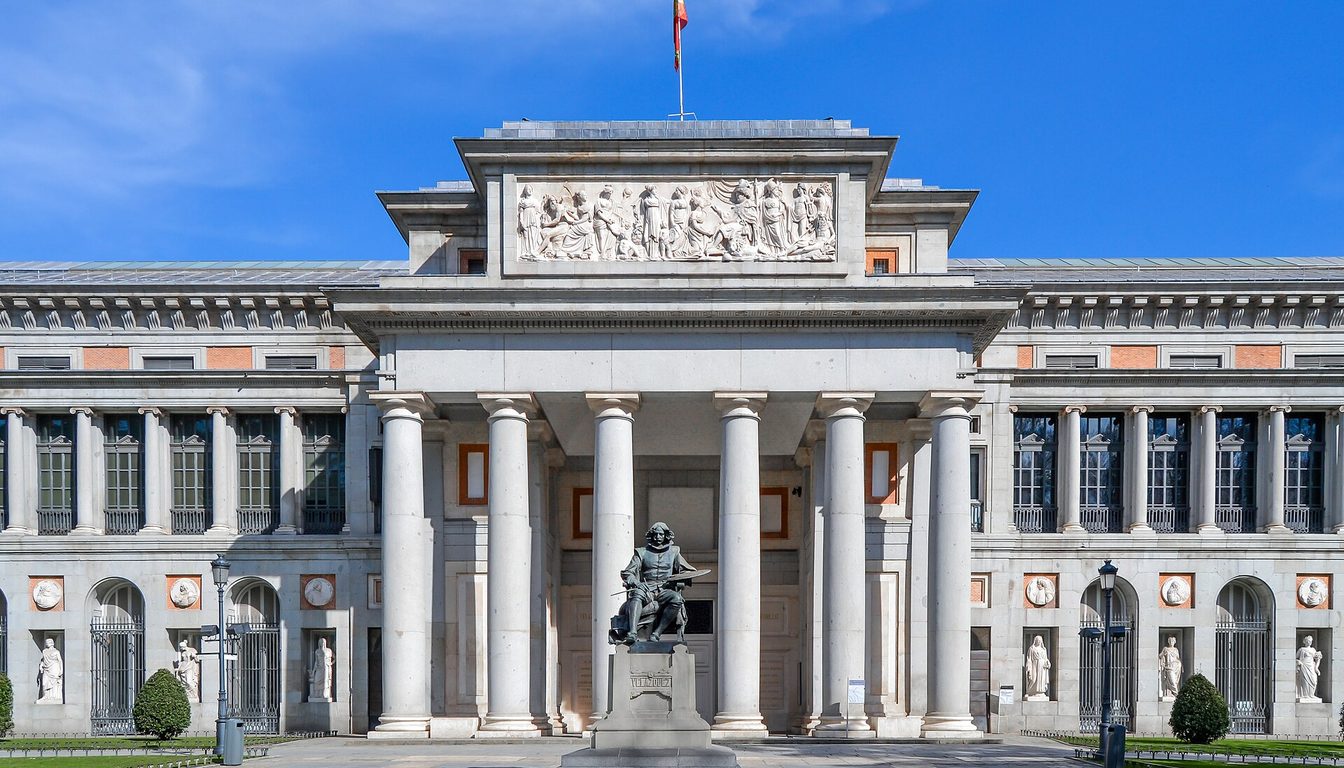
Two hours in the Prado demands strategic curation, not a sprint through every gallery. This guide builds a compact route around the museum’s absolute masterpieces while identifying entire categories you can confidently bypass.
Why Two Hours Is Both Enough and Not Nearly Enough
The Prado holds the most complete collection of Spanish painting from the 11th through the 18th centuries, plus major Flemish, Italian, German and French works. Two hours allows a selective highlights visit focused on masterpieces, not the full collection.
Beyond paintings, the museum contains important collections of drawings, prints, coins and medals, clothing, luxury objects and decorative arts—collections that require separate dedicated time. A strategic route built around artists and individual works protects viewing time for the highest-priority pieces rather than attempting systematic room-by-room coverage.
A two-hour sprint leaves no time to study Las Meninas’ spatial composition or The Garden of Earthly Delights’ panel details. The approach here favors depth over breadth: spending meaningful time with Las Meninas matters more than checking every room off a floor plan.
The Must-See Core: Five Masterpieces That Define the Visit
Velázquez’s Las Meninas is the single most important work in the museum and merits dedicated viewing time for its compositional complexity and technical mastery. Stand at multiple distances to see how the spatial relationships shift and how Velázquez places himself, the royal family, and the viewer in conversation across the canvas.
 Photo: Diego Velázquez / Wikimedia Commons, Public domain (cropped)
Goya’s two Majas—clothed and nude—represent a pivotal moment in Spanish painting and remain among the museum’s most celebrated works. The pair demonstrates Goya’s evolving approach to portraiture and the human figure, and the works continue to provoke discussion about identity, power and representation.
Bosch’s The Garden of Earthly Delights offers unparalleled detail and symbolism; allocate time to study each panel closely rather than glancing at the triptych as a whole. El Greco’s The Nobleman with His Hand on His Chest exemplifies Spanish Golden Age portraiture, combining the period’s formal restraint with El Greco’s distinctive elongated figures and intense spirituality.
Rubens’s The Three Graces anchors the Flemish collection and provides essential contrast to the Spanish focus, demonstrating the sensuality and technical accomplishment of Flemish Baroque at its peak. Do not allocate time to lesser-known painters or smaller works unless you have specific scholarly interest; protect your two hours for Las Meninas, the Majas, The Garden of Earthly Delights, The Nobleman with His Hand on His Chest, and The Three Graces.
For a broader city overview, see Gothic Quarter and El Born in half a day: a walking route without backtracking.
Building Your Route Around Spanish Painting
Prioritize the Velázquez rooms, which contain not only Las Meninas but also royal portraits and court scenes that demonstrate his evolving technique. The progression from earlier formal portraits to the atmospheric late works shows how Velázquez refined his handling of light, space and psychological presence.
 Photo: Francisco Goya / Wikimedia Commons, Public domain (cropped)
The Goya galleries span his career from tapestry cartoons through the dark Black Paintings; focus on the Majas and the major royal portraits for a two-hour visit rather than attempting to trace every phase of his output. El Greco’s work represents a distinct mystical strand of Spanish painting, characterized by elongated forms, dramatic light and intense religious feeling. The Nobleman with His Hand on His Chest is the essential starting point, offering a concentrated example of his approach to portraiture without the overwhelming scale of his larger altarpieces.
Start with Las Meninas and the Velázquez portraits, then move to the Goya Majas in the same wing to stay together. The collection includes major works by El Greco, Velázquez, Goya, Bosch, Titian, Van Dyck and Rembrandt, but the Spanish concentration is unmatched anywhere else. Structuring the visit around this strength ensures coherence and maximizes exposure to the museum’s defining holdings.
If time allows for a brief extension beyond the core five works, consider adding one or two additional Velázquez portraits or a representative Goya royal commission, which will deepen understanding without fragmenting attention across too many schools or periods.
For practical transit detail in Madrid, see Madrid Metro and Cercanías: navigating Spain’s capital.
Selected Flemish and Italian Highlights Worth the Detour
Bosch’s The Garden of Earthly Delights is a Flemish triptych that demands close inspection and is among the Prado’s most popular works. The left panel depicts Paradise, the central panel a fantastical garden of sensual pleasure. The right panel shows hell: grotesque hybrid creatures and musical instruments as torture. The density of detail rewards repeated viewing, and the work’s enigmatic symbolism has generated centuries of interpretation.
Rubens’s The Three Graces represents Flemish Baroque at its most sensual and technically accomplished, offering a counterpoint to the restrained palette and spiritual intensity of much Spanish painting. The Italian rooms include works by Titian, but in a two-hour visit, prioritize one or two representative pieces rather than attempting comprehensive coverage.
Choose Bosch and Rubens as the essential Flemish anchors, and treat Van Dyck and Rembrandt as optional if time allows.
What to Skip: Collections and Galleries to Leave for Another Day
Skip the drawings and prints collections entirely unless graphic work is your primary interest; these require separate focused time and different viewing conditions. The museum contains important collections of drawings, prints, coins and medals, clothing, luxury objects and decorative arts in addition to paintings and sculpture, but incorporating these into a two-hour highlights visit fragments the experience.
Bypass the numismatic galleries, decorative arts, clothing and luxury objects—specialized holdings that dilute a highlights-focused visit. Avoid attempting to see every room in the Italian, German, French or English sections; select one or two representative works rather than pursuing completeness. The goal is not encyclopedic coverage but meaningful engagement with the museum’s greatest strengths.
Do not allocate time to lesser-known painters or smaller works unless you have specific scholarly interest. Avoid attempting to see every room; this results in shallow exposure to everything and deep engagement with nothing. Selective skipping is not a compromise—it is the only rational approach to a museum of this scale and quality within a fixed timeframe.
Timing, Crowds and Practical Logistics
Check the calendar before visiting, as temporary exhibitions, loans, conservation work and rehangs can affect the location and availability of individual works. Build your route around specific artists and works rather than following a floor-by-floor plan; this approach maximizes time with the highest-priority pieces.
Print or download a short checklist of your five to seven must-see works and locate them in advance, noting that room numbers and layouts can shift.
Arriving with a clear hierarchy—Las Meninas first, followed by the Majas, The Garden of Earthly Delights, The Nobleman with His Hand on His Chest, and The Three Graces—prevents decision fatigue and protects viewing time. If crowds are heavy around one work, move to another and return later rather than queuing passively. The two-hour constraint requires active management of time and attention, not passive wandering.
Common Mistakes and How to Avoid Them
Do not assume the Prado is exclusively Spanish painting; Flemish and Italian works are central to the collection and essential to a balanced visit. Bosch’s symbolism and Rubens’s technique contrast with Spanish works and show how foreign painting shaped Spanish court taste.
Avoid the misconception that two hours covers the entire museum; this timeframe suits a selective highlights route, not comprehensive coverage. The Prado’s holdings also include sculpture, drawings, engravings, coins, medals, clothing, luxury objects and decorative art, each category representing a separate substantial collection.
Photographing everything replaces looking; prioritize seeing over recording. The goal is to see the work, not to capture it for later review.
Access and Final Preparation
Print or download a short checklist of your five to seven priority works and locate them in advance; room numbers and layouts can shift. Arrive with realistic expectations: two hours is ideal for a curated highlights visit, but the full collection rewards multiple dedicated sessions.
No other museum holds Velázquez, Goya, Bosch and El Greco under one roof. Treat the two-hour route as an introduction to works worth revisiting rather than a definitive encounter.
The two-hour Prado visit pairs naturally with other Madrid highlights, allowing a compact morning or afternoon session that leaves time for additional exploration. The key is setting boundaries in advance and honoring them during the visit, ensuring that the time spent with Velázquez, Goya, Bosch, El Greco and Rubens remains focused, unhurried and substantive.
The building’s tall ceilings and natural light suit large canvases like Las Meninas. Consulting Prado advance booking details helps avoid queue lines that can consume your two hours. Mid-morning on weekdays typically provides the best balance of manageable crowds and alert attention for absorbing the collection’s masterpieces.
Consulting Prado advance booking details helps avoid queue lines that can consume your two hours.
The Prado, Reina Sofía, and Thyssen-Bornemisza museums are within walking distance; a two-hour Prado visit leaves afternoon time for a second museum. While two hours suffices for a curated highlights visit, the museum rewards return trips that explore secondary galleries, temporary exhibitions, and the deeper holdings of specific artists encountered during an initial visit.
The Prado remains one of Madrid’s essential cultural institutions, and visitors planning their time in the city should consider how this museum fits within broader sightseeing priorities. According to Spain’s official tourism portal, the museum houses over 8,000 paintings and 700 sculptures, making selective viewing not just practical but necessary for most visitors. The two-hour approach outlined here addresses the reality that most travelers balance multiple Madrid attractions rather than dedicating entire days to single institutions.
For context on how the Prado fits within Madrid’s broader museum landscape, Wikivoyage notes that the city’s “Golden Triangle of Art” includes the Prado, Reina Sofía, and Thyssen-Bornemisza museums, each requiring separate visits for adequate coverage. Attempting to see all three in a single day results in superficial engagement with each collection. The strategic two-hour Prado visit allows time for these complementary institutions while ensuring meaningful engagement with Spanish painting’s greatest masterpieces.
Additional practical information, including current exhibition schedules and temporary closures, can be found through Madrid’s official tourism site, which provides updated visitor guidance and ticketing details. Planning your route in advance and arriving at opening time maximizes the effectiveness of a condensed visit, allowing focused time with the core masterpieces before crowd levels increase later in the day.