Széchenyi Spa: the mistakes first-time visitors make (and how to avoid them)
Széchenyi Thermal Bath is Europe’s largest spa complex, but first-timers often stumble on its size, timing rules, and cultural etiquette. This guide reveals the six most common pitfalls—from underestimating layout and arrival timing to phone bans in saunas and age restrictions for children under 14—and shows how to avoid them for a smooth, relaxing experience.
Széchenyi Thermal Bath is one of Europe’s largest spa complexes, but many first-time visitors arrive unprepared for its size, strict rules, and operational quirks. The sprawling facility in Budapest’s City Park includes indoor and outdoor pools, saunas, hot-air chambers, and a network of changing areas that can confuse newcomers. Unlike smaller thermal baths, Széchenyi demands advance planning to navigate its layout, understand its timing rules, and respect its cultural etiquette.
This guide identifies the most common pitfalls that trip up first-time visitors and provides practical solutions to help you make the most of your visit. From age restrictions that catch families by surprise to sauna rules that ban electronics, understanding these operational realities before you arrive turns a potentially frustrating experience into a relaxing one.
| Mistake | Key Issue | Solution |
|---|---|---|
| Underestimating size | Sprawling complex with multiple zones | Allow 2–3 hours; explore both indoor and outdoor sections |
| Arriving too late | Pools and saunas close 20 minutes before facility | Arrive with at least 2 hours remaining; check daily schedule |
| Bringing children under 14 | Age restriction in effect since August 2025 | Verify policy; arrange childcare or alternative activities |
| Electronics in saunas | Phones, watches, devices strictly prohibited | Leave all electronics in locker before entering wellness zones |
| Rushing the visit | Thermal bathing requires gradual temperature transitions | Block off at least half a day for full experience |
| Ignoring thermal heritage | Misunderstanding cultural norms and etiquette | Observe local behavior; respect quiet zones; appreciate history |
Mistake 1: Underestimating the size and layout of the complex
Many visitors expect a simple outdoor pool, but Széchenyi is one of Europe’s largest spa complexes and the first thermal bath established in Pest. The facility was built in 1913 according to plans by architect Győző Czigler, and it was expanded significantly in 1927 to add a public bathing department for men and women alongside an outdoor section. The result is a sprawling layout that combines historic architecture with multiple distinct zones, each serving a different purpose.
First-timers often struggle to navigate between changing areas, indoor thermal pools, outdoor pools, and wellness zones without a mental map.
The complex includes everything from steam baths and dry saunas to hot-air chambers and thermal pools at varying temperatures, all spread across indoor and outdoor sections connected by corridors and staircases. Signage appears in both Hungarian and English, but the sheer scale of the building means orientation takes time.
Allow at least two to three hours to explore both indoor and outdoor sections properly, plus additional time for changing and initial orientation. Rushing through the experience defeats the purpose of a thermal-bath visit, which is designed for gradual relaxation and temperature transitions between pools.
Rushing through the experience defeats the purpose of a thermal-bath visit, which is designed for gradual relaxation and temperature transitions between pools.
Understanding the layout before you arrive helps. The outdoor pools tend to draw the most attention, especially in winter when the temperature contrast creates visible steam. Indoor sections offer quieter, more intimate thermal pools and dedicated wellness areas. Plan to move between both environments during your visit to experience the full range of facilities.
Mistake 2: Arriving too close to closing time
Best time to visit:
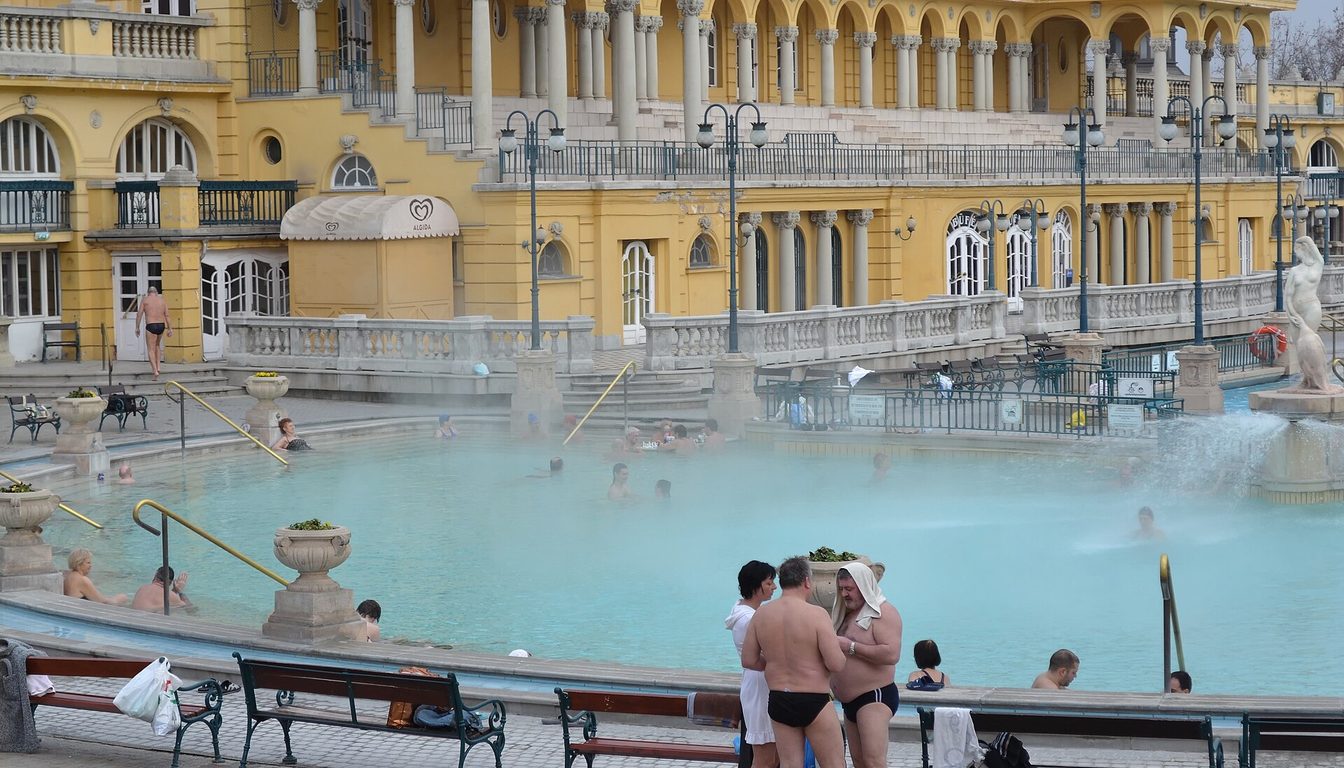
 Photo: xorge / Wikimedia Commons, CC BY-SA 2.0 (cropped)
- Early morning: Arrive before 10:00 AM to encounter smaller crowds and easier navigation of the complex.
- Weekday mornings (Mon–Thu): Visit 07:00–09:00 for the quietest pools and thermal areas.
- Friday evenings: Extended hours until 22:00 offer a less-crowded late-evening option if confirmed in advance.
- Allow 2+ hours: Plan arrival time so you have at least two hours before pools and saunas close (20 minutes before the main facility closing time).
- Avoid final hour: Do not arrive within one hour of advertised closing time; key facilities will already be shut.
The bath’s advertised closing time does not mean every facility remains open until that moment. Pools, saunas, and hot-air chambers close twenty minutes earlier than the main facility.
Opening hours vary by day: Monday through Thursday the bath operates from 07:00 to 20:00, Friday extends hours until 22:00, and Saturday and Sunday run from 08:00 to 20:00. Individual areas, however, shut down before those times.
The bath closes key sections in the final hour, so arriving then wastes your entry. The published schedule lists separate hours for the bath, pools, saunas, hot-air chambers, private spa, medical spa, and drinking fountain. Assuming that a 20:00 closing time means you can enter at 19:30 and use all facilities leads to disappointment when wellness areas have already locked their doors.
Check the detailed schedule for pools, saunas, and hot-air chambers on the day of your visit and plan to arrive with at least two hours of usable time. This buffer accounts for changing, orienting yourself in the building, and moving between different temperature zones at a pace that respects the thermal-bath culture of gradual relaxation. Arriving early also means access to quieter periods before afternoon crowds.
The extended Friday hours until 22:00 offer an opportunity to visit during evening hours, but confirm that the specific facilities you want to use remain open. The bath operates every day, including public holidays, though hours may shift. Treat the closing-time rule as non-negotiable: when pools and saunas close, they close—no exceptions for latecomers.
For a full multi-day plan in Budapest, see Budapest in 3 days: thermal baths, ruin bars, Danube views.
Mistake 3: Bringing children under 14 without checking the age policy
Since 1 August 2025, children under 14 are not permitted to enter Széchenyi Bath unless they have a specialist medical certificate meeting strict requirements. Many families assume thermal baths welcome all ages with adult supervision, leading to disappointed children turned away at the entrance. The rule exists for safety and operational reasons; exceptions are rare and require documented medical grounds with an ICD code.
If traveling with young children, verify the age restriction before booking and carry original identity documents in case age verification is requested. The bath’s FAQ states that an original passport or identity document may be required to confirm age when exceptions apply for medical reasons.
For visitors seeking family-friendly Budapest experiences, consider exploring options like St. Stephen’s Basilica, which welcomes all ages and offers architectural and cultural value without age restrictions. If traveling with children under 14, arrange childcare or plan separate activities while adults visit the bath.
Mistake 4: Taking phones, smart watches, and other electronics into saunas
Phones, tablets, smart watches, and other electronic devices are strictly prohibited in saunas and hot-air chambers unless specifically approved by the bath manager. First-time visitors often want to capture photos or use fitness trackers, unaware that this violates house rules designed to protect privacy and maintain a relaxing environment. The prohibition extends beyond cameras to all smart or electronic devices, with rare exceptions requiring managerial approval.
 Image by nkaminetskyy from Pixabay
Do not bring food or drinks into sauna areas. Slippers may be worn in steam baths but not in dry saunas. These rules reflect both safety concerns—electronics and extreme heat do not mix well—and cultural norms around shared wellness spaces where other bathers expect privacy and tranquility.
Leave all electronics, snacks, and beverages in your locker before entering wellness zones to avoid being asked to leave. Lockers provide secure storage for valuables, and the locker key typically attaches to a wristband so you can move freely through the facility without carrying anything. The inconvenience of not tracking your sauna session on a smart watch pales beside the disruption of violating house rules and disturbing other guests.
If documenting your visit matters, capture images in outdoor pool areas where photography is generally permitted, and store devices securely before moving to restricted zones.
For a full multi-day plan in Paris, see Best things to do in Paris in 3 days: a curated itinerary.
Mistake 5: Expecting a quick in-and-out visit
Changing facilities, locker procedures, and navigating the building all take time before you even reach the water. The bath’s historic layout can be confusing, with signage in Hungarian and English that helps but does not eliminate the learning curve. First-timers often spend fifteen to twenty minutes finding their way initially, locating changing rooms, understanding the locker system, and identifying where different pools and wellness areas sit within the complex.
The thermal-bath culture relies on gradual temperature transitions between pools, rest periods, and time in saunas—a pattern that cannot work in an hour.
Block off at least half a day, especially if you plan to use saunas, hot-air chambers, and both indoor and outdoor pools. Thermal bathing benefits from unhurried movement through different temperature zones, allowing the body to adjust and relax fully. Visitors who treat the bath as a checklist item between other activities miss the point entirely and often leave feeling they did not get their time’s worth.
Mistake 6: Ignoring the bath’s thermal heritage and etiquette
Széchenyi traces its origins to deep drilling in City Park initiated by mining engineer Vilmos Zsigmondy, with an artesian bath operating at the site by 1881. The venue is both a functioning thermal facility and an important piece of Budapest’s spa heritage, expanded multiple times since the original 1913 construction. The 1927 expansion added public bathing departments, and further transformations in the 1960s created additional bathing-suit thermal sections and physiotherapy facilities.
Széchenyi has operated as a thermal bath for over a century and attracts both tourists and local residents. Local thermal-bath culture values quiet relaxation, respectful use of shared spaces, and adherence to unwritten norms about noise and behavior.
Observe how regulars move through spaces, respect quiet zones, and avoid loud conversations or disruptive behavior in thermal pools and saunas. Wellness areas in particular function as sanctuaries where talking should be minimal and movements deliberate.
Key norms: keep conversations quiet in wellness areas, rinse off between temperature changes, and move deliberately between pools.
The Neo-Baroque façade, decorative tilework in indoor pools, and grand outdoor pools frame the complex’s 1913 architecture. For more Budapest wellness options, explore Széchenyi spa access to understand how visitors navigate this landmark facility.
Frequently asked questions
What is the minimum time needed to visit Széchenyi Thermal Bath?
Allow at least two to three hours to explore both indoor and outdoor sections properly. The thermal-bath experience is designed for gradual relaxation and temperature transitions, so rushing through undermines its therapeutic value. Plan to block off at least half a day if you want to use saunas, hot-air chambers, and multiple pools.
Plan to block off at least half a day if you want to use saunas, hot-air chambers, and multiple pools.
Are children allowed at Széchenyi Bath?
Since 1 August 2025, children under 14 are not permitted to enter unless they have a specialist medical certificate with an ICD code. Many families assume thermal baths welcome all ages, but this policy exists for safety and operational reasons. Verify the age restriction before booking and carry original identity documents if exceptions apply.
Can I bring my phone or smart watch into the sauna?
No. Phones, tablets, smart watches, and all other electronic devices are strictly prohibited in saunas and hot-air chambers unless specifically approved by the bath manager. Food and drinks are also forbidden. Leave all electronics in your locker before entering wellness zones to avoid being asked to leave.
What are the opening hours and when should I arrive?
Monday–Thursday: 07:00–20:00; Friday: 07:00–22:00; Saturday–Sunday: 08:00–20:00. However, pools, saunas, and hot-air chambers close twenty minutes before the main facility. Arrive with at least two hours of usable time remaining. Early morning visits encounter smaller crowds and allow easier navigation.
Practical tips for a smooth first visit
Costs at a glance:
- Budget tier: Standard day admission.
- Mid-range tier: Includes towel rental or other on-site facility upgrades if not bringing your own.
- Premium tier: Private spa and medical spa services are also offered.
Confirm opening hours for your chosen day and aim to arrive early enough to use pools, saunas, and outdoor sections before they close. Check the specific schedule for wellness areas, which shut down twenty minutes before the main facility. Early arrival also means encountering smaller crowds, easier navigation, and a more relaxed introduction to the complex layout.
Bring appropriate swimwear, a towel, and waterproof footwear. Leave valuables, electronics, and snacks in your locker before moving through changing areas into pool and sauna zones. The locker system uses wristbands with keys, allowing you to secure belongings while moving freely. If you forget a towel or other essentials, check whether on-site services offer rentals, though bringing your own items ensures you have exactly what you prefer.
If traveling with children, verify age restrictions and carry original ID documents. Plan alternative activities if your group includes anyone under 14, since the strict age policy means young children cannot enter except under rare medical exceptions.
Treat Széchenyi as a large complex, explore both indoor and outdoor sections, and allow at least 2–3 hours for the full experience.